How Water Cooled Chillers Work On Site
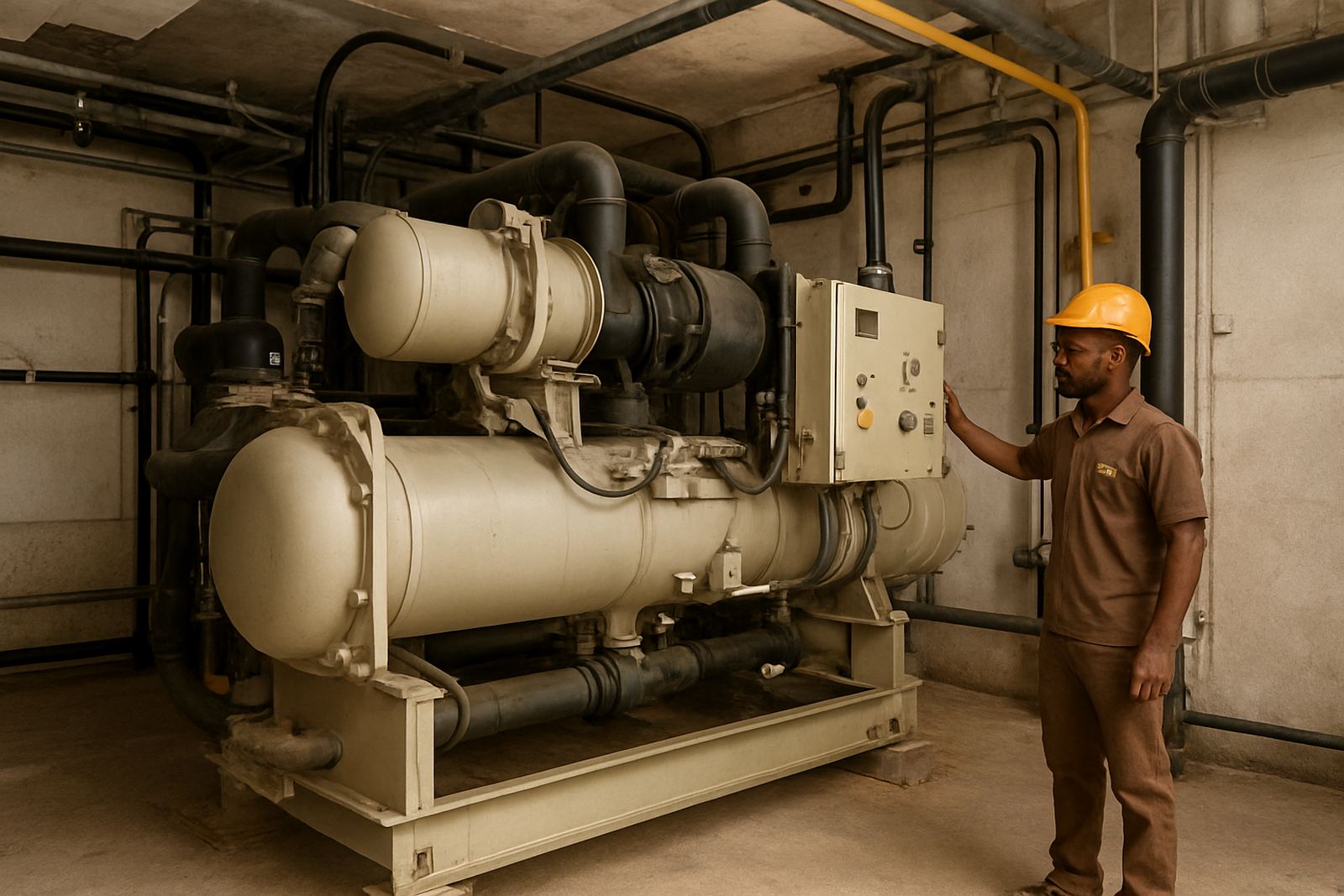
A water cooled chiller removes heat from a process or building load by using water instead of air at the condenser side. In practical terms, the chiller carries heat out of the chilled water loop, then rejects that heat into a condenser water circuit that runs through a cooling tower or similar heat rejection system. That setup is common where sites need higher cooling capacity, tighter temperature control and lower outdoor noise than air cooled units.
These systems are often found in hospitals, hotels, factories, shopping centres, food processing plants and large office blocks. They suit properties with space for plant rooms, pumps and water treatment, and they work well where operators want stable performance over long operating hours. For coastal sites in Gqeberha, Jeffreys Bay and Port Alfred, correct water treatment matters because salt air and mineral build-up can shorten equipment life if plant is left unchecked.
Capacity Ranges And Typical Chiller Options
We supply and service water cooled chiller options from smaller packaged units through to high-capacity plant used on multi-storey or industrial sites. Selection depends on the cooling load, chilled water temperature, condenser water flow, available electrical supply and whether the site needs N+1 redundancy or staged operation. A 100 kW system will not behave the same as a 1 000 kW plant, so the right sizing is important before installation or replacement.
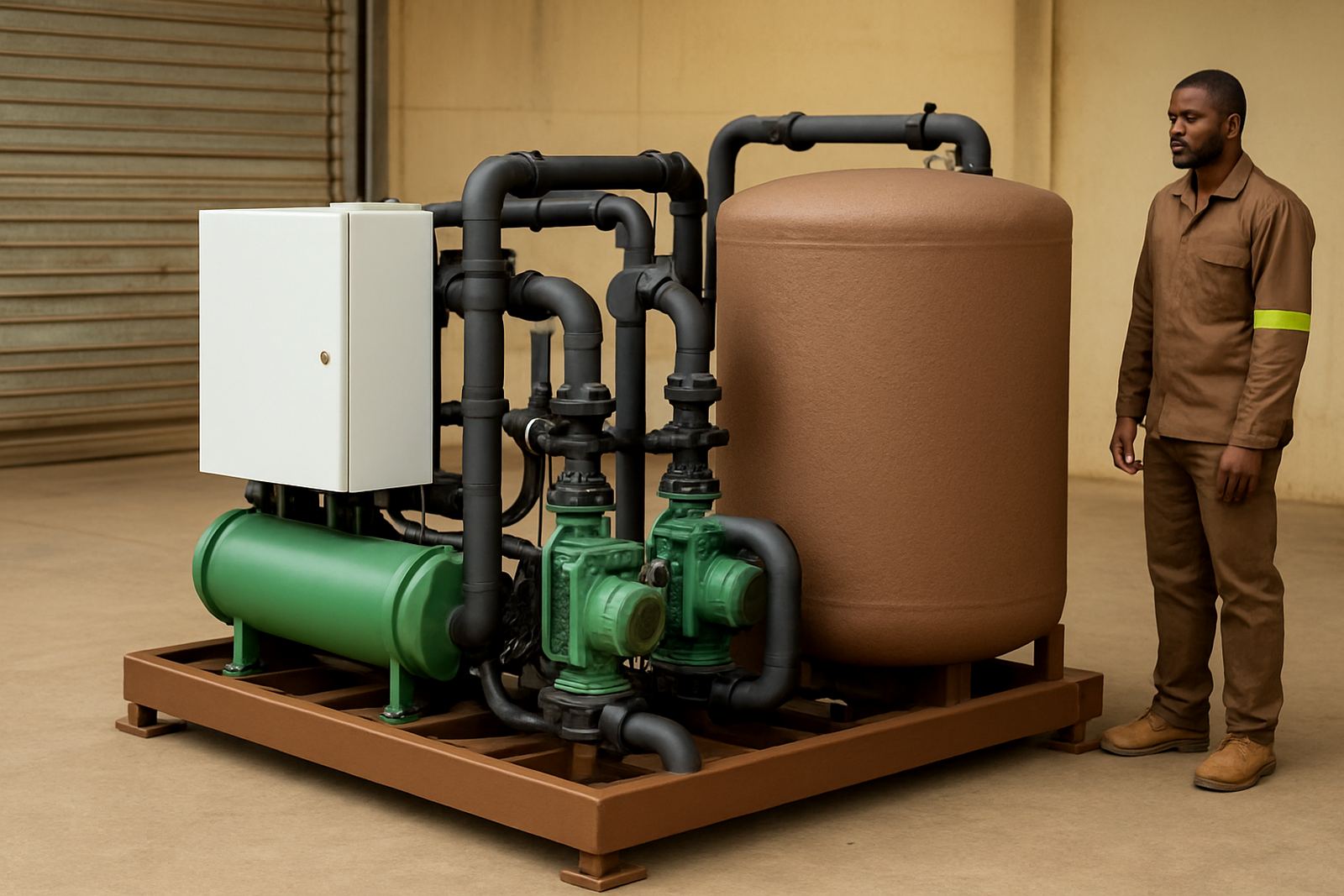
Common options include single-compressor units, multi-circuit machines and modular plants that allow maintenance without taking the full system offline. For upgrades, we can assess whether your existing pipework, pumps and controls can carry the new duty or whether they need changes. If your plant was installed years ago, it may still be usable with a retrofit, but the controls, expansion valves, starters and sensors often need attention.
- Approximate capacities: 50 kW to 1 500 kW and above, depending on site design
- Power supply: three-phase, typically 380 V to 400 V, subject to nameplate and motor spec
- Common control features: lead-lag staging, fault alarm outputs, chilled water setpoint control
- Refrigerant choice: confirm existing gas type and service condition before any retrofit
Where These Systems Make The Most Sense
Water cooled chillers suit sites where the cooling demand runs for many hours a day and noise control matters. They are also a good fit where the building already has chilled water pipework or a central plant room, which makes the system easier to integrate. In places like Uitenhage and Despatch, industrial users often choose this route because it supports process cooling, production lines and controlled storage without constant manual adjustment.
They are not ideal for every property. If a site has no water treatment, no plant space or limited maintenance access, the operating cost can climb quickly. The best results come when the full system is planned as one unit, including pumps, strainers, valves, cooling tower, controls and monitoring. If the condenser water side is neglected, the chiller will work harder, use more electricity and may trip on pressure faults during peak summer heat.
- Hospitals and clinics with continuous cooling demand
- Hotels, resorts and hospitality venues with central plant rooms
- Factories and workshops with process water needs
- Commercial buildings that want lower indoor noise at roof level
Installation Needs, Power And Water Requirements
Before installation, we check the available floor space, crane access if needed, pipe routes, electrical supply, drainage and whether the plant room can handle the weight of the unit and its water content. Water cooled chillers are heavy pieces of equipment, and the base has to be level and properly designed. In some buildings, the chiller can be lifted into a plant room, while in others the route has to be planned around doors, beams and existing services.
Electrical supply is just as important. Motor starting current, protection settings and generator compatibility all need to be checked, especially where load-shedding backup is part of the site plan. Water quality must also be considered. Poorly treated condenser water leads to scaling, corrosion and fouled tubes. That shows up as poor heat transfer, higher head pressure and rising running costs. On some sites we recommend side-stream filtration, chemical dosing and regular testing rather than waiting for a breakdown.
- Check chilled water flow rates and condenser water flow rates before ordering
- Confirm pipe sizes, pump duties and any existing bypass arrangements
- Allow for isolation valves, strainers, drain points and air vents
- Make sure the electrical room can take the starter or control panel needs
Maintenance That Protects Capacity And Running Costs
Water cooled chillers need planned maintenance if you want them to keep their duty over time. A good service plan covers refrigerant pressures, oil condition, water temperatures, tube cleanliness, controls, contactors, vibration, electrical terminations and water treatment. Small faults build up slowly. A blocked strainer or dirty condenser tubes can push power use up long before a full shutdown happens.
In the Eastern Cape, dust, coastal humidity and long running hours create their own problems. We often find fouled coils, weak sensors, scale in heat exchangers and control faults after power interruptions. Our planned maintenance can be arranged monthly, quarterly or by operating hours, depending on the load. For sites in Gqeberha and surrounding towns, we also look at the effect of load-shedding on restart sequences and alarm history so the system does not trip repeatedly after an outage.
- Tube cleaning and water side inspection
- Leak detection and refrigerant top-up checks
- Control testing, sensor calibration and alarm review
- Energy checks to identify high consumption points
What To Check Before You Order
If you are replacing an existing unit or specifying a new plant, the right information saves time and avoids mismatches. Start with the required cooling load in kW or tonnes of refrigeration, the chilled water supply and return temperatures, and the condenser water details if those are known. You should also check whether the site needs continuous operation, partial redundancy or future expansion room. A unit sized too small will struggle, while one that is far too large can short cycle and waste power.
It also helps to know the refrigerant status of the current system, the age of the plant, the condition of pumps and towers, and whether the controls can be linked to temperature monitoring. If the system will be installed near the coast, ask about corrosion protection and service access from the start. Our team can help review the nameplate data, service history and operating symptoms so you get a proper match for the site rather than a rough guess.
- Cooling load and process temperature requirement
- Available electrical supply and backup power arrangement
- Space for plant, access routes and service clearances
- Water treatment, drainage and ongoing maintenance plan
Key facts
| Capacity range | About 50 kW to 1 500 kW and above, subject to site design |
|---|---|
| Power supply | Typically 380 V to 400 V, three-phase |
| System type | Water cooled plant with condenser water circuit |
| Use case | Central plant sites, process cooling and large building cooling |
| Service options | Planned maintenance, emergency breakdowns and retrofits |
| Coverage | Gqeberha, Uitenhage, Despatch, Jeffreys Bay, Graaff-Reinet and Port Alfred |