What a dry cooler does on site
A dry cooler removes heat from water or glycol by passing air across finned coils, so the system gives up heat to the atmosphere without relying on evaporative water loss. That makes it a sensible choice for sites that want to reduce water consumption, avoid cooling tower treatment, or keep plant simpler in places where water supply and discharge controls are tight.
In plain terms, the unit sits outside or on a service area roof and works like a heat rejection component for chillers, process plant, brewery lines, laboratories and certain refrigeration support systems. It is not the answer for every job, because performance drops in very hot weather, but for many Eastern Cape sites it is the cleaner option when matched correctly to the load.
- Heat rejection for process water loops
- Support cooling for refrigeration and chiller circuits
- Low-water-use alternative to evaporative systems
- Useful where municipal water use needs to stay down
Sizes, coil options and build choices
Dry coolers are usually selected by duty, not by a standard box size. We look at the heat load in kW, entering and leaving fluid temperatures, airflow, and whether the unit will run through the hottest afternoon in summer or only carry part of the load. Small units may suit a modest workshop or small plant room, while larger units are built as multi-fan banks for higher industrial duties.
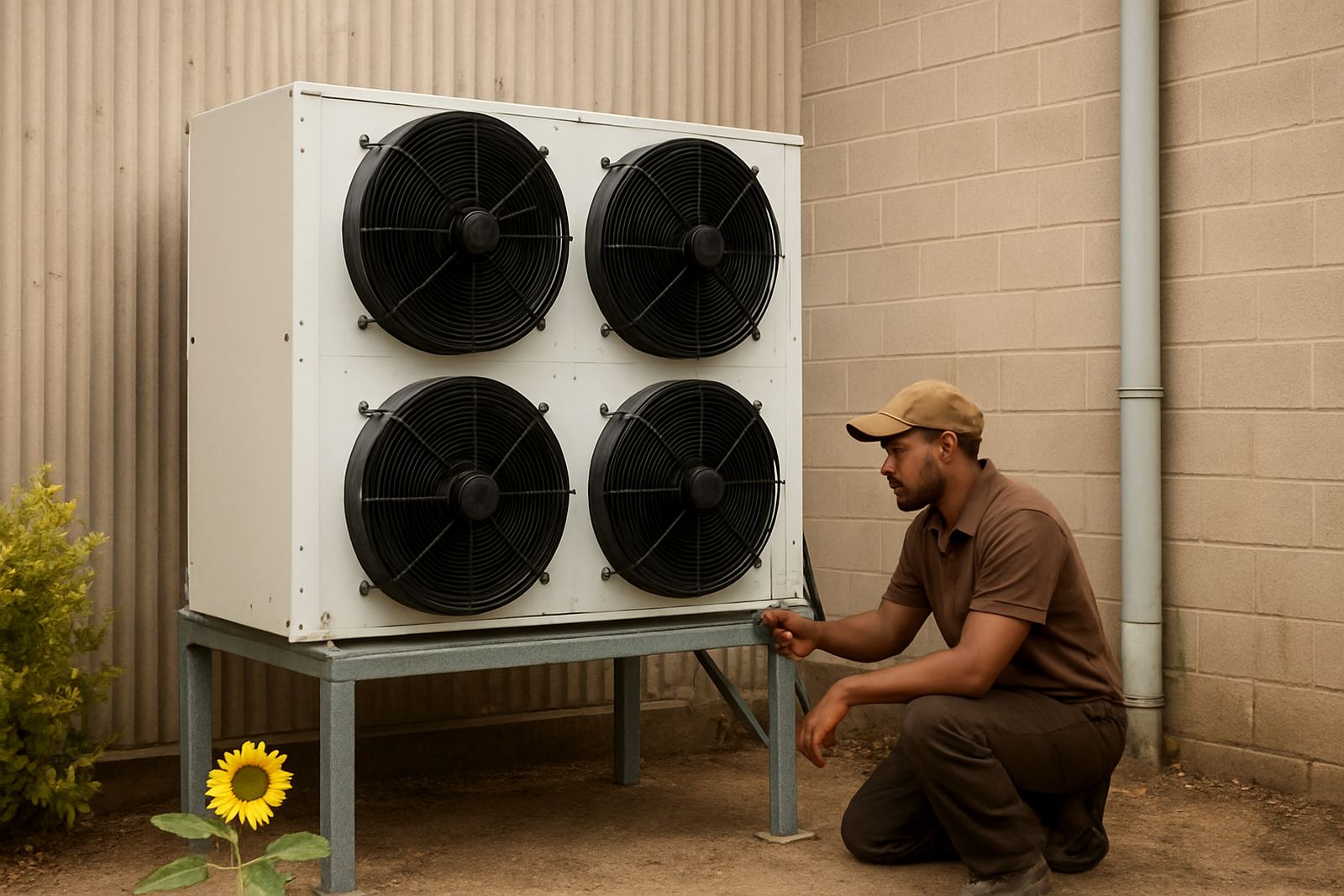
Typical options include one to six fans per section, single or multiple coil circuits, axial fans for general use, and controls that step fans up and down to match demand. Coils can be specified with coatings for coastal areas, which matters in Gqeberha, Jeffreys Bay and Port Alfred where salt air can shorten equipment life if the wrong finish is fitted.
- Airflow driven by one or more axial fans
- Aluminium fins with copper or copper-free tubing options
- Coastal coating options for improved corrosion resistance
- Single-circuit or multi-circuit coil layouts
- Matched fan speed control for lower power use
Where a dry cooler fits best
Dry coolers suit sites that need dependable heat rejection but do not want the water treatment, drift, sludge and biological control that come with wet cooling equipment. They are often used at factories, packing rooms, cold storage facilities, clinics, schools, food prep areas and light industrial premises where the plant can be placed outside with enough clear air around it.
They also make sense where loading varies through the day, because the fans can modulate and save power during lighter duty periods. On the other hand, if your process needs very low fluid temperatures in high ambient heat, a dry cooler may need oversizing or a hybrid arrangement. That is why we ask about the full load profile and not just the peak number. A unit that looks fine on paper can underperform once the wind picks up or the summer heat sits on the roof for hours.
- Best for sites with open outdoor space and good airflow
- Suitable for process plants with stable temperature bands
- Useful where water use or discharge must be kept low
- Can work with glycol loops for freeze protection
Installation, power supply and site checks
Correct installation matters as much as the equipment itself. The unit needs a sound base or roof frame, vibration isolation where required, and enough clearance so hot discharge air is not drawn back into the coil. We also check access for cleaning, fan motor replacement and crane or lift access if the unit sits above ground level.
Power needs depend on fan count and motor size. Many units run on standard three-phase supply, with control panels that bring in fan stages as temperature rises. For sites affected by load-shedding, we can factor in start-up current, generator compatibility and safe restart behaviour after an outage. A dry cooler that cycles badly after power cuts can upset the whole plant, so the controls need to be set properly from day one.
- Confirm supply voltage and phase before ordering
- Check roof or floor loading for the full filled weight
- Allow clearance for air intake, discharge and servicing
- Plan for generator or inverter interaction where needed
Care, servicing and coastal maintenance
Dry coolers work best when the coil faces stay clean and the fans stay balanced. In dusty areas around Gqeberha, Despatch and Uitenhage, fins can pack up with fine dirt, cardboard dust or grease. On the coast, salt mist can sit on the coil and hardware. Regular care keeps air moving properly and prevents the unit from drawing more power than it should.
Our planned maintenance can include coil washing, motor and bearing checks, fastener inspection, electrical tightening, control checks and fan blade condition. We also look for signs of vibration, restricted airflow and early corrosion. If a coil starts to foul, the system usually uses more electricity and the plant runs hotter than it should. Small faults are easier to sort before summer puts the whole setup under pressure, so dont leave it until the first breakdown.
- Clean coils before heavy summer loading
- Inspect for salt damage, loose terminals and fan wear
- Check control settings after electrical work or outages
- Keep surrounding plant space clear of rubbish and growth
What to check before you order one
Before you order, you need the heat duty, fluid type, temperature range and physical space. We also need to know whether the system will reject full load all day or only peak load at certain times. The more complete the information, the better the match. If one of these points is missed, the unit may still fit but it may not perform as expected under local summer conditions.
Tell us the operating hours, whether the installation is indoor or outdoor, and if there are noise limits from neighbours or municipal rules. Also share any corrosion concerns, because a site near the sea needs different material choices from a dry inland plant in Graaff-Reinet. We can work from drawings, site photos or a walkthrough at your premises in Newton Park, Port Alfred, Jeffreys Bay or elsewhere in the Eastern Cape.
- Heat load in kW or the equipment it must support
- Entering and leaving fluid temperatures
- Available footprint, access route and mounting height
- Power supply details and backup power arrangement
- Coastal exposure, dust levels and cleaning access
Key facts
| Cooling medium | Air over finned coil, with water or glycol circuit |
|---|---|
| Typical duties | Process heat rejection, chiller support, refrigeration assist |
| Fan arrangement | Single to multi-fan sections with staged control |
| Power supply | Usually three-phase, subject to unit size and controls |
| Installation location | Outdoor ground mount, roof mount or plant frame |
| Maintenance focus | Coil cleaning, fan checks, electrical inspection, corrosion control |