What Pipe Insulation Does on a Cooling System
Pipe insulation is a closed-cell protective layer fitted around chilled water lines, refrigerant suction lines and other cold pipework to slow down heat transfer. In practical terms, it helps the system hold temperature, reduces condensate forming on the outside of the pipe and gives the line a cleaner, more professional finish.
On sites around Gqeberha, Despatch and Jeffreys Bay, the right insulation matters because coastal humidity can make bare or poorly covered pipe sweat heavily. Once moisture gets into a pipe run, you start seeing rust on fittings, water marks on ceilings and extra strain on the plant as it works harder to hold setpoint.
- Reduces sweating on cold lines
- Limits heat gain through pipe runs
- Helps protect nearby ceilings, walls and cable trays
- Supports better temperature control in chilled systems
Typical Sizes, Thicknesses and Options
We supply and fit pipe insulation in a range of sizes to suit common refrigeration, HVAC and chilled water pipe diameters. The correct match depends on pipe outside diameter, operating temperature and whether the line is inside a plant room, on a roof or exposed outdoors. For colder applications, thicker wall sections are usually needed to stop sweating and limit energy loss.
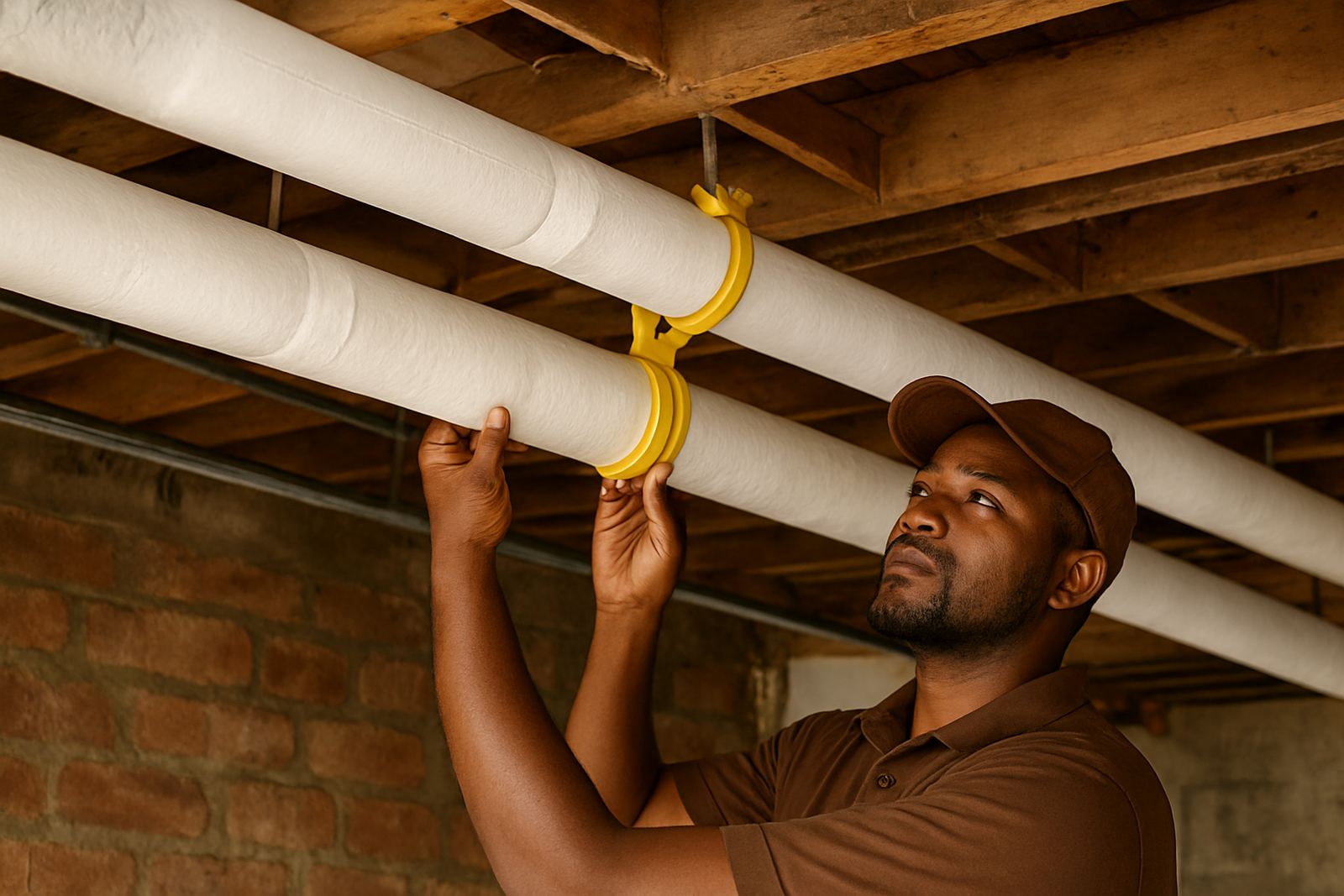
Common options include plain closed-cell tubing, slit tubing for easier retrofit work, and insulated lagging around fittings, bends and valves. Where the pipe run is exposed to sunlight or mechanical wear, a vapour-tight outer finish or protective cladding may be needed. For some industrial sites in the Eastern Cape, the installation also needs UV resistance and extra sealing at joins, especially near loading bays and external service routes.
- Pipe sizes: commonly from 10 mm up to 114 mm outside diameter
- Wall thickness: 9 mm, 13 mm, 19 mm and thicker where required
- Formats: tube, split tube, sheet wrap, valve covers and fitting kits
- Finish options: vapour-sealed tape, jacketing or protective cladding
Where Pipe Insulation Works Best
This product suits cold-room suction lines, chilled water lines, process cooling circuits, rooftop risers and plant room pipework. It is also useful on service lines running through warm ceiling voids or along exterior walls where temperature swing is high. In mixed-use buildings and factories, good insulation helps the refrigeration system keep up during load-shedding restarts and hot afternoon peaks.
Pipe insulation is often recommended where you are seeing drip trays filling too quickly, water pooling under lines or uneven temperatures between the plant and the load. It is also worth fitting where maintenance access is tight because once a line is boxed in, a small fault can become a bigger one very quickly. A clean insulation job saves time later and makes leak checks easier.
- Cold rooms and freezer rooms
- Food processing plants and packhouses
- Warehouses and retail cold chain areas
- Cooling plants in schools, offices and clinics
Installation and Power or Gas Considerations
Proper installation is about more than sliding foam over a pipe. The line must be checked for damage, cleaned and measured accurately before the insulation goes on. Joints need to be sealed tightly, because even a small gap can let humid air in and cause condensation under the outer layer. On retrofits, old wet insulation should be removed first or it will keep trapping moisture against the pipe.
Pipe insulation does not need power to work, but it supports systems that are running on compressors, pumps and control gear. If the refrigeration circuit has been converted to a low-GWP gas, the insulation should still match the operating temperatures and pressures of that system. On some installations we also check nearby valves, supports and hangers so the pipe is not crushed or left exposed at contact points. That detail matters on coastal sites where salt air can speed up corrosion.
- Measure the pipe outside diameter before ordering
- Check operating temperature and line location
- Seal all cuts, tees and elbows properly
- Allow access to gauges, valves and service points
Care, Cleaning and Ongoing Servicing
Once fitted, pipe insulation should be checked as part of planned maintenance. Look for splits, loose tape, damp patches and places where workers have removed sections for repairs and not put them back right. A damaged section can undo the benefit of the full run, so small faults should be fixed early.
In humid areas like Port Alfred and Jeffreys Bay, the outer surface should also be checked for mould, UV breakdown and salt build-up. If a line is washed down during cleaning, the insulation must dry properly and remain sealed. For cold-room and chiller sites, we often include insulation checks in the service visit so the team can pick up wear before it turns into a leak or a ceiling stain.
- Inspect every 3 to 6 months in busy plant areas
- Check for condensation after weather changes
- Replace wet or moulded sections immediately
- Keep pipe supports and clips in good condition
What to Check Before You Order
Before ordering pipe insulation, have the pipe size, line temperature, route length and site conditions ready. If the run includes bends, valves, unions or outdoor sections, those details affect the material count and the finish. You should also note whether the line carries chilled water, suction gas or another medium, because that changes the insulation thickness needed.
If you are unsure, a site measure is the safest option. We look at the existing pipework, any sweating or heat gain issues, and how the line sits in relation to load-bearing brackets, ceilings and service access. That makes it easier to specify the right closed-cell system the first time, and avoids material shortages on site. It also helps when the plant is in a busy space where shutdown time is limited.
- Pipe outside diameter and insulation length
- Operating temperature and pipe contents
- Indoor or outdoor exposure
- Need for vapour sealing, cladding or UV protection
Eastern Cape Supply and Support
Nvirocool supports pipe insulation supply and fitment from our Newton Park base in Gqeberha, with work carried out across Uitenhage, Despatch, Jeffreys Bay, Graaff-Reinet and Port Alfred. We also assist with related refrigeration work, from emergency breakdowns to cold-room maintenance, leak detection and control upgrades. That means the insulation is checked in context, not as a stand-alone item.
For busy sites, we can align insulation work with planned maintenance so there is less interruption to production. If a system is losing temperature, sweating badly or showing signs of heat gain on long runs, the pipework needs attention before the compressor and controls start carrying extra load. A properly insulated line is a practical fix, and it helps the rest of the plant do its job better.
Key facts
| Construction | Closed-cell insulation system for cold pipework |
|---|---|
| Common wall thicknesses | 9 mm, 13 mm, 19 mm and thicker where specified |
| Pipe size range | Typically 10 mm to 114 mm outside diameter |
| Application | Chilled water, refrigerant suction lines and cold-room pipe runs |
| Performance benefit | Reduces sweating, heat gain and condensation risk |
| Finish options | Split tubing, vapour sealing, valve covers and protective cladding |