What a display fridge is built to do
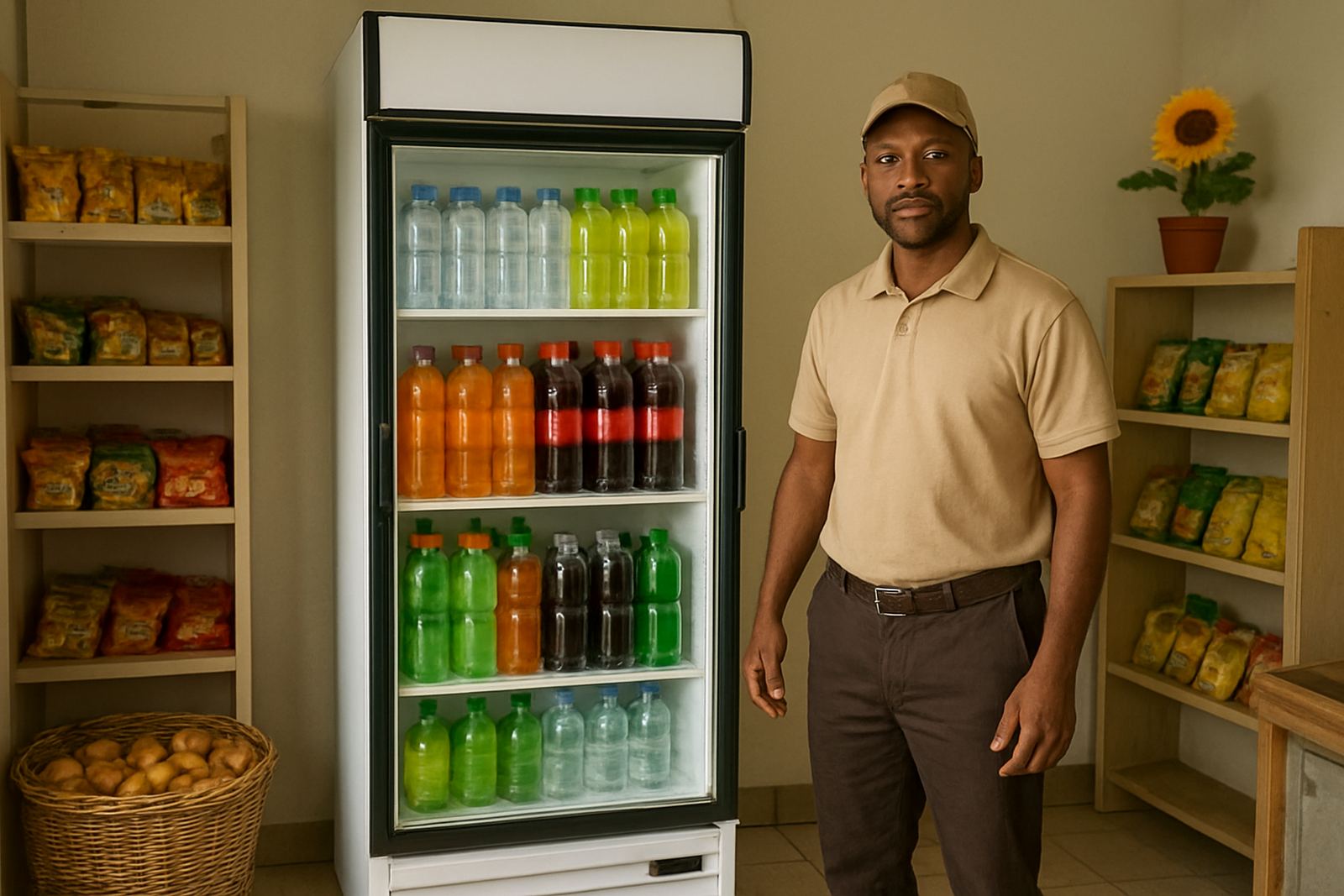
A display fridge is a chilled cabinet with a clear front or open merchandising face, made to hold temperature while showing product to customers. It is used where sales depend on visibility, easy access and steady cooling, so the unit needs more than just cold air. It must circulate air properly, hold doors shut, and recover quickly after repeated opening during trading hours.
In Eastern Cape conditions, that matters. Warm afternoons in Gqeberha, salt in the air near the coast, and load-shedding all put extra pressure on refrigeration plant. A well matched display unit helps protect stock such as drinks, dairy, pre-packed meals, salads and convenience items without wasting power through poor airflow or oversized capacity.
We work with retail clients who need units that fit a shop floor, a checkout area, or a high-traffic front-of-house space. The right choice depends on product mix, floor space, daily foot traffic and whether the fridge will stand against a wall, in an aisle, or near a service counter.
Sizes, formats and key options
Display fridges come in several formats and each one suits a different trading space. Single-door upright units are common for smaller shops and cafés, while two-door and three-door cabinets suit heavier turnover. Counter-top and under-counter versions work for till areas or small service points. Some units are open-fronted for quick grab-and-go sales, while others use glass doors to reduce cold loss and lower running costs.
Typical options include adjustable shelving, LED lighting, self-closing doors, digital controllers and forced-air cooling. Depending on the model, you may also choose a solid top for extra storage, lockable doors for after-hours security, or castors for moving the unit during cleaning and maintenance.
- Upright single-door units for smaller retail floors and cafés
- Two-door and three-door units for higher volume chilled products
- Open-front merchandisers for quick access and fast customer turnover
- Glass-door cabinets for better product visibility and reduced energy use
- Counter and under-counter fridges for compact service areas
When planning the size, allow enough space for door swing, airflow at the back and access for cleaning. A fridge that fits too tightly against a wall usually runs hotter, cycles harder, and costs more to keep cool.
Where display fridges suit best
These units suit retail spaces where the customer needs to see the product before buying. We see them used in supermarkets, convenience stores, butcheries, cafés, taverns, fuel stations, school tuck shops and hospitality counters. They also suit back-up sales areas in larger shops where chilled stock must stay in reach but still look neat.
For coastal towns like Jeffreys Bay and Port Alfred, corrosion resistance is worth checking before you order. In places where doors open all day and sea air gets inside the building, painted panels and metal fittings need proper care or they start to pit. In drier inland areas such as Graaff-Reinet, dust and stable power quality are the bigger concern, so coil cleaning and correct voltage protection become important.
The best fit also depends on the type of stock. Drinks and pre-packed items are easier to display in deep shelves. Dairy and deli products need tighter temperature control, with less fluctuation when the door opens. If the fridge is for high-frequency sales, ask about recovery time after opening and how evenly the cabinet holds temperature from top shelf to bottom shelf.
- Retail shops that need product visibility and fast turnover
- Food service counters that sell chilled items all day
- Forecourts and spaza style convenience stores
- Hospitality venues that need front-of-house cooling
Installation, power and gas considerations
A display fridge should be installed with proper clearances, level flooring and a dedicated electrical supply. Most units need a stable power point and should not share a circuit with heavy kitchen equipment. If the site has frequent outages or voltage dips, it is worth planning for changeover equipment or a protected supply so the compressor is not forced to restart under strain.
We also check airflow, room temperature and heat load from nearby ovens, windows or direct sun. A fridge standing in a hot corner or next to a glass shop front will work harder than one in a shaded internal area. That extra strain shortens component life and pushes the energy bill up.
Some older systems may need gas work, controller upgrades or a move to lower-impact refrigerants during a retrofit. We handle low-GWP conversions where the equipment is suitable, and we check whether the cabinet, seals, valves and expansion device are in good condition before any change is done. Gas work should be handled carefully and logged properly, especially where municipal inspections or landlord rules apply.
- Dedicated electrical supply with correct breaker protection
- Enough rear and side clearance for ventilation
- Level installation so doors and drainage work properly
- Room temperature kept within the unit’s design range
- Gas compatibility checked before any conversion or retrofit
Care, cleaning and planned servicing
Display fridges stay efficient only when they are cleaned and serviced on time. Dirty condenser coils are one of the main reasons a unit starts running warm. Blocked drains, worn door seals and poor airflow inside the cabinet also cause temperature drift and higher power draw. In busy shops, these issues creep in slowly and then show up as spoilage or customer complaints.
Our planned maintenance support covers coil cleaning, seal checks, temperature monitoring, controller testing and general condition reports. For sites with more than one cabinet, it makes sense to keep a service log with dates, set points and any fault trends. That helps spot a compressor that is overworking before it fails during a busy trading weekend.
If the unit is standing in a coastal environment, rust and salt residue should be dealt with early. If it is in a dusty inland area, filter and coil cleaning may need to happen more often than the manufacturer schedule says. Simple care saves more than waiting for a breakdown, and it keeps stock safe through summer peaks and power interruptions.
What to check before you place an order
Before ordering a display fridge, it helps to confirm the exact product mix, the available floor space and the temperature range you need. A drinks cabinet has different requirements from a dairy display unit, and a grab-and-go fridge needs different shelf spacing from a deli case. You should also measure doorway widths, delivery access and the final position inside the shop so the unit can be brought in without damage.
Ask for the cabinet size in metres or millimetres, shelf load limits, operating temperature range, and whether the unit is suitable for continuous trading. Check if the doors are self-closing, whether the controller is digital, and what the power requirement is at start-up. If you are replacing old equipment, compare the running cost and service history as well, because a cheaper cabinet can be expensive to keep cold.
- Exact footprint and height for the shop layout
- Required temperature range for the product being sold
- Electrical load and outlet location
- Door type, shelving layout and internal depth
- Access for delivery, positioning and future servicing
- Any site limits from landlords, malls or municipal rules
If you are unsure, we can help match the unit to the site and the stock profile before anything is ordered. That usually avoids buying a fridge that looks right on paper but does not suit the way the shop actually trades.
Local support from Newton Park to the coast
Nvirocool was founded in 2011 and works from Newton Park, Gqeberha, with support across Gqeberha, Uitenhage, Despatch, Jeffreys Bay, Graaff-Reinet and Port Alfred. Our team handles planned maintenance, emergency breakdowns, cold room repairs, chiller servicing, control upgrades and temperature monitoring for retail and food clients that depend on stable cooling.
For display fridges, this local support matters because faults often happen after trading hours or during a heat spike. If a cabinet is holding stock for sale, every hour counts. We can assess whether the problem is electrical, mechanical or related to gas charge, then advise on repair, servicing or a practical replacement plan.
You can reach us at hello@nvirocool.co.za for assistance with a new unit, an existing cabinet, or a site that needs better cooling performance without wasting power.
Key facts
| Product type | Merchandising display fridge for chilled retail stock |
|---|---|
| Common formats | Single-door, two-door, three-door, open-front and under-counter units |
| Typical temperature range | 2 C to 8 C for general chilled display, subject to product needs |
| Power supply | Usually 220 V to 240 V single phase, check unit-specific load |
| Cooling system | Forced-air cabinet with digital control on most models |
| Common options | Glass doors, LED lighting, adjustable shelves, castors, self-closing doors |