What a Water Chiller Does
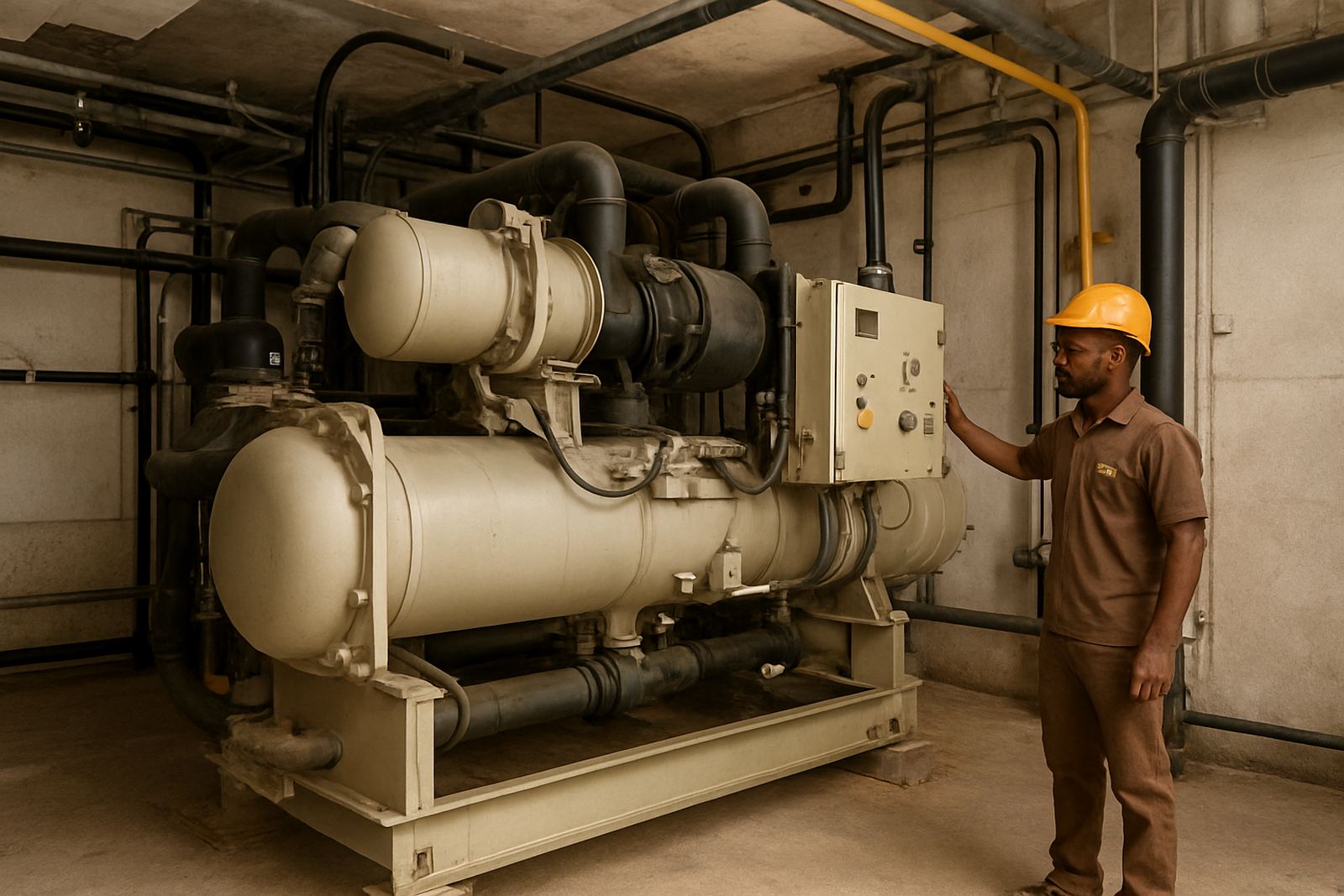
A water chiller removes heat from a water or glycol circuit and passes that heat out through an air-cooled or water-cooled condensing section. The chilled water then feeds fan coils, process equipment, moulding machines, laser systems, jacketed tanks or other plant that needs a steady temperature. For sites in Gqeberha, Uitenhage and Despatch, this is often the better choice where air temperatures rise through summer and production cannot stop for long warm-up periods.
Most units are selected by cooling capacity, flow rate and leaving water temperature. Common ranges start around 5 kW for smaller comfort or cabinet cooling duties, then move through 10 kW, 20 kW, 50 kW and higher industrial sizes. A small unit may work on a single internal loop, while larger installations can run multiple zones with their own pumps, valves and controls. The right unit keeps temperatures steady without overworking compressors or wasting power.
Typical Sizes, Options and Control Features
Water chillers are available in compact floor-standing units, split arrangements and larger packaged systems. Some are built for indoor plant rooms, while others can sit outside under cover if airflow and weather protection are handled properly. In coastal areas like Jeffreys Bay and Port Alfred, salt air and moisture must be considered from the start.
- Cooling capacity from small 5 kW units to large industrial systems above 100 kW
- Air-cooled or water-cooled condenser options, depending on site water availability and heat rejection needs
- Single circuit or dual circuit configurations for better redundancy on critical sites
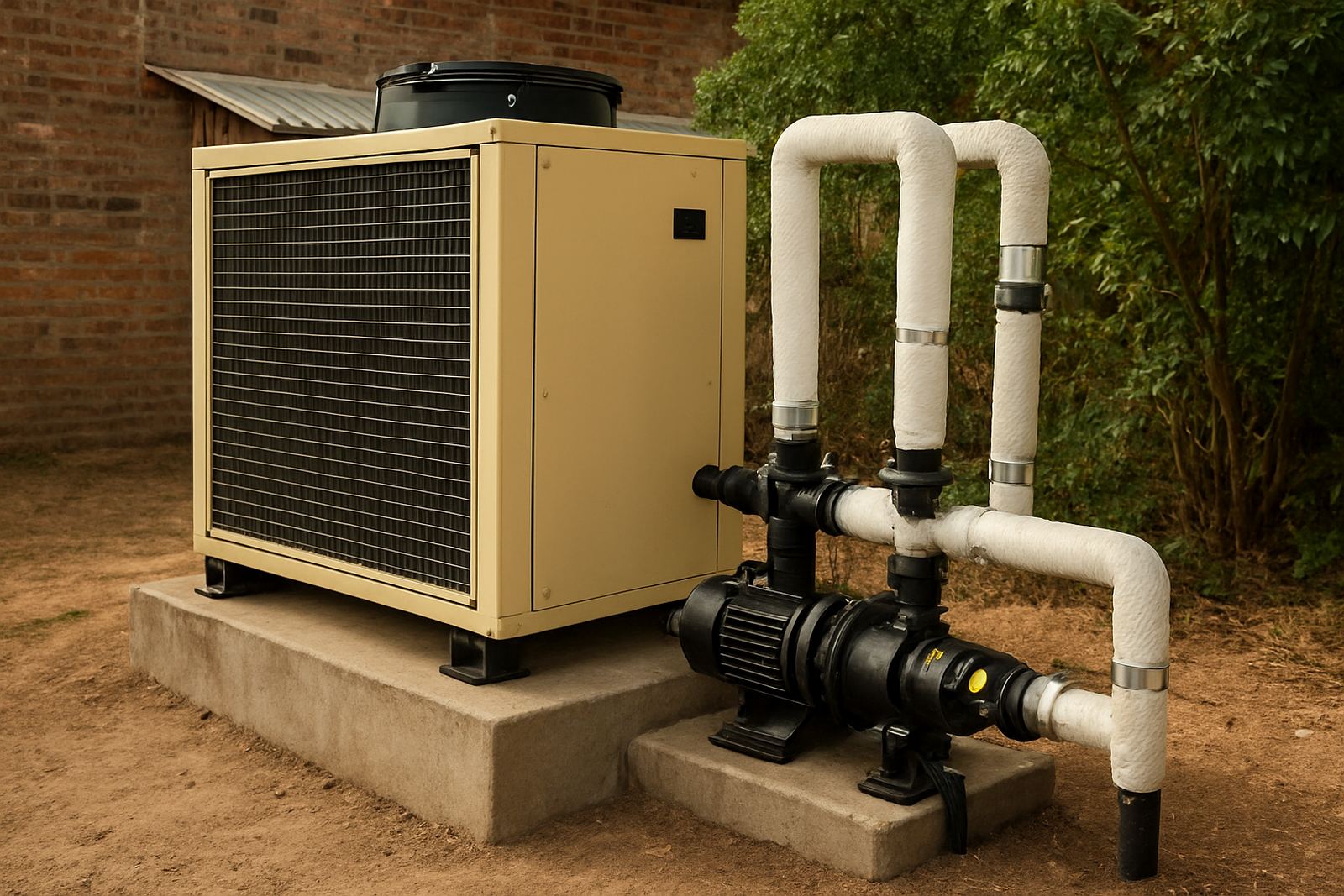
- Integrated pump sets, buffer tanks, flow switches and differential pressure controls
- Digital temperature control, fault alarms and remote monitoring options
For comfort cooling support, a chiller may feed air handlers in offices, workshops or medical spaces. For process work, the unit needs tighter temperature control, often within 1 to 2 deg C. That is where correct control settings, pump sizing and insulation on the chilled line matter a lot. A good install also allows for easy isolation, so maintenance does not shut down the whole site.
Where Water Chillers Suit Best
These units suit places where water is the practical medium for moving heat from one point to another. That includes factories, printing areas, food handling rooms, laboratories, packaging lines, retail centres and plant rooms serving comfort cooling systems. They are also useful where equipment must run at a fixed temperature even when outside weather swings between hot afternoons and cool mornings.
On industrial sites around Gqeberha and the surrounding towns, chilled water units often support machinery that gives off constant heat through long shifts. They also help where dust, oils or confined spaces make direct air cooling less effective. If the site has long pipe runs, the pipe insulation, flow balancing and pump head must all be checked before final selection.
- Machine cooling for presses, moulding, laser and packaging equipment
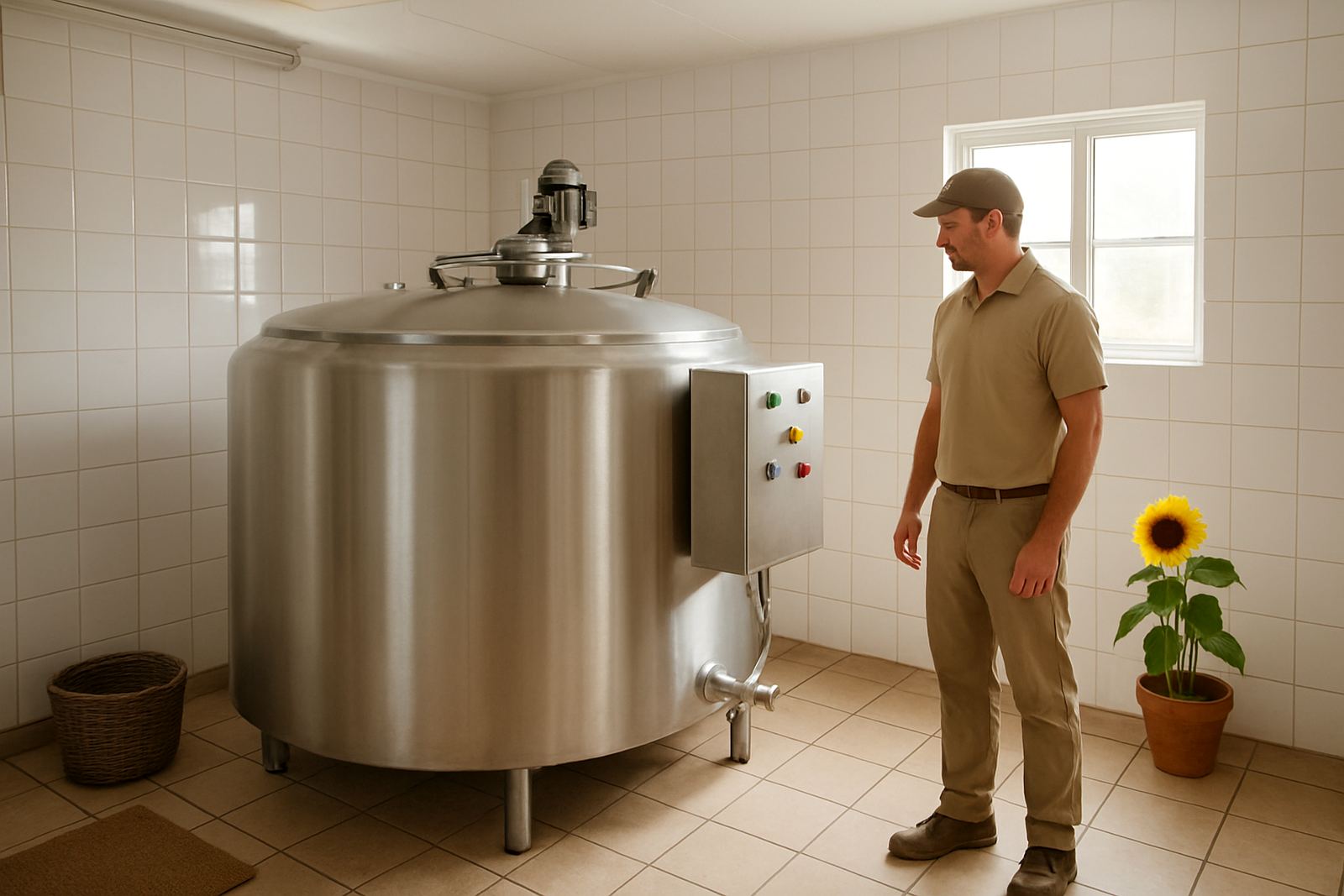
- Process cooling for tanks, baths, mixers and heat exchangers
- Comfort cooling support for offices, clinics and workshop areas
- Retrofits where older systems need lower power use and better temperature control
Installation, Power Supply and Refrigerant Considerations
Installation starts with load calculation, water flow checks and a look at the available electrical supply. Some chillers need a standard 230 V single phase supply, while others require 400 V three phase power for larger motors and compressors. The supply must be matched to the starting current, breaker size and cable capacity, especially on sites that already struggle when municipal power dips or load-shedding starts.
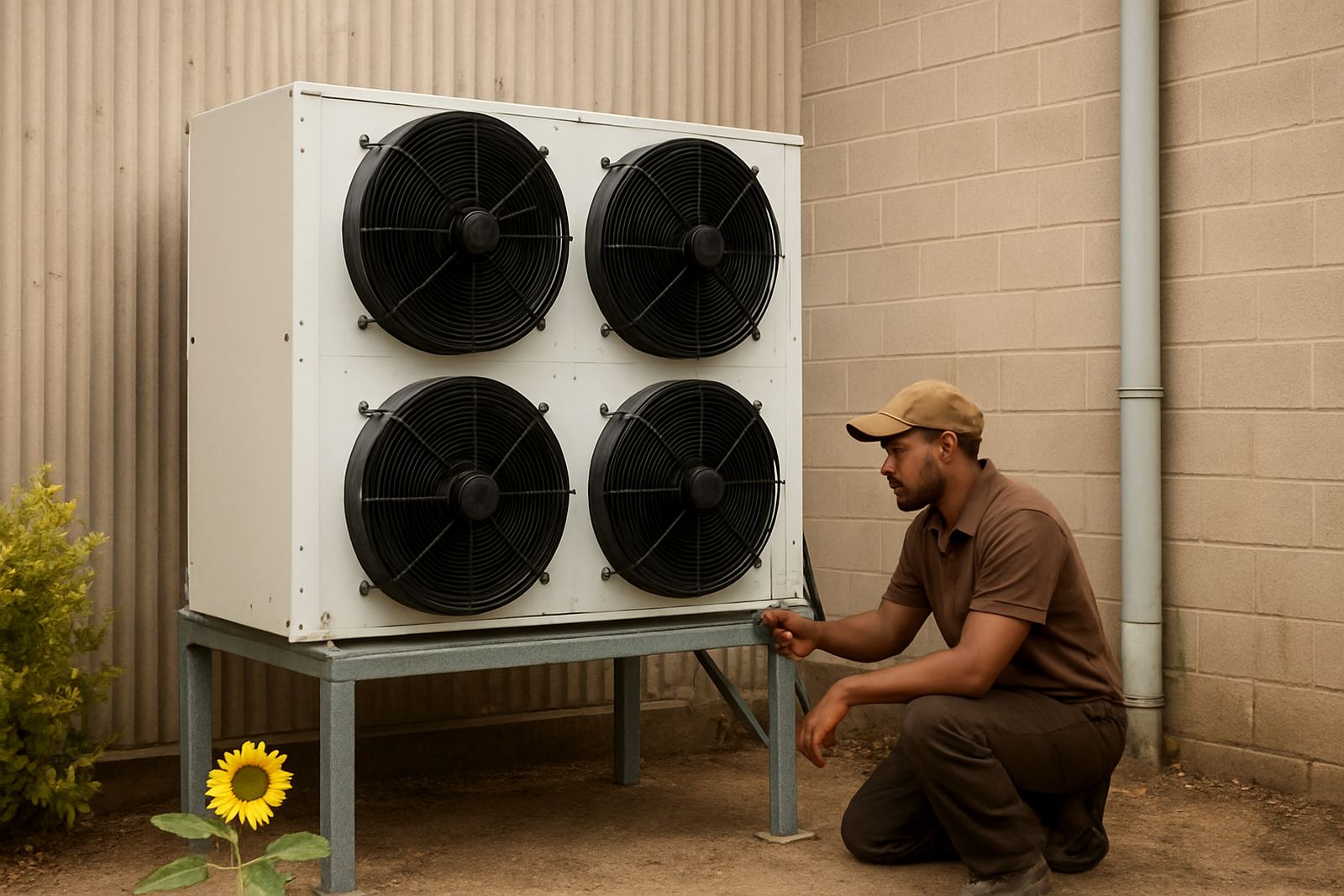
Air-cooled units need clear airflow around the condenser section, and they should not be boxed in by walls, pallets or stored material. Water-cooled systems need stable water quality, correct condenser protection and a reliable make-up arrangement. The refrigerant circuit itself depends on the model and capacity, but the main point is that charge size, pipe length and service access must be planned properly. Rigid pipework, vibration isolation and correct insulation all help prevent loss and premature wear.
For outdoor or coastal installations, corrosion protection is not optional. Fasteners, supports and exposed pipe sections should be chosen with humidity and salt exposure in mind. If a unit is being added to an older plant room, the installers also need to confirm drainage, service clearance and safe lifting access before work starts.
Care, Cleaning and Planned Servicing
A chiller that runs every day needs regular attention, not just emergency repairs after a trip or leak. Dirty coils raise head pressure, reduce output and push up electricity use. Low water flow, blocked strainers and air in the system can also cause unstable temperatures. In many cases the problem starts small, then becomes a breakdown once the unit has worked through a heat wave or a power interruption.
Planned servicing usually includes the following:
- Coil cleaning and fan inspection
- Leak detection on refrigerant and water circuits
- Filter cleaning, strainer checks and pump review
- Controller checks, alarm testing and sensor calibration
- Temperature monitoring and trend review
For sites in Graaff-Reinet or further inland where dust can build up quickly, cleaning intervals may need to be shorter than on a controlled indoor site. On coastal sites, corrosion and electrical connection checks matter just as much as refrigerant condition. Good records help too, because repeated faults often point to a flow issue, a dirty heat exchanger or a control setting that is fighting the plant rather than helping it.
What to Check Before Ordering
Before selecting a unit, gather the basic site details so the chiller is sized for the real duty, not a guess. The wrong size can short cycle, freeze water lines or fail to pull down temperature when production peaks. The right size supports the load without wasting power or creating unnecessary wear.
- Required cooling capacity in kW or tonnes of refrigeration
- Leaving and return water temperatures
- Required flow rate in litres per second or litres per minute
- Power supply available on site, including phase and breaker size
- Whether the unit will be indoors, outdoors or in a coastal environment
- Need for glycol, buffer tank, pump set or remote monitoring
It also helps to know what the chiller is serving, because process equipment can need tighter control than a comfort cooling loop. If the application must keep running during power interruptions, ask about backup power planning, staged restart and alarm contacts. A well matched unit gives easier starts, fewer callouts and better control through the year.
Nvirocool Support Across the Eastern Cape
Nvirocool services water chillers from our Newton Park base in Gqeberha, with support in Uitenhage, Despatch, Jeffreys Bay, Graaff-Reinet and Port Alfred. Our work includes planned maintenance, emergency breakdowns, control upgrades, leak detection, energy audits and temperature monitoring for chilled systems that need reliable day to day performance.
Whether a site needs a new chiller selection, a retrofit on an older unit or help tracing a recurring fault, the aim is to keep the water circuit stable and the power draw sensible. For many businesses, that means fewer shutdowns, less product risk and a cooler plant room through the hottest months.
For ordering advice or a site check, email hello@nvirocool.co.za with the duty, temperatures, space available and power supply. A proper spec sheet saves time and avoids buying a unit that is too small for the load.
Key facts
| Cooling capacity | From 5 kW up to 100 kW plus, depending on application |
|---|---|
| Supply voltage | 230 V single phase or 400 V three phase, model dependent |
| Temperature control | Typical setpoint range 2 deg C to 20 deg C |
| Refrigerant circuit | Air-cooled or water-cooled, with matched expansion and protection controls |
| Water circuit | Pump set, flow switch, strainers and optional buffer tank |
| Application | Machine cooling, comfort support and industrial process cooling |