What a pump skid does in a chilled water system
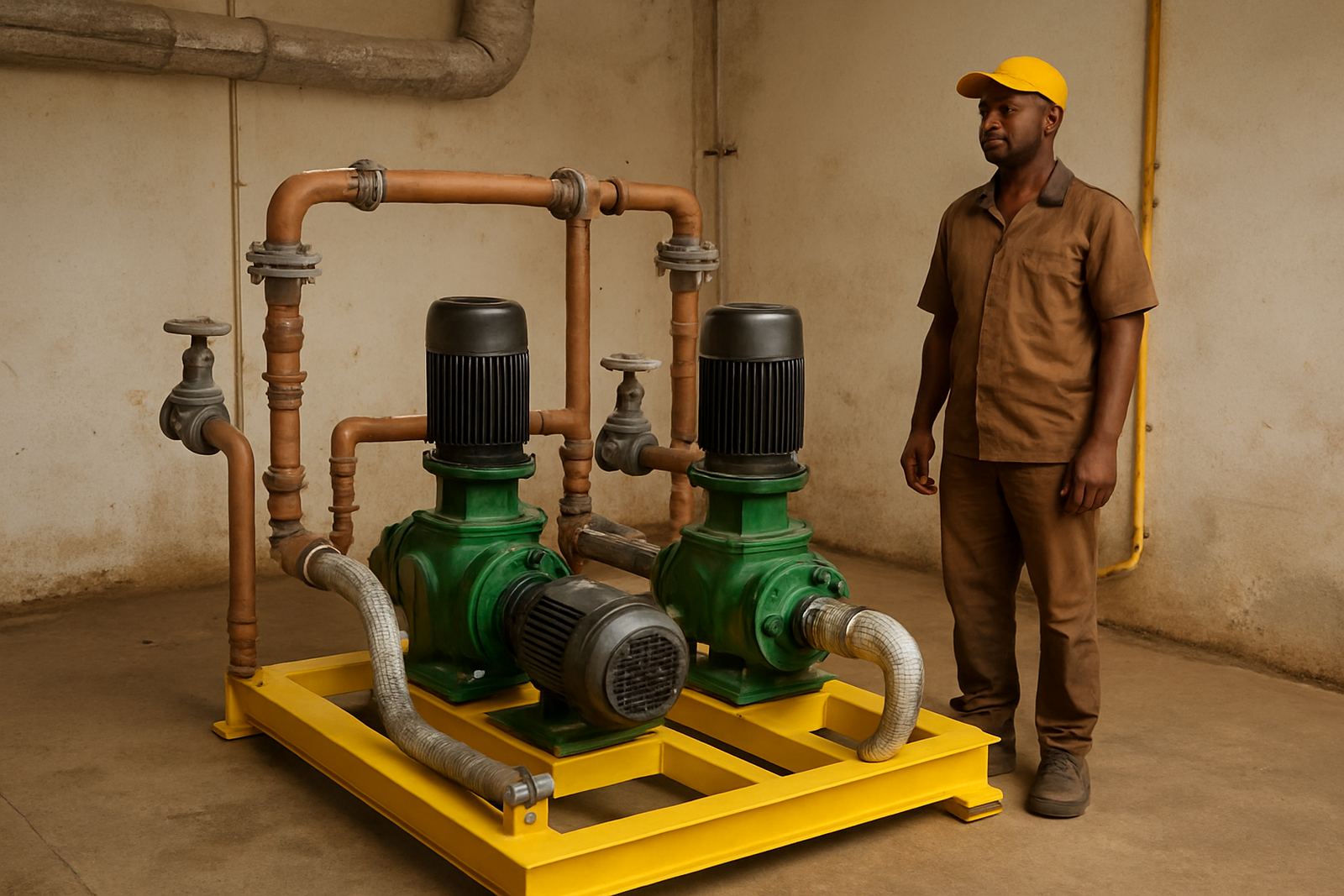
A pump skid is a preassembled pumping set on a steel base with the pumps, valves, strainers, gauges, isolation fittings and control panel arranged as one unit. It is used to move chilled water or glycol through coils, air handling units, plate heat exchangers, cold rooms and process equipment at a controlled flow rate.
For many sites, the main advantage is consistency. The pipework is laid out properly, the pumps are matched to the duty, and the installer does not have to build every detail on site under pressure. That matters in plant rooms where space is tight and downtime costs money. It also helps during load shedding because the skid can be planned around generator supply, soft starters or variable speed drives, depending on the site.
In the Eastern Cape, we often see pump skids used where corrosion, vibration and uneven flow have been causing repeat faults. A properly selected skid gives a cleaner install and makes fault-finding much easier when a site is running at odd hours or under heavy summer demand.
Sizes, pump duty and control options
Pump skids are supplied in different flow and head ranges, depending on the cooling load and the length of the pipe run. We can specify single-pump or twin-pump sets, including duty and standby arrangements where continuous operation is needed. The frame size, motor rating and pipe connection sizes are matched to the system rather than forced to fit one fixed pattern.
Common options include fixed-speed pumps, variable speed drives for energy control, pressure sensors, flow switches and control panels with local indication. Where glycol is used, materials and seal selection must suit the fluid mix and operating temperature. For coastal sites in Gqeberha, Port Alfred or Jeffreys Bay, we also pay attention to corrosion resistance on base frames, fittings and electrical enclosures.
- Typical motor sizes: 0.75 kW to 22 kW, depending on duty
- Pipe sizes: 25 mm to 150 mm, with larger sets on request
- Working fluid: chilled water or water glycol blends
- Mounting: skid base for floor mounting, with anti vibration feet where needed
- Controls: manual start, auto lead lag, BMS input or variable speed control
Where pump skids suit best
Pump skids suit cold stores, food preparation areas, abattoir support systems, commercial buildings, medical and laboratory cooling circuits, and industrial process plants. They are also useful where a client wants a neater plant room layout and faster future servicing. A skid can be lifted into position, connected and commissioned without a lot of loose components scattered around the site.
We often recommend them where there is limited access, such as older buildings in Uitenhage or Despatch, and on sites where service teams need clear isolation points. They also work well for temporary or phased upgrades, because the skid can be added while the rest of the plant stays in service. For municipal and commercial sites, neat pipework and proper isolation valves make it easier to comply with maintenance planning and inspection routines.
When a system has long pipe runs, variable occupancy or changing process loads, a skid with the correct controls can help keep temperatures steadier. That reduces short cycling on the refrigeration plant and can lower electricity use over time.
Installation and site requirements
A pump skid still needs correct installation, even if it arrives preassembled. The base must sit level on a sound slab or plinth, with enough clearance for motor removal, strainer cleaning and valve access. Power supply must match the motor and control panel, and cable routes should be protected from water, vibration and accidental impact.
If the skid includes a variable speed drive or controller, the supply should be checked for voltage stability and proper earthing. On sites that run from generator backup, the starting load and running current must be confirmed before handover. We also check whether the chilled water or glycol circuit needs flushing, venting and pressure testing before the pump set is put into service.
- Confirm the duty point before ordering, not after delivery
- Allow floor space for maintenance and pipe expansion joints
- Plan for drain points, air vents and pressure gauges
- Check power supply, phase balance and backup generator capacity
- Use insulation on cold pipe sections to limit sweating and moisture damage
Care, servicing and common faults
Like any mechanical plant, pump skids need planned maintenance. Bearings, seals, strainers, gauges, electrical terminations and control settings should be checked on a regular cycle. In coastal air, rust on fasteners and panel fixings can start quickly if the equipment is left unprotected. In busy plant rooms, leaks and air ingress are common causes of poor circulation and higher power use.
Our maintenance work normally includes leak checks, vibration checks, strainers cleaning, seal inspection, control testing and verification of setpoints. Where a site has recurring problems, we may recommend a control upgrade, better temperature monitoring or a piping correction. A small issue on a skid can turn into a cold room or chiller fault if it is left too long, so early attention saves time and money.
We also look at the condition of insulation, because condensation around cold-water pipework can damage flooring and nearby electrical gear. In some cases a simple service call and adjustment solves the issue, in others the pump duty has been wrong from the start and the system needs rebalancing.
What to check before you order
To quote and build the right pump skid, we need the system duty and the site details. That includes flow rate, total head, fluid type, operating temperature, pipe connection size and available power. We also need to know whether the skid is for chilled water, glycol or a mixed application, because that affects pump selection and materials.
Please have the following ready if you can:
- Required flow rate in litres per second or m3/h
- Total head or pipe run details, including elevation changes
- Supply voltage, phase and available breaker size
- Fluid type and glycol percentage if used
- Connection sizes and preferred pipe orientation
- Space available for the skid, including access for service work
If any of this is uncertain, Nvirocool can assist from a site visit or from the existing plant data. We work with clients across Gqeberha, Graaff-Reinet, Port Alfred and surrounding areas, and we know many systems have been modified over the years. A proper check up front avoids the common mistake of ordering a unit that is too small, too large, or awkward to fit.
Why clients choose a skid-built approach
A skid-built pump set reduces site assembly time, keeps the pipe layout neater and gives you a known maintenance arrangement from day one. It is also easier to support as part of a planned maintenance programme because the service points are clear and the controls are all in one place. For sites that run through peak summer loads and occasional power interruptions, that predictability is worth a lot.
Nvirocool has supported refrigeration and cooling systems since 2011 from our Newton Park base in Gqeberha, and we back that up with service support across the Eastern Cape. If your project needs a new pump skid, a retrofit on an older chilled water loop, or help matching a pump set to the rest of the plant, we can assist with the specification and the on-site setup.
We keep the advice practical. If a smaller pump will do the job better, we will say so. If the system needs better controls rather than more motor power, we will say that too.
Key facts
| Product type | Preassembled circulation pump skid |
|---|---|
| Typical fluids | Chilled water and water glycol blends |
| Pipe sizes | 25 mm to 150 mm standard, larger on request |
| Motor range | 0.75 kW to 22 kW typical |
| Control options | Fixed speed, variable speed, lead lag, BMS interface |
| Finish | Steel skid base with corrosion aware fittings and enclosure options |