What cooling tank coils do in day to day plant work
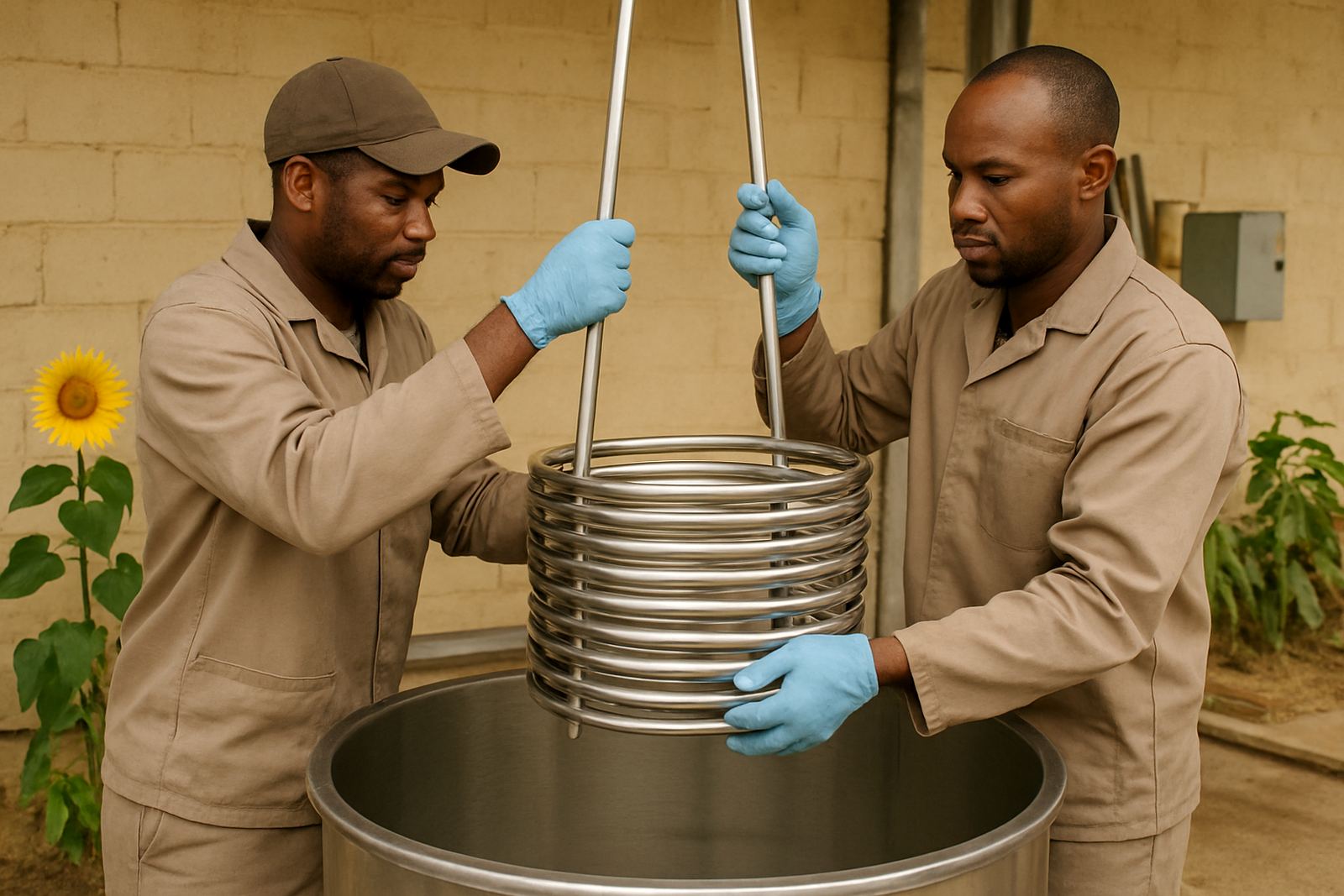
A cooling tank coil is a heat exchange assembly fitted inside or around a tank so that heat is pulled out of the contents in a controlled way. The coil may carry chilled water, glycol, brine, or another approved coolant depending on the duty and product. In practice, that means steadier temperatures, less product stress and better repeatability from batch to batch.
These coils are common in food and beverage plants, dairies, small process rooms, chemical blending areas and general industrial cooling. They suit tanks where direct chillers would be too harsh, or where the tank shape and liquid level change through the day. In coastal areas like Gqeberha, the right material choice matters too, because salt air and humidity can shorten coil life if the wrong finish is used.
We see them used on product tanks, brine vessels, holding tanks and special process vessels where temperature must stay within a narrow band. If the duty is critical, the coil is often paired with temperature monitoring and control upgrades so operators can see what is happening before product goes out of spec.
Materials, sizes and coil layouts available
Cooling tank coils are not one size fits all. The size depends on tank volume, liquid type, target temperature, agitation and how fast the load changes. A small 500 litre holding tank may only need a compact coil pack, while a process vessel running long shifts may need a larger multi-pass layout with more surface area.
Typical options include straight tube coils, helical coils, removable coil bundles and jacket-style assemblies for fitted tanks. Tube diameters are commonly selected in the 12 mm to 28 mm range, with custom bends and supports to suit the tank dimensions. Coil surface area is matched to duty rather than guesswork, because an undersized coil will chase temperature all day and waste energy.
- Materials: copper, stainless steel or coated tubing, depending on product and cleaning method
- Typical working pressures: low to medium pressure systems, sized to the pump and controls
- Connection sizes: commonly 15 mm, 22 mm, 28 mm and custom flanged ends
- Finishes: corrosion resistant options for humid or coastal sites
For brine and aggressive washdown areas, stainless steel is usually the safer choice. For some clean process duties copper can still be suitable, but only where the product and cleaning regime allow it. We always check compatibility first, because the cheapest option can cost more later.
Where cooling tank coils fit best
These coils suit sites that need stable cooling without a large capital spend on a full plant redesign. They are often fitted where the tank already exists and the owner wants better temperature control, lower power use or more reliable production. In Eastern Cape conditions, they also help where load-shedding has forced teams to shorten production windows and get more done while power is available.
Common applications include dairy holding tanks, beverage blending tanks, product chillers, brine vessels for indirect cooling, pharmaceutical or laboratory process vessels, and general factory process tanks. They can also be useful where municipal water use must be kept down, because a coil system can reduce the need for once-through cooling. On some sites the aim is not maximum speed, but steady cooling over a longer cycle that protects the product.
- Good for batch processes where the same tank is filled and emptied through the day
- Useful in small plants where floor space is tight and external equipment has to stay compact
- Practical for sites that need a simple maintenance plan with fewer moving parts
- Suitable for cold rooms or plant rooms that need linked temperature control on shared systems
We often recommend a site check in Gqeberha, Uitenhage, Despatch, Jeffreys Bay, Port Alfred or Graaff-Reinet before any coil is ordered. Tank shape, pipe routing and access for cleaning all change the final setup.
Installation, control and power supply needs
Installation starts with measuring the tank, confirming the product duty and working out the heat load. Then we check where the coil will enter, how it will be supported and whether the tank needs extra access ports or brackets. If the vessel is already in service, we plan the work to reduce downtime and avoid contamination.
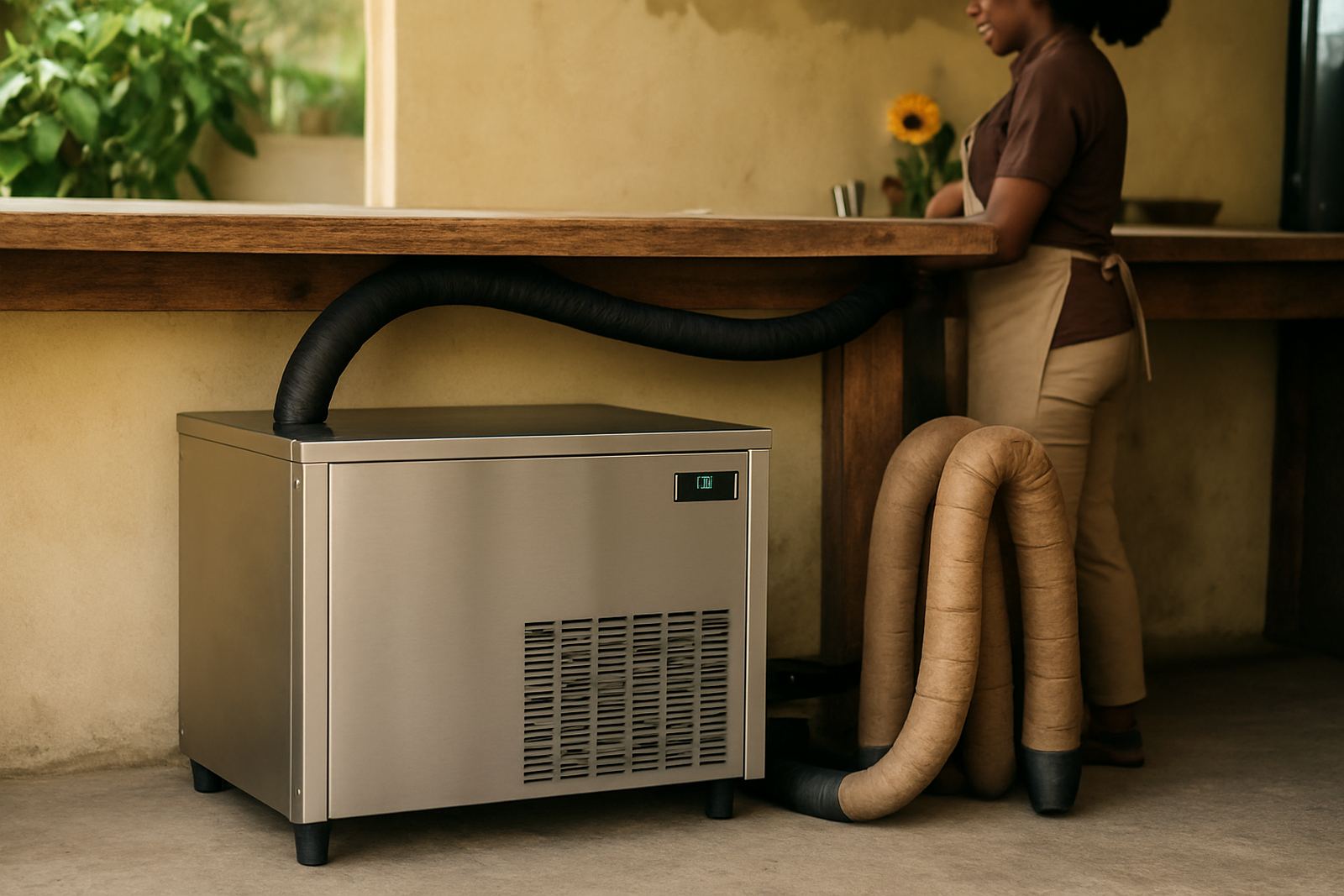
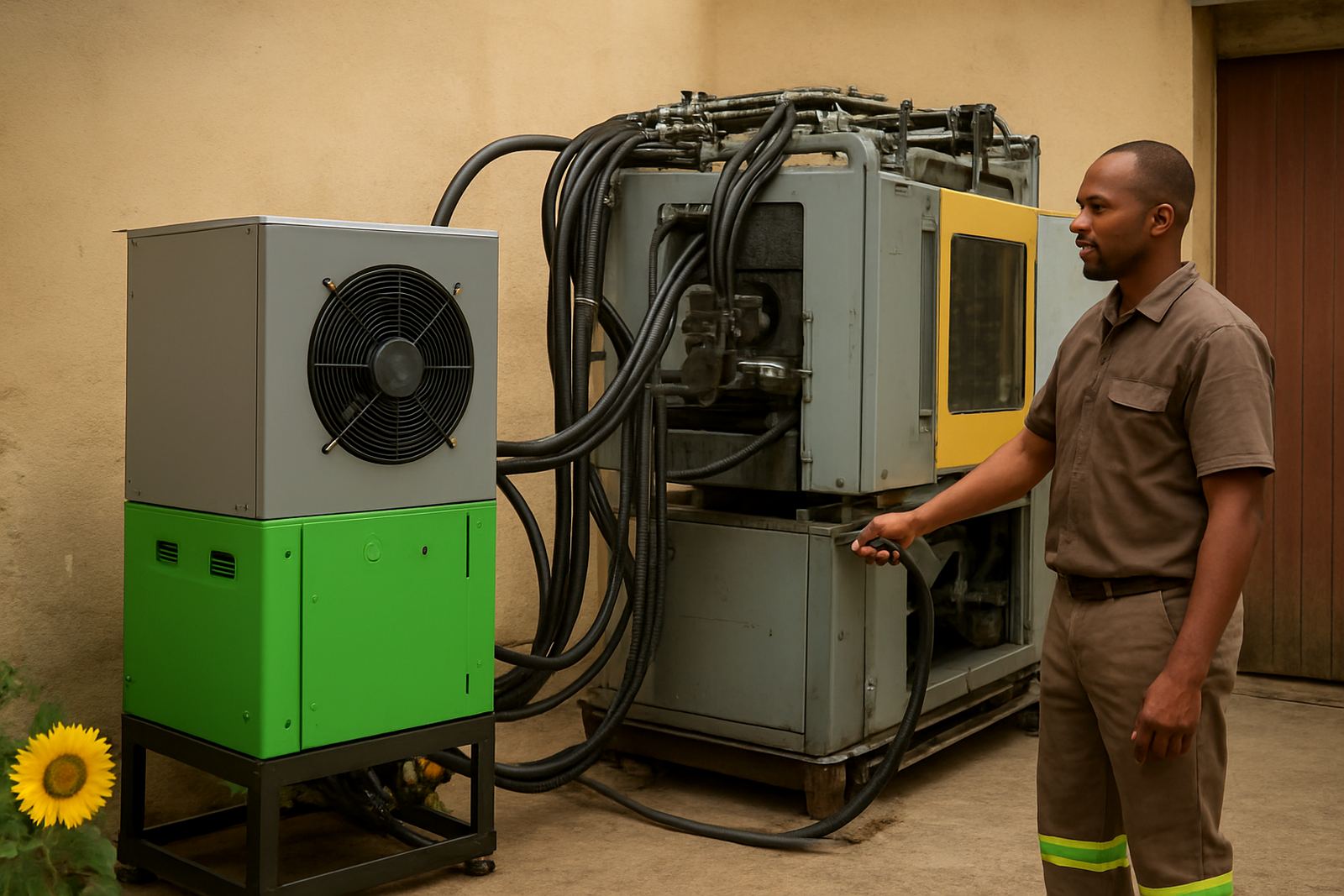
The cooling circuit may be linked to a chiller, ice bank, glycol loop or brine system depending on the process. Some systems need a small circulation pump and basic thermostat control, while others need a more precise sensor setup with alarms and temperature logging. For loads that are sensitive to power interruptions, we can also look at restart behaviour after load-shedding so the tank does not drift too far out of range.
Electrical needs are usually modest compared with a full mechanical refrigeration plant, but the controls still need proper protection. Supply quality, phase balance and breaker sizing must be checked. On coastal sites or older factories, we also look for corrosion on terminals and weak cable glands, because those are common failure points.
When a coil is fitted to an existing process, we make sure operators know the correct start-up and shut-down order. A good coil can still underperform if valves are left partly closed, pumps are air locked, or the return line is too small. Those little faults add up fast.
Care, cleaning and service intervals that keep the coil working
Cooling tank coils need regular care if they are to hold performance through long shifts. Scale, product residue and poor water treatment can reduce heat transfer and push energy use up. In some plants the coil looks fine from outside, but the inside is already restricted and the cooling cycle is getting slower month by month.
Our planned maintenance checks usually include pressure testing, leak detection, surface inspection, control checks and flow verification. We also look at the condition of supports, clamps and insulation. If the system uses a chilled water or glycol loop, fluid quality should be checked as well, because dirty fluid can block strainers and wear pumps.
- Clean product residue before it hardens on the coil surface
- Check for pinhole leaks, vibration wear and loose pipe supports
- Inspect pump strainers and valves on the return line
- Confirm temperature sensors are reading correctly after cleaning or shutdown
For plants close to the coast, a light external corrosion check is worth doing every month. In towns inland like Graaff-Reinet, dust build-up and dry air can be the bigger issue. Either way, a coil that gets a proper service lasts longer and keeps the process steadier.
What to check before you order a coil assembly
Before ordering, we need the tank dimensions, the product being cooled, the target start and finish temperature, and the time allowed for pull-down. If you already have a process sheet, that helps a lot. If not, we can work from site measurements and operating notes. Please include whether the tank is open or closed, fixed or portable, and whether the contents are cleaned in place or manually.
It is also important to know what the cooling source will be. A coil used with chilled water has different requirements from one connected to glycol or brine. We need to know the available pipe size, pump duty, power supply and control method so the assembly can be matched properly. If the site has limited access, say so early, because some coils are easier to fit before the tank is moved into position.
- Tank volume and internal dimensions
- Product type, viscosity and cleaning method
- Target temperature and cooling time
- Available coolant, pipe sizes and pump details
- Installation space, access points and support method
- Any corrosion, hygiene or municipal compliance limits on site
If you are unsure, send photos, a sketch and the old coil details if there is one. We can usually tell quickly whether a replacement coil, a modified layout or a full control upgrade is the better route.
Key facts
| Product type | Cooling tank coil assemblies for process and product tanks |
|---|---|
| Typical applications | Brine vessels, holding tanks, batch tanks and specialist cooling duties |
| Material options | Copper, stainless steel, coated tube and custom mixed layouts |
| Common sizes | Custom built to tank size, with tube diameters from 12 mm to 28 mm |
| Operating range | Matched to chilled water, glycol or brine systems by duty |
| Service area | Gqeberha, Uitenhage, Despatch, Jeffreys Bay, Graaff-Reinet and Port Alfred |