Insulated doors for daily traffic and tight temperatures
Cold room doors do one simple job, but they do it in hard working spaces where trolleys move, staff come and go, and the room must stay within spec. A good door keeps cooled air in, warm air and moisture out, and helps the refrigeration plant use less power. That matters in Gqeberha where humidity can load the room quickly, and it matters just as much during load-shedding when every minute of holdover counts.
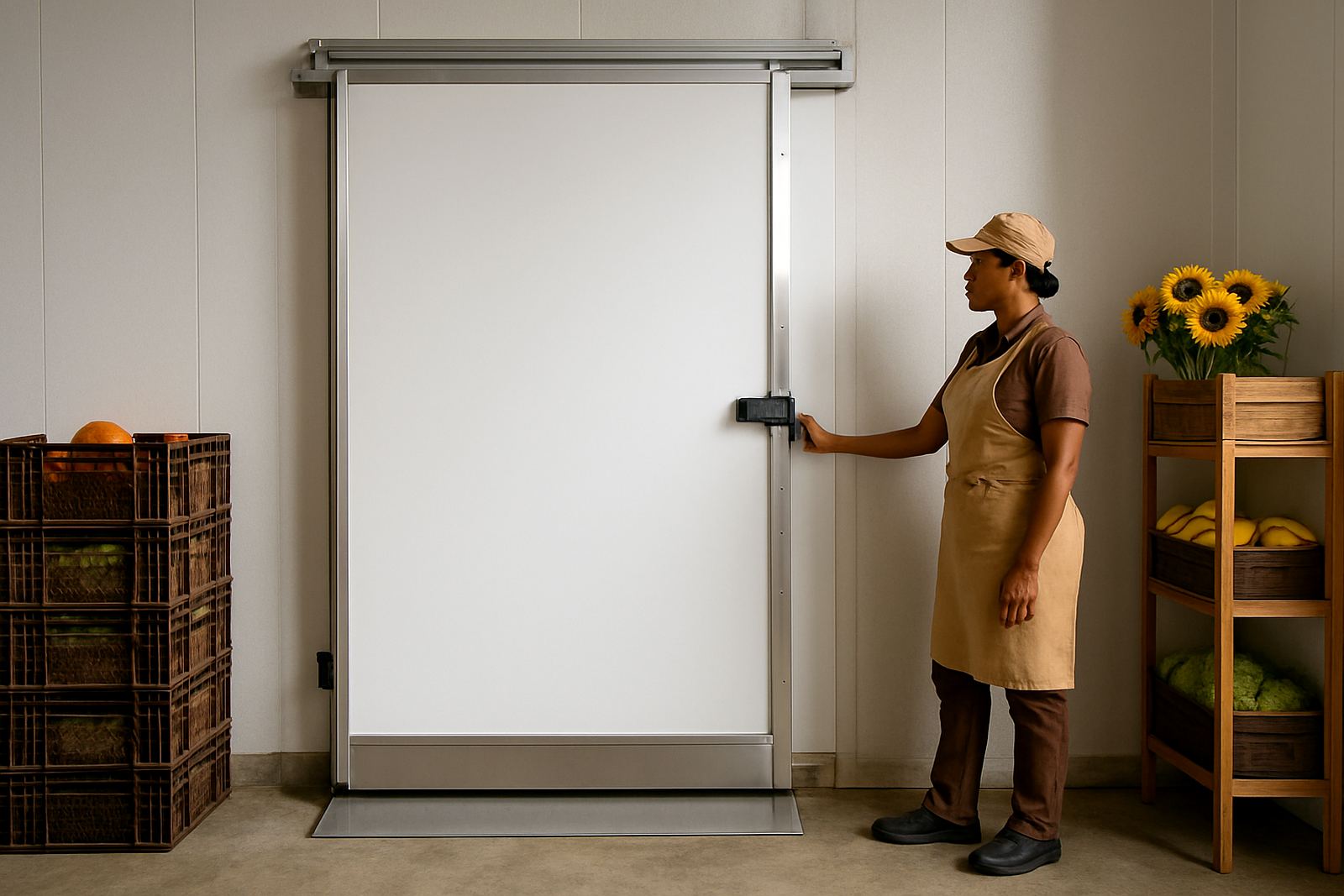
We supply hinged and sliding insulated doors for chill rooms and freezer rooms. Hinged doors suit smaller openings and quick hand access, while sliding doors work better where fork trucks, pallet jacks or frequent deliveries need a wider clear opening. Both types can be made for new rooms or supplied as replacements when an old door is bent, sweating or failing to seal properly.
Typical panel and leaf construction is a polyurethane insulated core with metal skins, high-compression seals and a suitable frame to match the room wall. Door choice depends on the room temperature, how often it opens, and whether the space is in a dry inland area like Graaff-Reinet or a salty coastal site like Jeffreys Bay. A freezer door needs tighter sealing and often a heated frame or threshold detail so ice does not build up on the sill.
Sizes, opening styles and hardware options
We measure up on site or work from your drawings, then match the door to the opening and traffic pattern. Standard sizes are common, but many facilities need a custom height or width to suit racks, counters or pallet flow. If the doorway is too small, people bash the edges and the seal fails early. If it is too large, you lose room volume and spend extra on cooling.
- Hinged single leaf doors for small chill rooms, mortuaries, prep areas and pack rooms
- Sliding doors for dispatch areas, larger freezer rooms and sites with higher traffic
- Manual or assisted closing hardware for easier operation on busy shifts
- Vision panels where staff need a quick view before opening
- Kick plates, push bars, hold-open latches and safety release handles
- Heated frame or anti-frost details for freezer applications
We can also advise on left-hand or right-hand handing, inward or outward swing, and the clearance needed for racking, hinges and wall returns. On some sites the main issue is not the door itself but poor floor levels or a rough threshold, so the opening needs to be corrected before the new leaf goes in. That saves a lot of frustration later.
Where cold room doors suit best
These doors are used in butcheries, food processing, bakeries, restaurants, fisheries, flower storage, bottle stores, pharmaceutical stores and wholesale distribution sites. They also work well in agricultural packing rooms, dairy depots and temperature-controlled stores at ports or transport yards. In the Eastern Cape, we often see doors needing replacement after years of hard use in facilities that open and close through most of the day.
Cold room doors suit any space where temperature loss, condensation or hygiene is a concern. A door that does not close squarely can cause iced-up floors, water pooling near the threshold, and higher compressor run time. That adds cost and creates slips, which is not great in a food area. For rooms in exposed coastal positions, we also look at corrosion risk on hinges, locks and guides, because salty air will attack cheap hardware sooner than you expect.
For Gqeberha, Uitenhage and Despatch clients, we often recommend a practical hardware set that can be serviced locally and kept in stock. There is no point fitting a clever door if replacement rollers, seals or latches are impossible to get when the room is standing open. Port Alfred and Jeffreys Bay sites also benefit from stronger seals and regular check-ups because humidity changes through the year can alter how the leaf sits in the frame.
Installation, power needs and room compatibility
Most cold room doors do not need their own electrical supply, but some freezer doors may need heated components, anti-condensation features or controls linked to the room system. If a door is heated, it must be wired properly and protected correctly. That work should be done with the refrigeration layout in mind so the door does not fight the plant by letting in excess heat or moisture.
We check the wall opening, floor finish, ceiling line and adjacent equipment before fitting. A good installation needs a level base, straight jambs and enough clear space for the door to open fully. On sliding units, track alignment and floor guidance matter as much as the leaf itself. On hinged units, the frame must be anchored well or the door will go out of square after a few hard knocks.
- Check room voltage supply before ordering heated seals or accessories
- Allow for clear opening width, not just the leaf size
- Confirm swing direction and traffic path before fabrication
- Make sure floor finishes are complete where the threshold will sit
- Plan for forklift and trolley clearance on the approach side
For new builds or upgrades, we can coordinate with the refrigeration technician and building team so the opening, plant capacity and door spec all line up. This saves repeat visits and helps avoid a door being fitted first, then cut around later which is never ideal.
Care, servicing and common wear points
Cold room doors last longer if they are cleaned, checked and adjusted before small faults become big ones. The most common wear points are hinges, rollers, seals, latches, locksets and the threshold area. If staff have to shoulder the door shut, it usually means the seal is damaged, the frame has moved, or something is catching on the floor.
Our planned maintenance support covers door inspections as part of the wider cold room visit. We look for tears in gaskets, ice build-up, loose fixings, corrosion on metal parts and signs that the room is sweating around the opening. Where needed, we can replace worn components, re-align the leaf and clean out dirt that stops the door closing properly. It is a practical job, not a glamour one, but it keeps the room running.
For freezer rooms, regular attention is even more important. If the door is opening against frost or the closer is weak, warm air gets in and freezes on the inside. That leads to thicker ice, harder openings and extra strain on the plant. A small hinge adjustment or seal change can prevent a bigger breakdown later, and yes, it often saves a fair bit of power too.
What to check before you place an order
Before ordering a cold room door, work through the details below. If you can send photos, rough measurements and the room temperature range, we can usually narrow it down quickly and avoid wrong parts.
- Opening width and height in millimetres
- Chill room or freezer room temperature range
- Hinged or sliding access needed
- Traffic type, people only, trolleys or pallet jacks
- Handing, swing direction and available wall space
- Floor finish, threshold height and drainage nearby
- Need for vision panels, locks, release handles or heated details
It also helps to know whether the room is in a coastal area, a dusty inland area or a high-traffic dispatch zone. That affects the hardware choice and the service interval. If your current door is sticking, icing or out of square, send us the symptoms as well as the measurements. We can often tell whether you need a full replacement, a new seal set, or a repair only. That saves time and keeps the room from standing open while a decision is made.
Key facts
| Product type | Insulated hinged and sliding cold room doors |
|---|---|
| Use temperature | Chill and freezer room applications |
| Typical construction | Insulated core with metal skins and compression seals |
| Opening sizes | Standard and custom made to site measurements |
| Hardware options | Locks, handles, vision panels, heated frame details, rollers and tracks |
| Service area | Gqeberha, Uitenhage, Despatch, Jeffreys Bay, Graaff-Reinet and Port Alfred |