What a blast chiller does in day-to-day use
A blast chiller is built to bring food temperature down quickly after cooking or hot packing. That matters for food safety, shelf life and product consistency. Instead of leaving trays out to cool slowly, the unit uses strong forced air and a controlled refrigeration cycle to move heat out of the product in a set time. This helps reduce bacterial growth and also protects texture, moisture and presentation.
In practical terms, a blast chiller is useful where batches are cooked in advance and later stored, plated, or sent out. It is not just for large factories. Smaller kitchens in Gqeberha, Uitenhage, Despatch and Jeffreys Bay use them for sauces, meats, pastries, meals and prepared ingredients. For processors, they are often part of a HACCP-style food safety plan and can help keep checks straightforward during audits.
- Rapid pull-down for hot food, trays and pans
- Safer transition from cook line to cold room
- Better portion control and less waste
- Improved finish on chilled products and desserts
Sizes and options that suit local kitchens
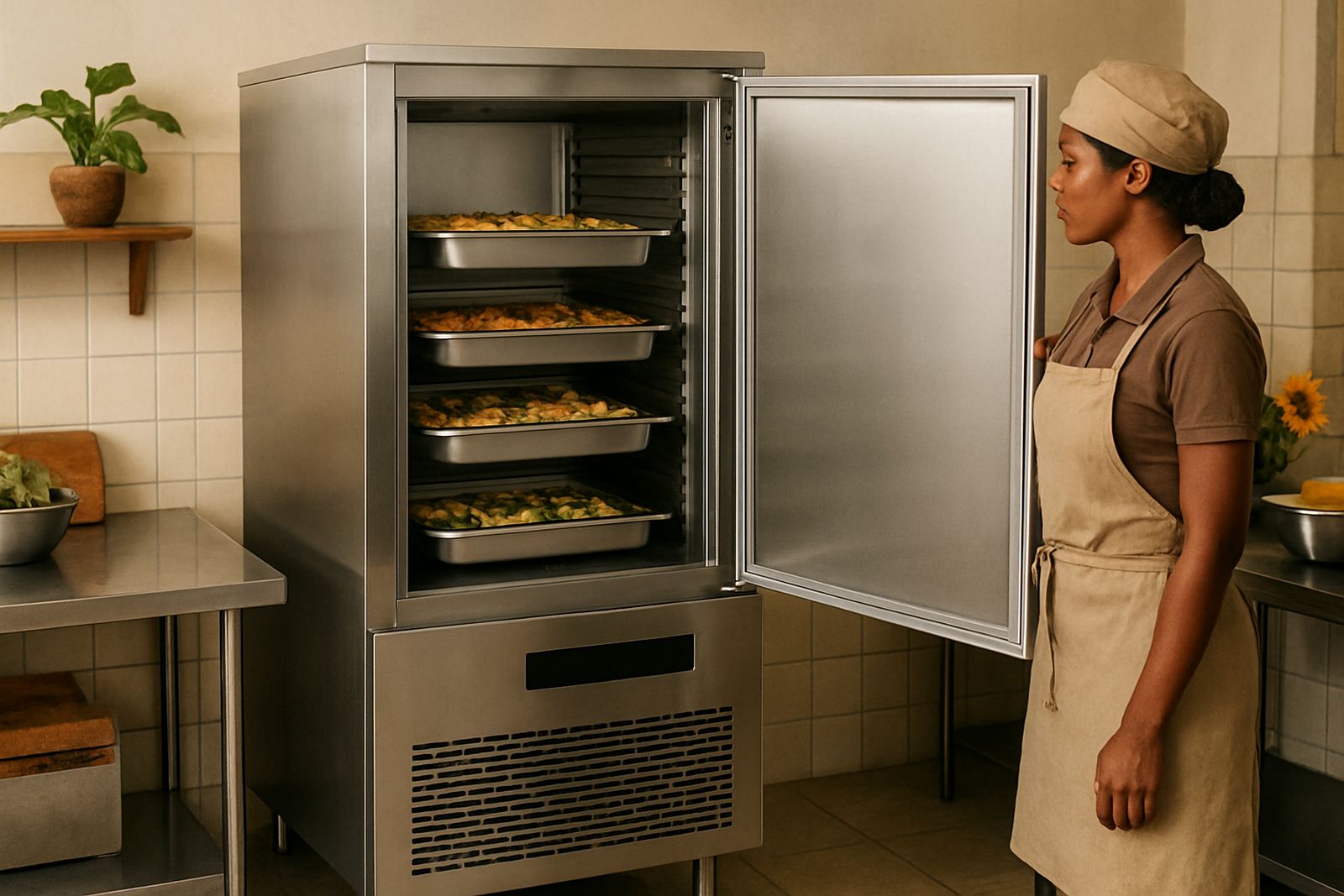
Blast chillers are available as compact undercounter units, upright cabinet models and roll-in systems for trolleys or full trays. The right size depends on batch volume, tray size, space in the kitchen and how often product comes through during the day. A small café may only need 3 to 5 kg per cycle, while a butcher, bakery or institutional kitchen may need 20 kg, 40 kg or more at a time.
We look at usable capacity, not just the outside cabinet size. A unit that looks big enough can still struggle if the tray spacing is wrong or if the load is too deep. For warmer coastal conditions in places like Port Alfred and Jeffreys Bay, airflow and room ventilation also matter. If the room is tight or heat builds up around the machine, performance drops and running costs go up.
- Undercounter units for smaller prep areas
- Upright multi-tray units for regular batch cooling
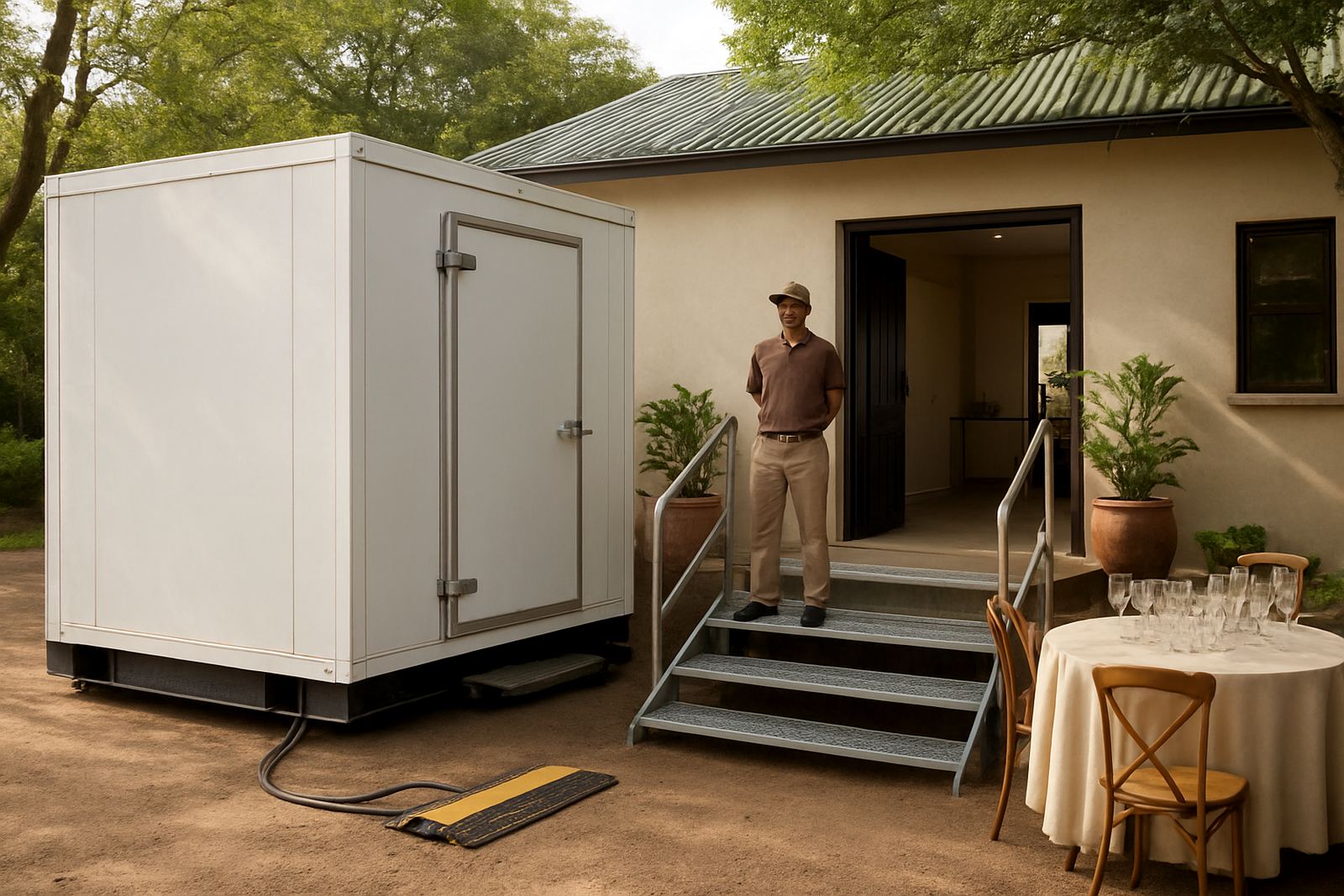
- Roll-in or trolley models for high volume operations
- Temperature probes and timed cycles for tighter control
Where blast chillers fit best
These units suit kitchens and production spaces that need repeatable cooling, not guesswork. They work well in restaurants, school kitchens, hospitals, bakeries, butcheries, delis and food processing areas. If you are producing cooked meals in batches, chilling cream-based desserts, cooling pastry fillings or getting packed product ready for cold storage, the machine saves time and keeps the process more controlled.
Blast chillers also help where load shedding or unstable supply can interrupt normal production. A well set system can shorten the time product spends in the danger zone, which is important when generators or backup systems are being used. In mixed-use buildings, it is also useful to keep hot prep away from the main cold room so the rest of the refrigeration plant is not overloaded.
- Food preparation sites with batch production
- Operations that need temperature logs for compliance
- Sites where product is cooled before vacuum packing or storage
- Spaces that need cleaner workflow between hot and cold areas
Installation, power supply and room conditions
Good installation is as important as the unit itself. Blast chillers need enough clearance for air intake and discharge, a level floor and a supply that matches the compressor load. Some units run on standard single-phase power, while larger machines need three-phase supply. We check the actual site conditions before installation so there are no surprises when the unit starts cycling under load.
Power quality matters, especially where voltage swings happen after load shedding. Control boards, fans and compressors can suffer if the supply is poor or if the unit is not protected correctly. In many kitchens we recommend proper isolation, correct breaker sizing and a practical cleaning plan around the intake and condenser area. A unit installed in a hot corner or next to a stove will work harder and use more energy.
- Single-phase or three-phase options depending on capacity
- Space for ventilation and maintenance access
- Correct drainage for condensate and cleaning water
- Electrical protection suited to local supply conditions
Gas type, performance and energy use
When a blast chiller is selected or upgraded, the refrigerant type and system condition should be checked. Many older units were built around higher impact gases and may not be ideal for long term running costs or environmental targets. Where suitable, low-GWP conversion options can help improve the footprint of the equipment and support a cleaner maintenance path. The right choice depends on the compressor, pipework, controls and service history.
Energy use is not only about the refrigerant. Dirty coils, weak door seals, poor loading practices and failed fans all push power use up. We often find units in good physical condition that are simply running hard because they have not been cleaned or balanced properly. On a site with a lot of daily throughput, that can add up quickly on the electricity bill, especially when temperatures are high in summer.
- Check gas compatibility before any conversion
- Review compressor condition and fan performance
- Inspect seals, insulation and control settings
- Measure pull-down times against the stated load
Care, servicing and what to inspect before ordering
For dependable running, blast chillers need regular cleaning and planned servicing. Condenser coils should be kept clear of flour dust, grease and lint. Door seals need a close fit, drain lines must remain open, and temperature probes should read accurately. If the unit is used hard every day, a maintenance interval of 3 to 6 months is sensible, with more frequent cleaning in dusty or greasy kitchens.
Before ordering, check the tray size, batch weight, room layout, supply voltage, and the finish you need for the cabinet. Ask how fast the unit can cool a realistic load, not just a light test tray. It is also worth confirming how the controls work, whether there is a core probe, and what alarms or temperature monitoring options are available. That saves a lot of back and forth later on.
- Product size and batch weight per cycle
- Tray count, pan size and trolley fit
- Electrical supply and backup power arrangements
- Cleaning access, drain point and service space
Key facts
| Capacity range | From compact 3 to 5 kg units up to high-volume multi-tray systems |
|---|---|
| Temperature pull-down | Designed to reduce hot product to safe chilling temperatures quickly |
| Power supply | Single-phase or three-phase depending on model and load |
| Construction | Stainless steel cabinet options with food-area friendly finishes |
| Control features | Digital temperature control, probe options and timed cycles |
| Service support | Planned maintenance, breakdown callouts and performance checks |