What a data logger does in day to day refrigeration work
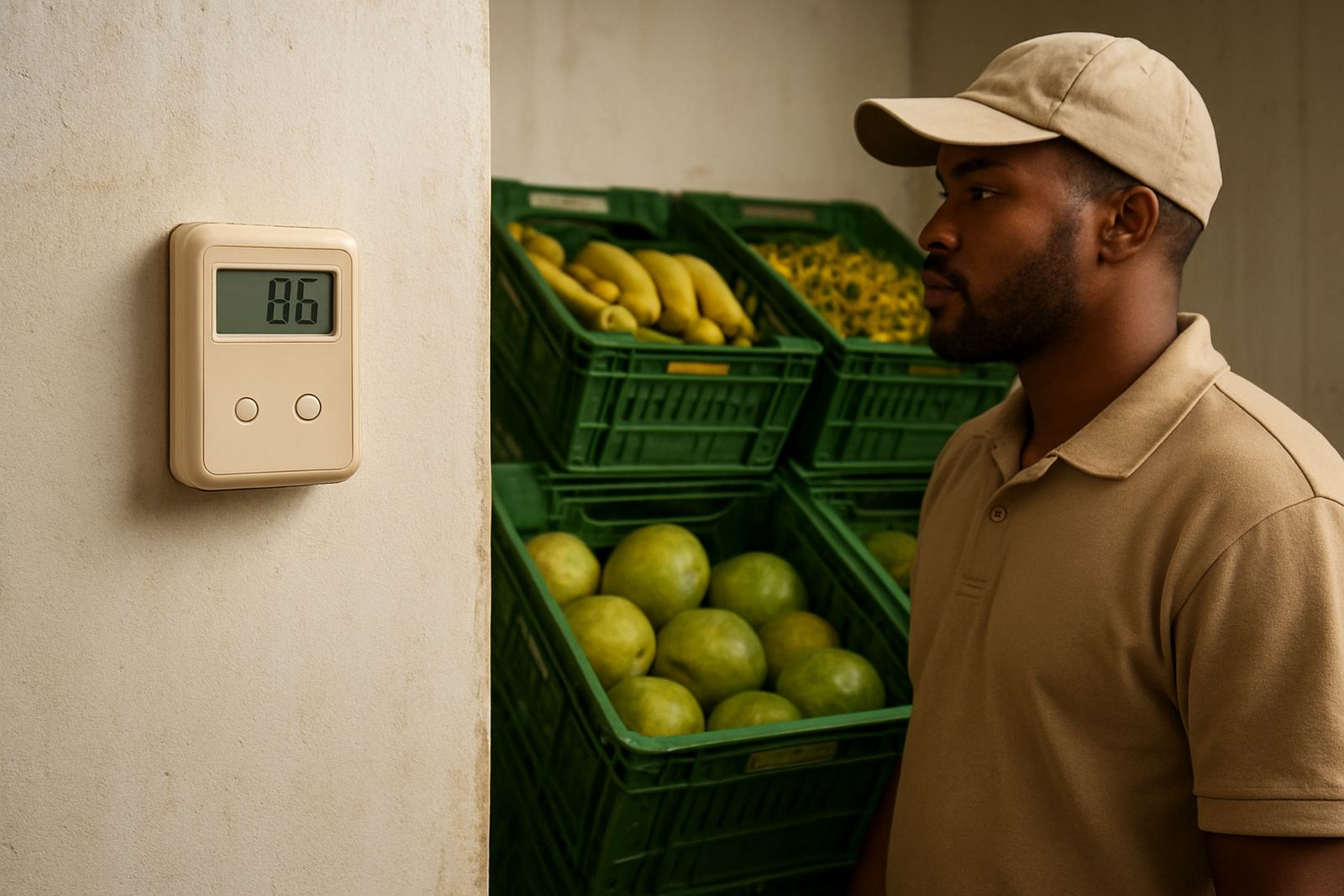
A data logger records temperature at set intervals so you can prove what happened in a cold room, chiller line or delivery cabinet over hours, days or weeks. That record helps with HACCP checks, stock claims, breakdown investigations and verifying that products stayed inside the correct range during load-shedding or door faults.
For many sites in Gqeberha, Uitenhage and Despatch, the problem is not only a rise in temperature but not knowing when it started. A logger shows the pattern. You can see short spikes when doors are opened, slow drift when a compressor is tired, and full failures when power drops out or a controller starts cycling badly.
- Temperature history for compliance folders and audits
- Evidence for product loss and insurance queries
- Troubleshooting for alarms, door leaks and plant faults
- Cold chain proof for stores, kitchens and dispatch points
Logger sizes and options for different sites
Data loggers come in small standalone units, probe-based units with external sensors, and connected units that send readings to a gateway or local network. A simple battery logger suits a single cold room or display fridge, while a multi-channel logger works better where you need to track room air, product core temperature and plant area conditions at the same time.
For Easten Cape sites near the coast, we often suggest sealed housings and stainless or corrosion-resistant probes because damp air and salt can shorten the life of open fittings. If your site has a generator, frequent power cuts or unstable supply, a logger with internal memory is worth having because it keeps recording even when the lights are out.
- Battery logger for short term checks and portable use
- Mains powered logger for fixed plant rooms and cold stores
- Network or gateway logger for remote alerts and record sharing
- Single channel, dual channel or multi-channel models
- Internal memory for offline recording during outages
Where data loggers suit best in the Eastern Cape
These units are useful in fresh produce stores, butcheries, pharmacies, florists, takeaway kitchens, packhouses and refrigerated transport depots. They are also practical in schools, clinics and small factories where someone needs a simple printout or downloadable record without checking gauges by hand each hour.
In coastal towns such as Jeffreys Bay and Port Alfred, humidity can affect both product temperature and electrical fittings so the logger placement matters. Inland sites in Graaff-Reinet can face bigger day to night swings, which makes trend records useful when a room is overworking in summer or not holding temperature early in the morning.
- Cold rooms for meat, dairy, fish and vegetables
- Chiller plants serving food production or process cooling
- Dispatch rooms and holding areas near loading bays
- Freezer rooms where thaw events must be recorded
- Short term verification after repairs or control upgrades
Installation, power supply and probe placement
Installation depends on whether the logger is used inside the room, at the controller panel or in a plant area. We normally mount the body where it can be read and serviced without opening the room too often, then run the probe to the correct measuring point. For air temperature, the sensor should sit away from coils, fans and direct sunlight. For product checks, the probe should be placed in the product zone or a buffered bottle.
Power options include replaceable battery, mains supply or low-voltage feed from a control panel. On sites with load-shedding, the battery backup keeps the record intact and that is often the first thing clients ask about after a breakdown. If the logger is linked to alarms or controls, we check the supply rating, cable routes and any need for conduit, especially where cleaning with a hose is routine.
We also look at local rules for any equipment fitted in food rooms, municipal buildings or processing areas. Cabling must be tidy, protected and easy to inspect. If a site has washdown or cold wash procedures, the housing and probe gland should be selected for that environment, otherwise moisture works its way in and causes false readings.
Care, calibration and servicing
A logger only helps if the readings stay accurate. Units need periodic checking against a known reference and a proper battery change schedule. Some systems can drift over time, especially where probes are pulled, bent or left hanging near evaporator discharge air. If a room keeps showing odd peaks, the logger may be fine and the probe position may be wrong.
For busy sites, we recommend a quick visual check each month and a full review at planned maintenance visits. That can include probe condition, mount security, memory status, alarm settings and date and time accuracy. If the logger is used for compliance records, the clock must be correct or the report loses value. A unit with a flat battery and no warning can leave a gap in the history, so battery changes should be logged too.
What to check before you order
Before choosing a data logger, match the unit to the room, the product and the record you need. A simple overnight test is not enough for some operations. If the site keeps stock for retail, export or healthcare use, you may need longer memory, clearer report export and a probe that can handle repeated opening and cleaning. It also helps to know whether staff need a screen on the unit or whether reports will be downloaded later.
Tell us the room size, target temperature, door opening frequency and whether the site uses battery backup or generator supply. If there are temperature alarms already in place, we can make sure the logger complements them rather than repeats the same job. On older systems, wiring space may be tight and a compact unit can save time during fitting. The wrong logger often means extra call-outs later, so it is worth matching the spec properly from the start.
- Required temperature range and accuracy
- Number of channels or probes needed
- Memory depth and logging interval
- Battery, mains or network power option
- Alarm output, report format and data export needs
- Probe type, cable length and fixing method
Key facts
| Temperature range | Typically -40 °C to +80 °C depending on model |
|---|---|
| Accuracy | Usually within ±0.5 °C to ±1.0 °C |
| Logging interval | From 1 minute to 60 minutes or user set |
| Power options | Battery, mains or low-voltage supply |
| Memory | Internal non-volatile storage for outage protection |
| Outputs | Screen, USB, network or alarm contact options |