When pharmacy stock starts to drift out of range
Medication, vaccines and temperature-sensitive consumables do not cope well with heat swings, power interruptions or a unit that cycles too hard. In pharmacy stock rooms, the usual pain points are warm corners, blocked condensers, damaged door seals and systems that recover too slowly after the door is opened for long periods. In coastal areas like Gqeberha, humidity adds another layer because moisture builds up on coils and in door frames, which can shorten equipment life if it is not cleaned and set up properly.
We often get called in after staff notice ice on the evaporator, a room that sits 3 to 4 degrees above target, or a compressor that runs almost flat out during summer. If the temperature log shows repeated spikes, the issue is not always the thermostat. It can be airflow, controls, refrigerant loss or a layout problem in the room itself.
Typical equipment used in pharmacy storage areas
Every site is different, but most pharmacy support areas use a mix of storage fridges, small cold rooms, split-type chillers or close control cooling for back-of-house spaces. Some facilities also rely on monitoring probes, alarms and simple control panels that need to be checked, calibrated and protected from dust or moisture.
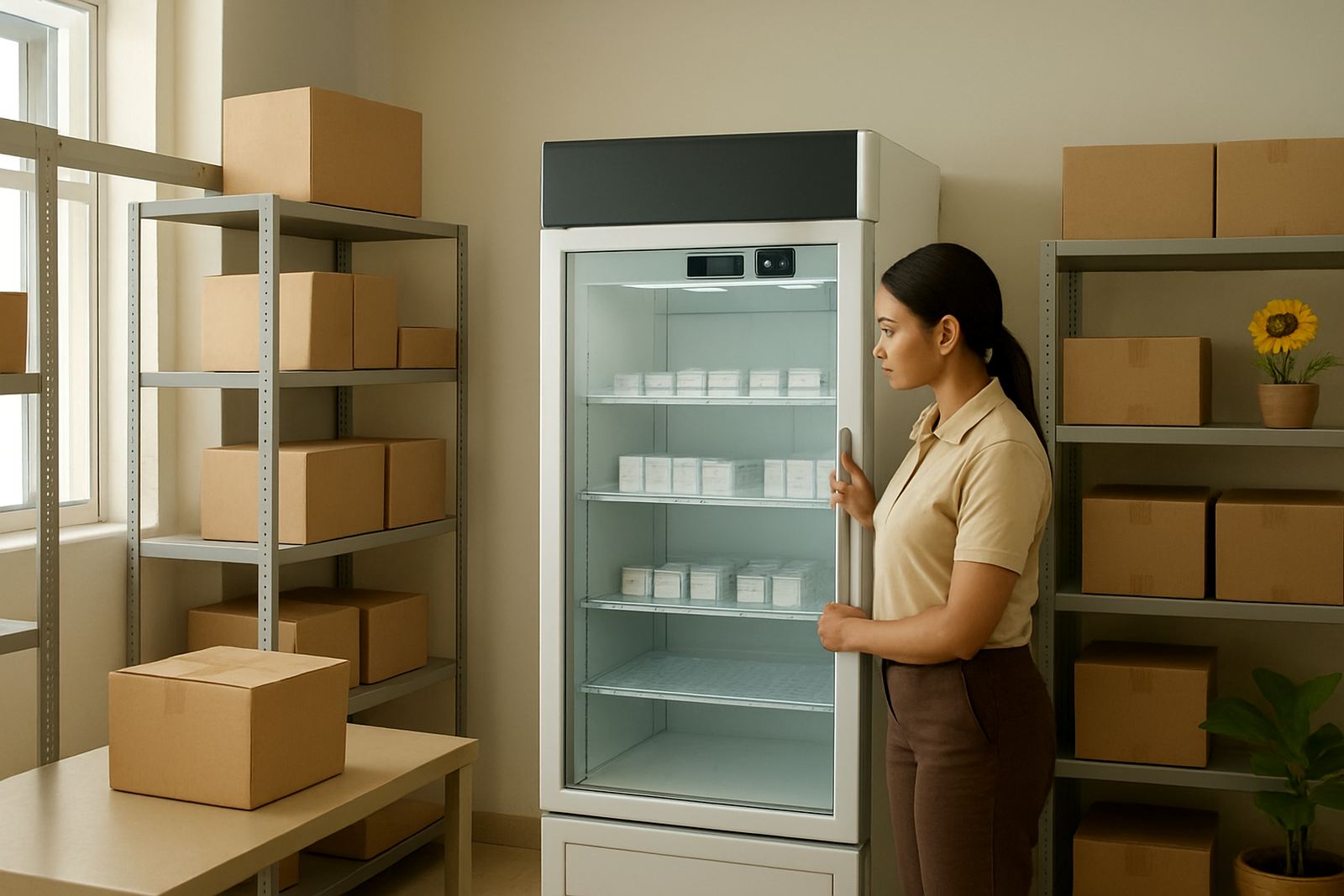
- Upright medicine fridges for routine stock holding
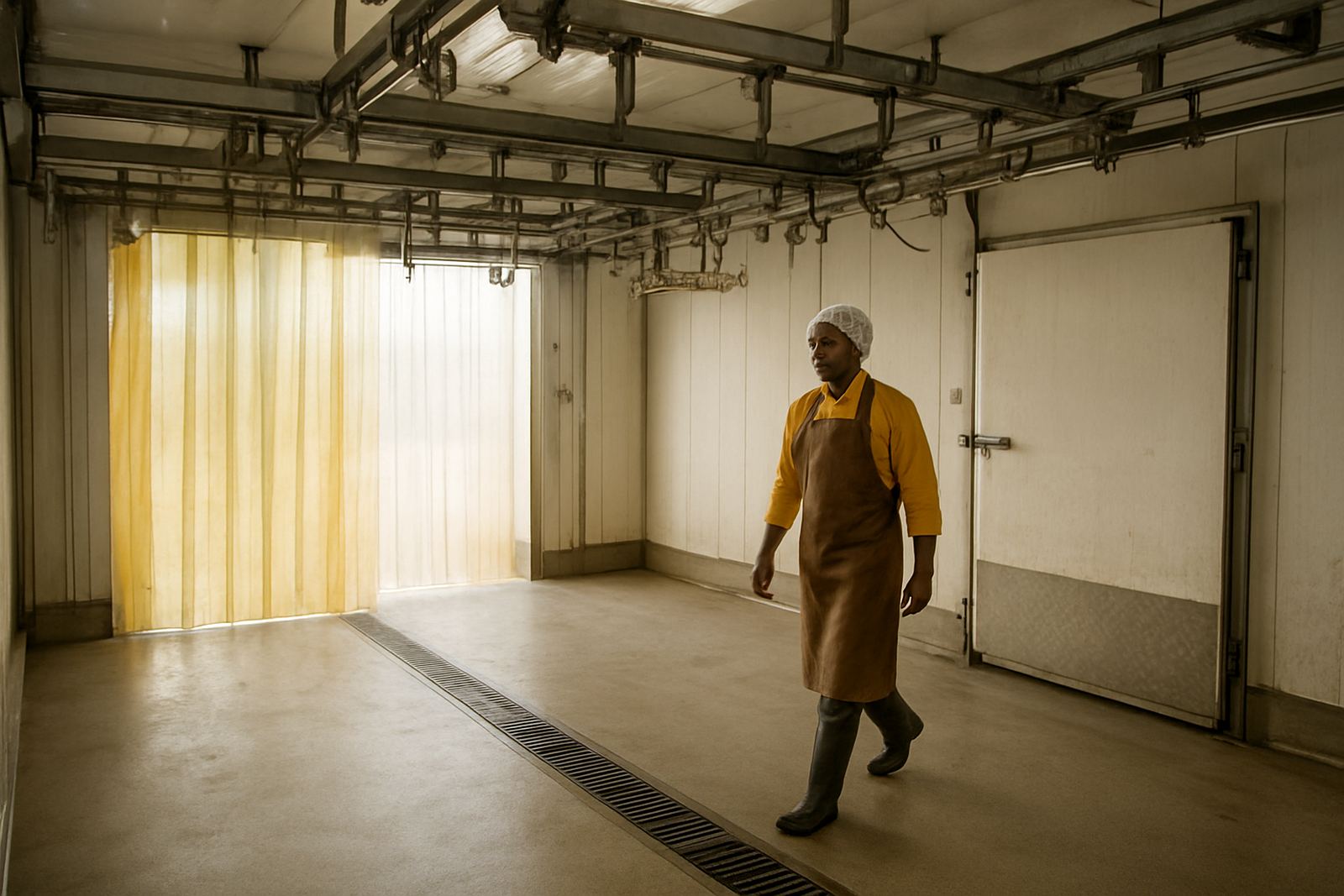
- Small cold rooms for bulk cartons and higher volumes
- Chillers for controlled room temperatures in holding areas
- Temperature monitoring systems with audible alarms
- Door seals, strip curtains and self-closing hardware
- Back-up power arrangements for load-shedding periods
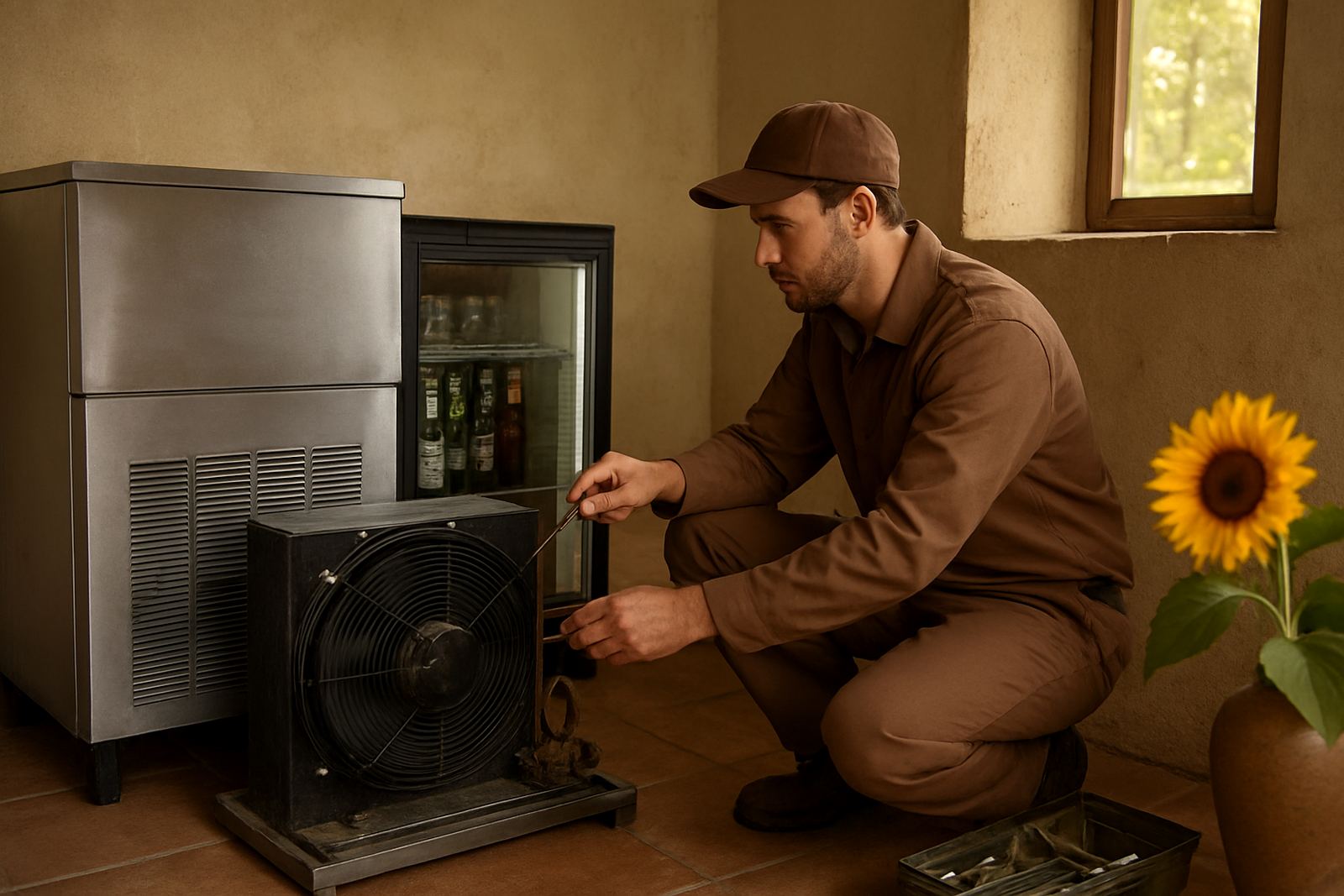
Siyabonga Mthembu, our senior refrigeration technician, usually starts by checking the full system behaviour rather than only the fault code. That includes airflow, coil condition, compressor load, drain lines and how often the door is being opened during peak trading hours.
Layout and planning that help keep temperatures steady
A good pharmacy storage layout makes the cooling system work less hard. Shelving should leave enough space for air movement, stock should not be packed tight against evaporator discharge points, and the room should not be placed next to a hot plant area or a sun-exposed wall if it can be helped. In older buildings around Newton Park, Despatch and Uitenhage, we often find that a small change in layout makes a big difference to temperature stability.
Planning also needs to include maintenance access. If a technician cannot reach the condenser, control panel or drain line without moving half the stock, the unit will not get the attention it needs. We look at service clearance, wash-down space, cable routes and whether the room can be isolated for repairs without disrupting the whole pharmacy.
- Keep stock off the floor and away from return air paths
- Allow space around the evaporator and condenser for cleaning
- Fit door closers that shut properly every time
- Use temperature logging that can be checked quickly by staff
- Plan for generator or inverter support where outages are frequent
Common mistakes that lead to spoiled stock or high bills
One common mistake is waiting until a unit fails completely before calling for help. Another is assuming a low temperature alarm means the fridge is overcooling, when the real issue may be a faulty probe or poor circulation. We also see systems that have never been deep-cleaned, especially on the coastal belt where salt and dust settle onto coils faster than many owners expect.
Other avoidable problems include using the wrong gas after a repair, ignoring small leaks, overloading shelves, and leaving the door open during stock take. A pharmacy can lose money quickly if a compressor burns out or if product has to be quarantined because nobody noticed a slow drift overnight. Leanne Petersen in accounts often tells clients that a planned service is far cheaper than an emergency callout plus replacement stock, and she is right.
- Missing annual leak checks and temperature verification
- Running equipment with dirty coils or blocked filters
- Using temporary fixes on controls for too long
- Skipping alarm checks during staff handover
- Ignoring minor vibration, frost build-up or oil stains
Low-GWP conversions and energy-saving retrofits
Where older equipment is still sound, a low-GWP gas conversion or retrofit can extend service life and reduce environmental impact. That matters for pharmacies that want to cut running costs without replacing every unit at once. Ruan Smit, who leads retrofit projects, usually begins with a site assessment to check compressor condition, pipework suitability, control compatibility and whether the cabinet or room can take the change safely.
We also look at energy use. A refrigeration system that runs all day because of poor controls or dirty coils can cost far more than it should. Energy audits help identify where to improve performance, whether that is with control upgrades, better insulation, improved fan operation or a staged replacement plan. In areas with load-shedding, the right control strategy can also help equipment recover faster once power returns.
For older systems, the usual budget ranges are practical rather than flashy. Small service repairs may start from about R1,250 to R3,500 depending on the fault and travel. A planned maintenance visit for a pharmacy storage area often falls between R1,800 and R4,500. Low-GWP conversions and retrofit work can range from R8,000 to R35,000 or more, depending on the size of the system, the refrigerant change and the condition of the existing plant. Larger cold room or chiller upgrades are quoted after inspection because pipe length, control hardware and access all change the final figure.
Response, maintenance and support across the Eastern Cape
Pharmacy work needs quick communication and proper follow-through. Ayabulela Ndlovu, our service co-ordinator, helps schedule planned maintenance and emergency breakdowns across Gqeberha, Port Alfred, Jeffreys Bay, Graaff-Reinet, Despatch and Uitenhage. Yolanda Jacobs handles client care so updates are kept clear, especially when a site needs parts, monitoring checks or a return visit after hours.
For pharmacies, we recommend planned maintenance at least twice a year, and more often if the cold room is busy or the building is exposed to heat and dust. That usually includes coil cleaning, seal checks, control inspection, leak detection and a review of temperature logs. If your holding area is near the coast, monthly visual checks are worth it because corrosion and grime can build up faster than expected.
Whether the issue is a warm room, a noisy compressor or a control alarm that keeps returning, the aim is simple: keep stock stable, keep the system efficient, and reduce the chance of losing product during a busy week.