What an abattoir needs from refrigeration
In a meat processing plant, refrigeration is not a back-up service, it is part of the production line. Chilling needs to hold product at safe temperatures after slaughter, while cold rooms, blast spaces and dispatch areas must keep moving even when the power is unstable or the plant is under pressure. In Gqeberha, Uitenhage and Despatch, we often see sites running hard through warm afternoons, coastal humidity and load-shedding swings, so the system has to be sized and maintained for real conditions not just the nameplate rating.
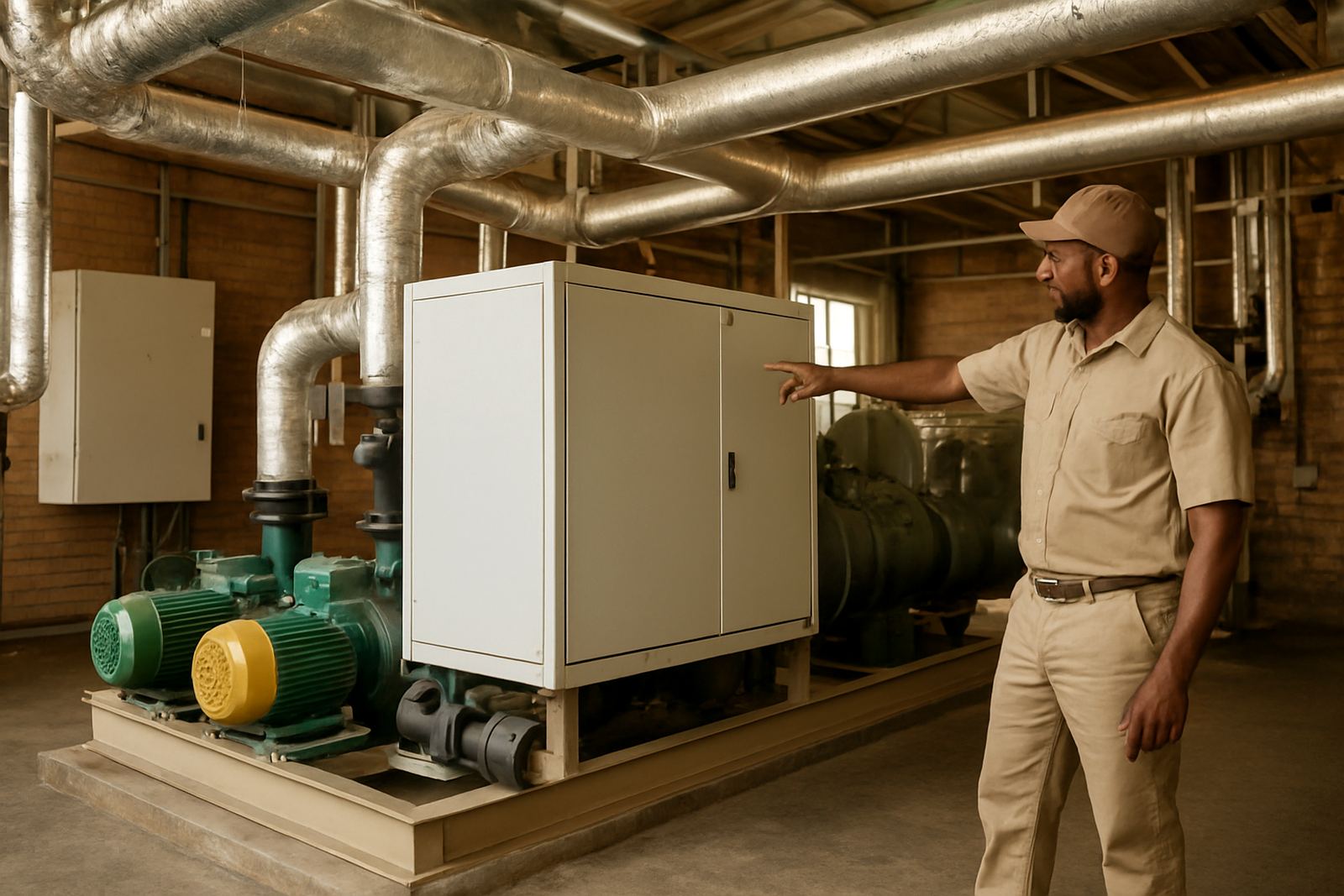
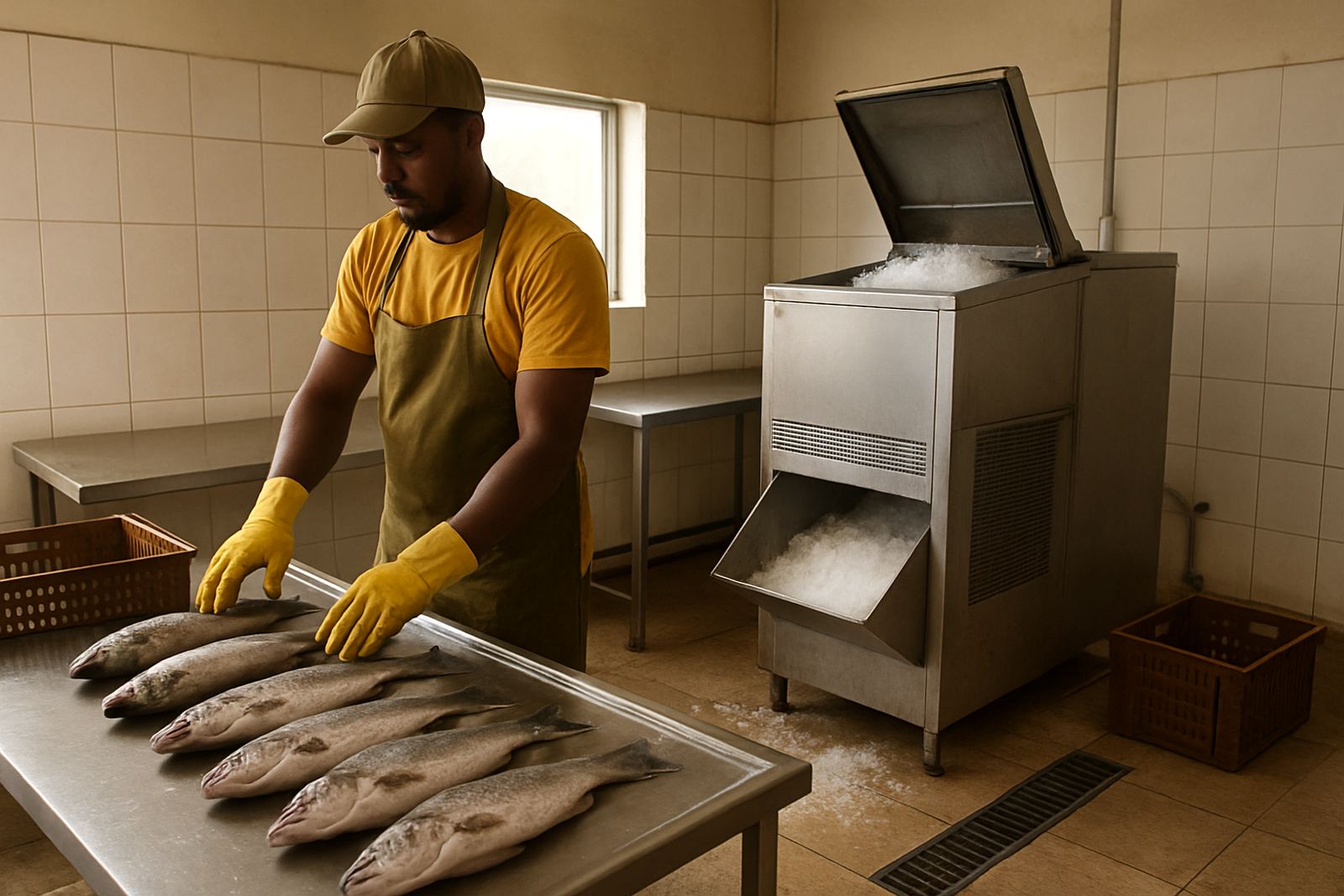
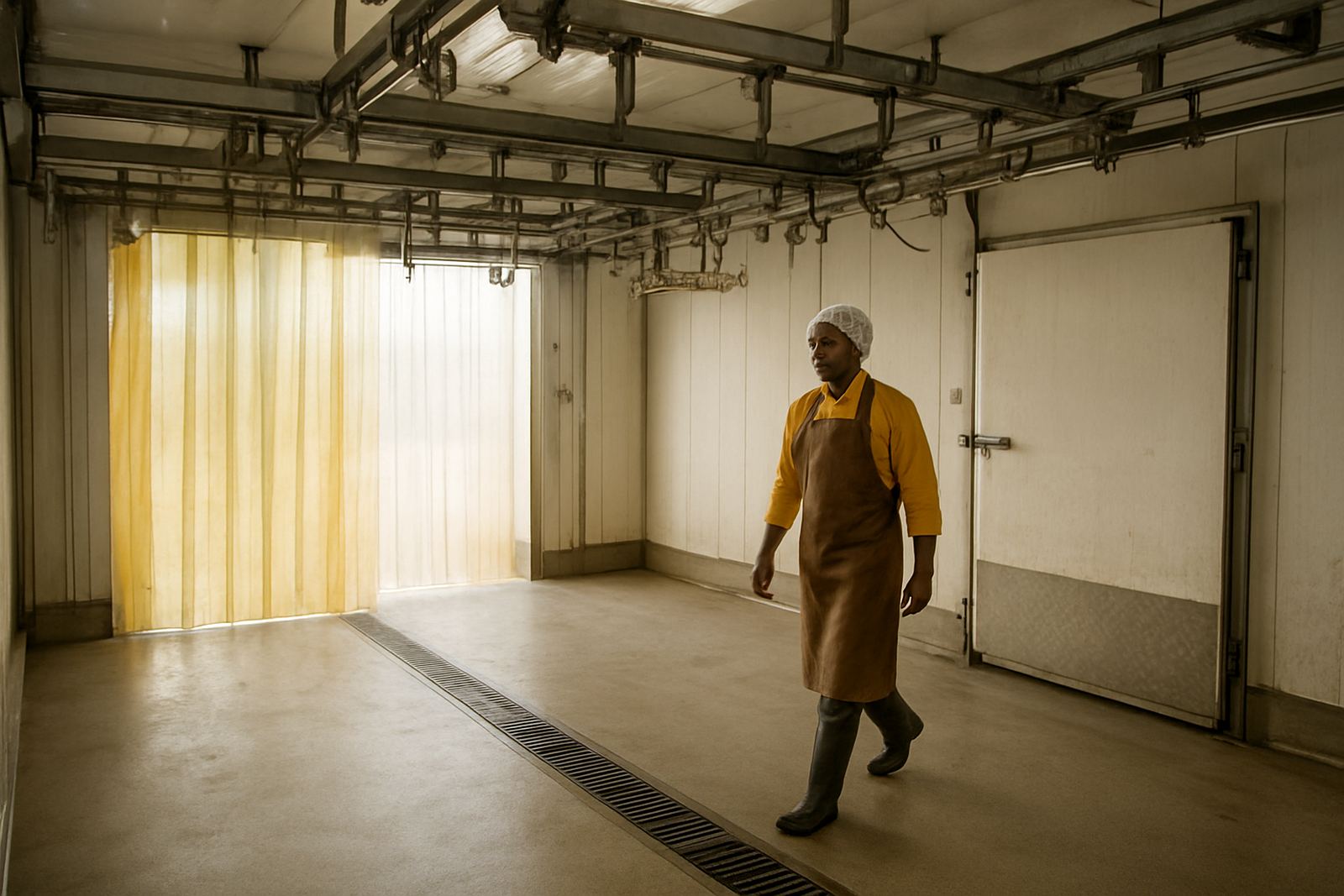
Typical equipment includes walk-in cold rooms, freezer rooms, process chillers, condensing units, evaporators, insulated panels, digital controllers, door heaters, temperature probes and monitoring alarms. On larger sites there may also be pre-cooling areas, trimming rooms, brine systems or glycol circuits. The key is to keep each zone stable and easy to clean, with enough access for service crews to work without stopping the line longer than necessary.
Common problems we find on meat plants
Most breakdowns start small. A blocked coil, loose sensor, damaged door seal or drifting controller can lead to uneven temperatures and higher compressor run-time. In abattoirs that handle a mix of carcasses, offal and packed product, these issues show up fast in product holding times and electricity use. We also find systems that were never set up for local conditions, especially where equipment sits close to hot wash areas or where the plant layout forces warm air back into the cold room intake.
- Ice build-up on evaporators because defrost settings are wrong or drains are blocked.
- Low refrigerant charge caused by small leaks at joints, valves or vibration points.
- Fan motors failing after months of moisture and wash-down exposure.
- Controllers that are not matched to the actual room cycle or product load.
- Door seals, strip curtains and thresholds that let in warm air and insects.
Many of these faults can be corrected during planned maintenance before they become a full shutdown. That saves product, keeps staff from working in emergency mode and cuts down on call-outs after hours.
Layout and planning advice for new or upgraded sites
Good planning starts with the flow of product. Chillers and cold rooms should follow the movement of carcasses, trim and packed meat so goods do not cross back through warm or dirty areas. On many sites, the best answer is not a bigger machine but a better layout, with shorter pipe runs, less door opening and clear separation between wet work zones and storage zones. If the room is on the coast, insulation and corrosion protection matter even more because salty air and moisture attack frames, coils and electrical parts quicker than inland plants.
We usually advise clients to leave space around condensers for cleaning, maintenance and airflow. Roof-mounted sets need safe access ladders or walkways, while ground-mounted units should have enough clearance for coil washing and fan replacement. Controls should be placed where supervisors can see alarms without walking through production, and temperature monitoring should be linked to a clear log so any drift is caught early. A small layout change can save a lot of Rand in compressor wear over a year.
- Keep hot surfaces and wash-down hoses away from electrical panels.
- Allow service access to valves, filters, starters and fan motors.
- Separate loading bays from cold room doors where possible.
- Plan for backup power and safe restart after outages.
Low-GWP conversions and energy-saving retrofits
Many abattoirs are looking at lower-impact refrigerants and better energy use, especially where older systems are expensive to run or difficult to service. Low-GWP conversions can be a smart path when the base equipment is still sound but the refrigerant choice, controls or safety setup needs updating. That work has to be done properly, with leak checks, component compatibility and correct charge procedures. It is not just a gas change, it is a full review of pressure settings, oil compatibility and control response.
Energy-saving retrofits often bring quicker payback than full replacement. These may include control upgrades, variable speed drives where suitable, condenser fan management, better defrost programming, coil cleaning and tighter temperature monitoring. On a mid-sized plant, an audit and focused retrofit can cost from about R25 000 to R75 000. Larger chiller or plant-room projects can run from R120 000 to well over R500 000 depending on the number of rooms, pipework changes and shutdown windows. We help clients phase the work so the plant keeps moving while upgrades happen in sections.
Planned maintenance that suits production hours
Abattoirs cannot always stop for a full service during business hours, so maintenance needs to be practical. Nvirocool builds plans around production peaks, cleaning cycles and dispatch times. For sites in Port Alfred, Jeffreys Bay and Graaff-Reinet, we also factor in travel time, spare parts availability and local power conditions so the work is done properly the first time. Planned maintenance usually covers coils, drains, filters, contactors, sensors, fan belts where fitted, door hardware and refrigerant leak checks.
For many clients, a service visit every month or every second month is enough to keep the system stable, with a more detailed inspection before summer. Where the plant is older, or the site has history of breakdowns, a tighter schedule is better. Emergency breakdown support is also important because one failed evaporator or chiller can affect the whole line in a matter of hours. Quick response reduces spoilage, missed dispatches and overtime costs.
How Nvirocool supports abattoirs in the Eastern Cape
Nvirocool is based in Newton Park, Gqeberha and has been supporting refrigeration and cooling systems since 2011. Our team includes Anele Mbeki-Jacobs, Ayabulela Ndlovu, Leanne Petersen, Siyabonga Mthembu, Ruan Smit, Nokulunga Dlamini and Yolanda Jacobs. We work across Gqeberha, Uitenhage, Despatch, Jeffreys Bay, Graaff-Reinet and Port Alfred, with support for planned maintenance, emergency breakdowns, cold room repairs, chiller servicing, low-GWP conversions, leak detection, energy audits, coil cleaning, control upgrades and temperature monitoring.
For abattoirs, our aim is simple: protect product, keep the plant compliant and reduce waste. If you need help with a failing cold room, a noisy chiller, or a retrofit plan that makes better use of power, contact hello@nvirocool.co.za. We can assess the current setup, talk through the likely budget and give you a sensible path forward, without overcomplicating it.