Milk rooms need steady temperatures, not guesswork
In a dairy, a few degrees make a big difference. Whether you are cooling raw milk in a small collection room or managing several bulk tanks on a commercial site, the system has to pull heat down quickly and hold temperature through load shedding, summer heat and early morning pickups. In Gqeberha, Port Alfred and Jeffreys Bay, coastal moisture also puts extra pressure on electrical parts, coils and controls.
We support dairy rooms, tanks and process refrigeration where the plant must run hard and stay clean. That includes cold-room checks, chiller servicing, temperature monitoring and callouts when a unit starts short cycling, icing up or pulling current too high. A delay of even a few hours can turn into product loss and costly downtime.
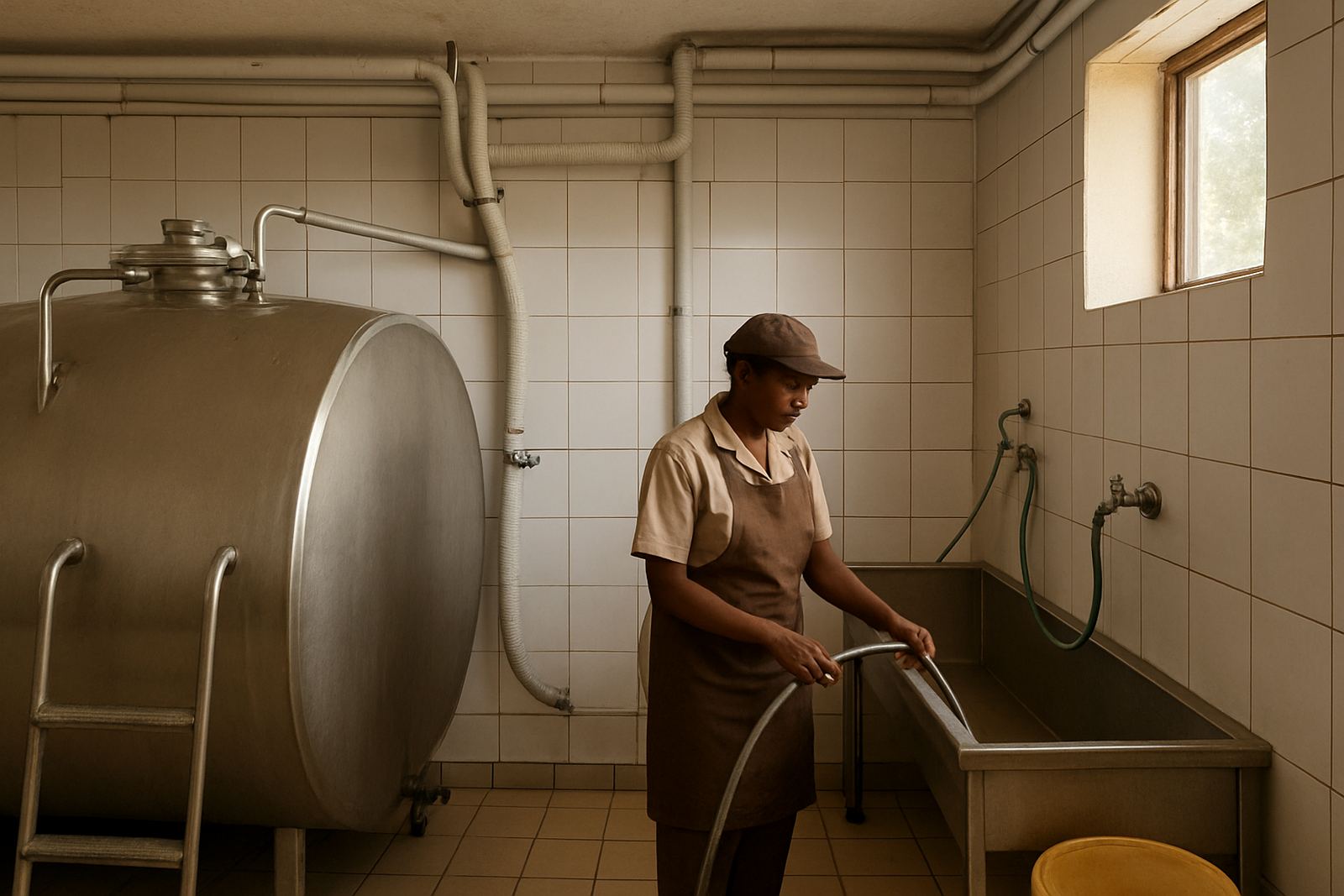
- Milk holding rooms and tank areas
- Process cooling for wash water and handling areas
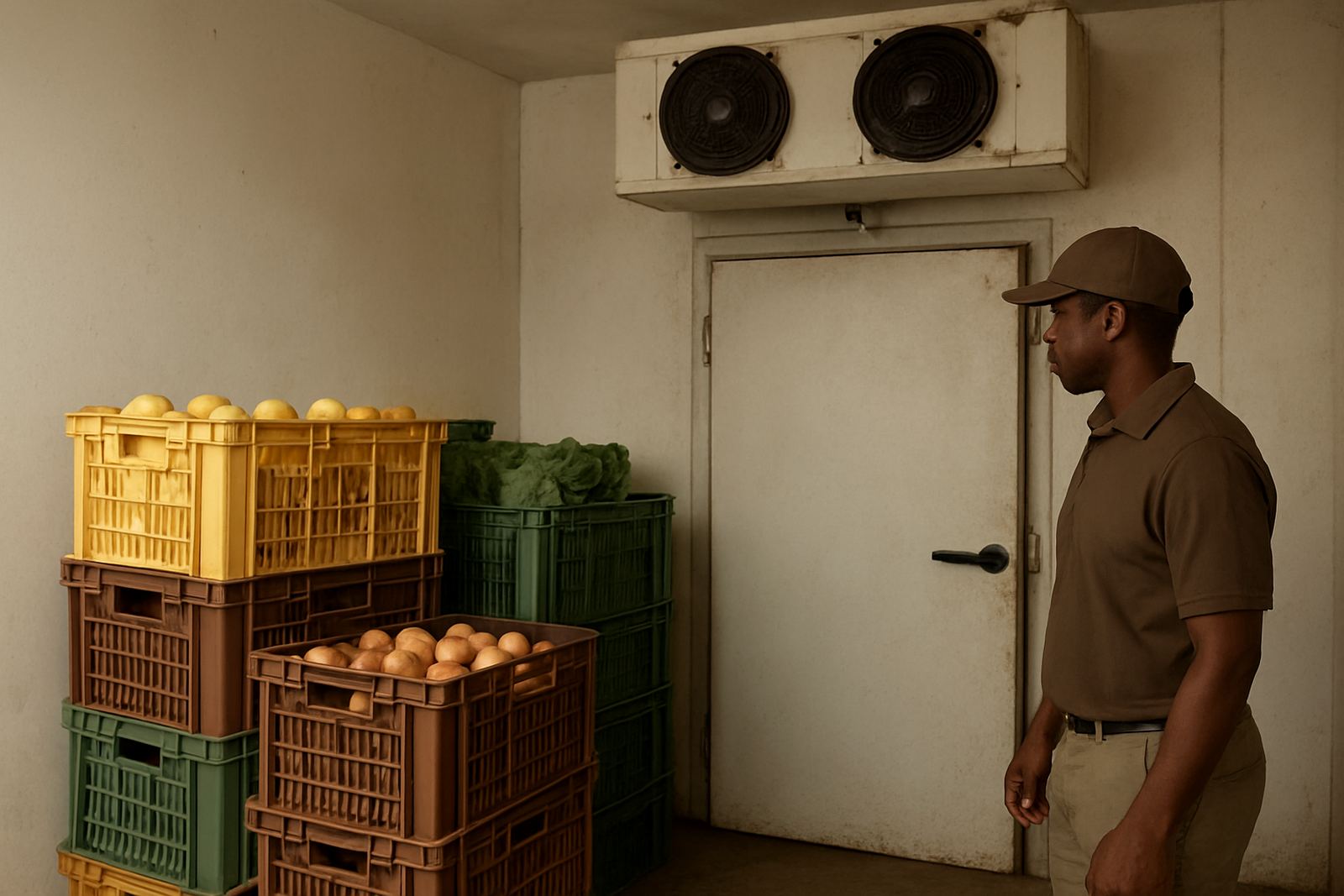
- Cold rooms for packaging, cultures and spare stock
- Sites with backup power and staged start-up requirements
Typical equipment on a dairy site
Dairy refrigeration is usually a mix of cold storage and process support. Some sites use a single cold room and one bulk milk tank. Others run several tanks, a dedicated plant room, wash-down areas and a temperature monitored dispatch point. We work on systems that need regular cleaning, accurate controls and reliable starting after outages.
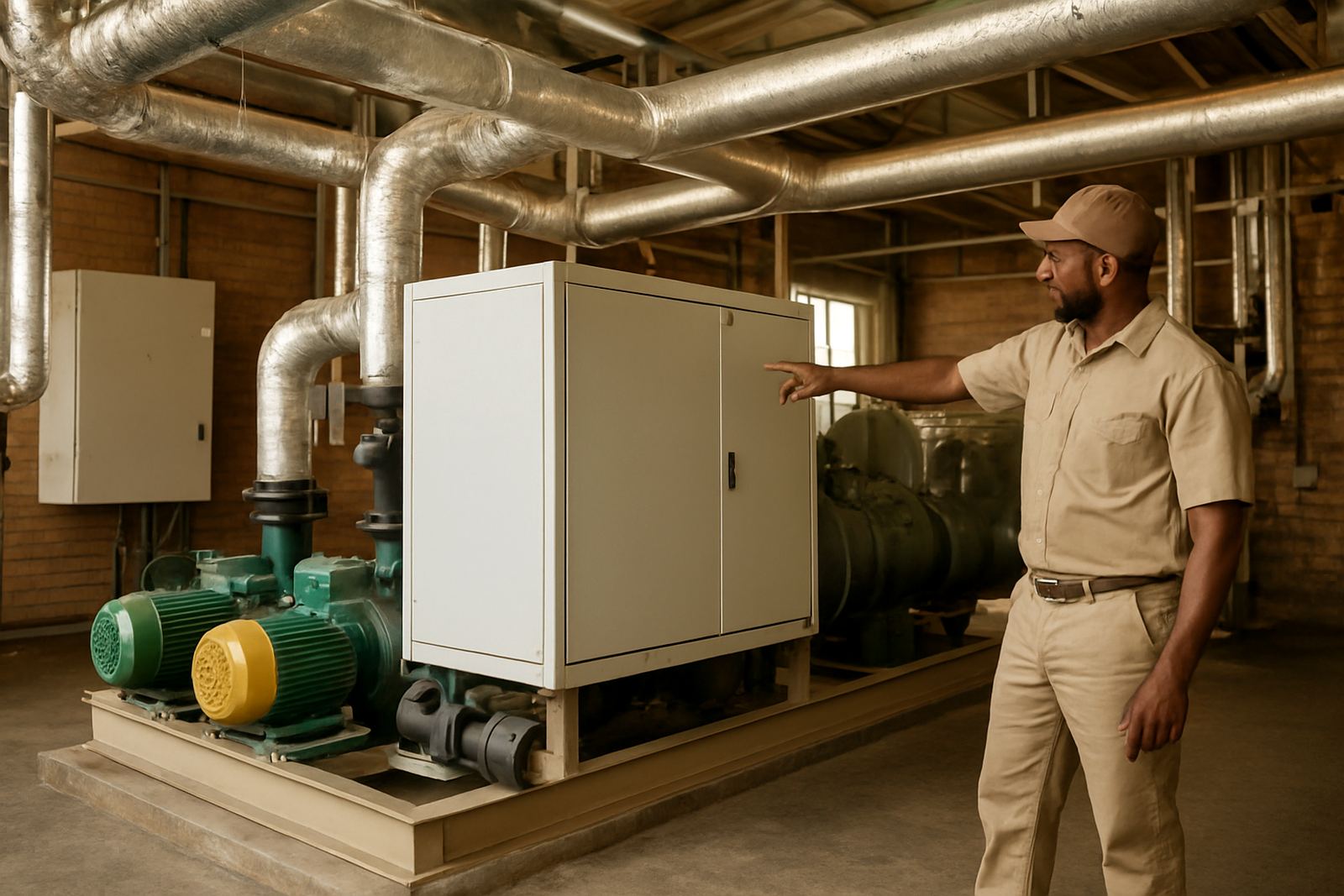
The most common equipment set includes evaporators, condensing units, pipework, thermostatic expansion devices, control panels, probes and monitoring alarms. If the site has older equipment, we often find worn fan motors, blocked coils, leaking valves or poor insulation around pipe runs. These faults push up electricity use and make the plant work harder than it should, which is bad news when municipal supply is already unstable.
- Bulk milk tank cooling circuits
- Walk-in cold rooms and chiller rooms
- Remote condensers and pipework runs
- Temperature sensors, alarms and data logging
- Backup changeover controls for generator or inverter operation
For older installations, low-GWP gas conversions can reduce environmental pressure and improve long-term serviceability, provided the system is checked properly before any changeover. We never treat a gas swap as a quick fix. The machine, oil return and expansion setup all need to be right.
Planning layouts for collection points and tank rooms
Good planning saves money before the first pump starts. Dairy sites need clear airflow, short pipe runs where possible, easy access for cleaning and enough space around equipment for service work. If compressors are packed into a tight room with poor ventilation, the system will run hotter and draw more power. That becomes a problem in summer, especially in the Eastern Cape where heat and humidity can hit at the same time.
We look at where milk comes in, where heat is released, how the room is cleaned and how staff move around the plant. If you are fitting out a new room or reworking an old one, it helps to get the layout right early. A tidy plan also makes compliance easier when inspectors want cleanable surfaces, clear access and proper records for temperature control.
- Leave space for service access around every major component
- Keep hot equipment out of enclosed unventilated areas
- Separate wash-down water from electrical fittings
- Plan for blackout recovery and staggered restart after load shedding
We often advise clients in Uitenhage and Despatch to think beyond the current tank count. If production grows by another 20% in two years, the refrigeration room should still cope without a full rebuild. That kind of planning is cheaper than a second round of modifications later.
Common mistakes that cost dairies money
Many refrigeration problems start with small oversights. A coil not cleaned on time. A sensor left in the wrong position. A door seal that should have been replaced months ago. In a dairy room, these issues lead to higher power use, unstable temperatures and more strain on the compressor set.
Another common mistake is waiting until the plant fails completely before calling for support. If a tank room is slow to pull down after milking, or the unit trips when the load comes on, the fault is already speaking. Acting early usually means a repair instead of a shutdown.
- Ignoring dirty coils and blocked air paths
- Running systems with incorrect gas charge
- Poor temperature logging or no alarm response
- Old controls that do not match current usage
- Skipping planned maintenance because the plant is still cooling, for now
We also see sites using temporary fixes that keep the room cold but waste power. That might look fine on the day, yet the monthly bill tells a different story. In most dairy applications, a proper repair pays for itself quicker than people expect.
Breakdowns, maintenance and emergency response
When milk is waiting and the room is rising above target, speed matters. Our service team handles emergency breakdowns, routine maintenance and fault finding on refrigeration circuits that have become noisy, weak or unstable. For dairy sites, that includes compressor checks, leak detection, contactor faults, defrost issues and control failures.
We work from Newton Park in Gqeberha and support nearby areas including Gqeberha, Uitenhage, Despatch, Jeffreys Bay, Graaff-Reinet and Port Alfred. Some callouts are simple and some need parts, rewiring or staged repairs. Either way, the aim is to get the plant safe and cooling again without unnecessary downtime.
- Planned maintenance for steady performance
- Emergency breakdown response for product protection
- Leak detection and repair
- Control upgrades and temperature monitoring
- Coil cleaning and airflow restoration
For dairy rooms that run through the night, we can set up maintenance intervals that suit production, not just office hours. That means fewer surprises before a pickup and fewer awkward phone calls at 4 am.
Budget ranges for dairy refrigeration work
Every dairy site is different, but it helps to work with real budget bands. A basic service visit for a small room or tank support system may start from about R1 800 to R3 500, depending on access, fault type and travel. Coil cleaning, temperature checks and minor adjustments often sit in this range or slightly above if after-hours support is needed.
Repairs on fans, controls, sensors, contactors and leaks can range from R2 500 to R18 000 depending on parts and labour. A low-GWP conversion on a modest system may start around R18 000 and move up from there if pipework changes, refrigerant recovery or control upgrades are needed. Energy audits for larger dairy operations usually begin around R7 500 and increase with site size and the number of systems that need assessment.
Major chiller retrofits, compressor replacements and full control upgrades can run from R35 000 into six figures on larger sites. The point is not to spend the least possible amount once, but to spend in the places that protect product, cut waste and reduce repeat callouts.
If the plant is old and power hungry, a mix of maintenance, controls and retrofits can often stretch its life without forcing a full replacement straight away. That approach usually suits dairies that are still growing or working with tight seasonal cash flow.
How we support Eastern Cape dairies
Nvirocool has been working since 2011 and our team handles refrigeration support with a practical eye. Anele Mbeki-Jacobs leads the business, with Ayabulela Ndlovu coordinating service, Siyabonga Mthembu on technical repairs and Ruan Smit leading retrofit projects. Nokulunga Dlamini handles energy audits, while Leanne Petersen and Yolanda Jacobs keep client admin and communication moving.
For dairy clients, that means you get one team that understands maintenance, response times, energy use and the pressure of keeping milk safe. We are based in Gqeberha and support sites across the Eastern Cape where weather, supply interruptions and high production demand can all hit the same week.
If your milk room is ageing, your tanks are working harder than they should, or your site needs better control after load shedding, we can assess it and give you clear next steps. No fluff, just what needs fixing, what can wait and what it will cost.