Clinic Cooling That Has To Hold Temperature Every Day
In a clinic, cooling is not just about comfort. It keeps medicines stable, protects samples, and supports mortuary storage where required. A unit that cycles too often, struggles during load-shedding, or loses gas slowly can put stock at risk long before it fails completely.
We work with clinics in Newton Park, Gqeberha, Uitenhage, Despatch, Jeffreys Bay, Graaff-Reinet and Port Alfred. The aim is simple: keep the equipment steady, keep the power draw sensible, and catch small faults before they turn into a warm cabinet and an urgent phone call.
Our clinic clients usually need support that fits around patient traffic, after-hours requirements and record-keeping. That means planned maintenance with proper readings, clear fault notes, and a technician who understands that a fridge in a treatment room is not the same as a general office appliance.
Typical Equipment We Service In Clinics
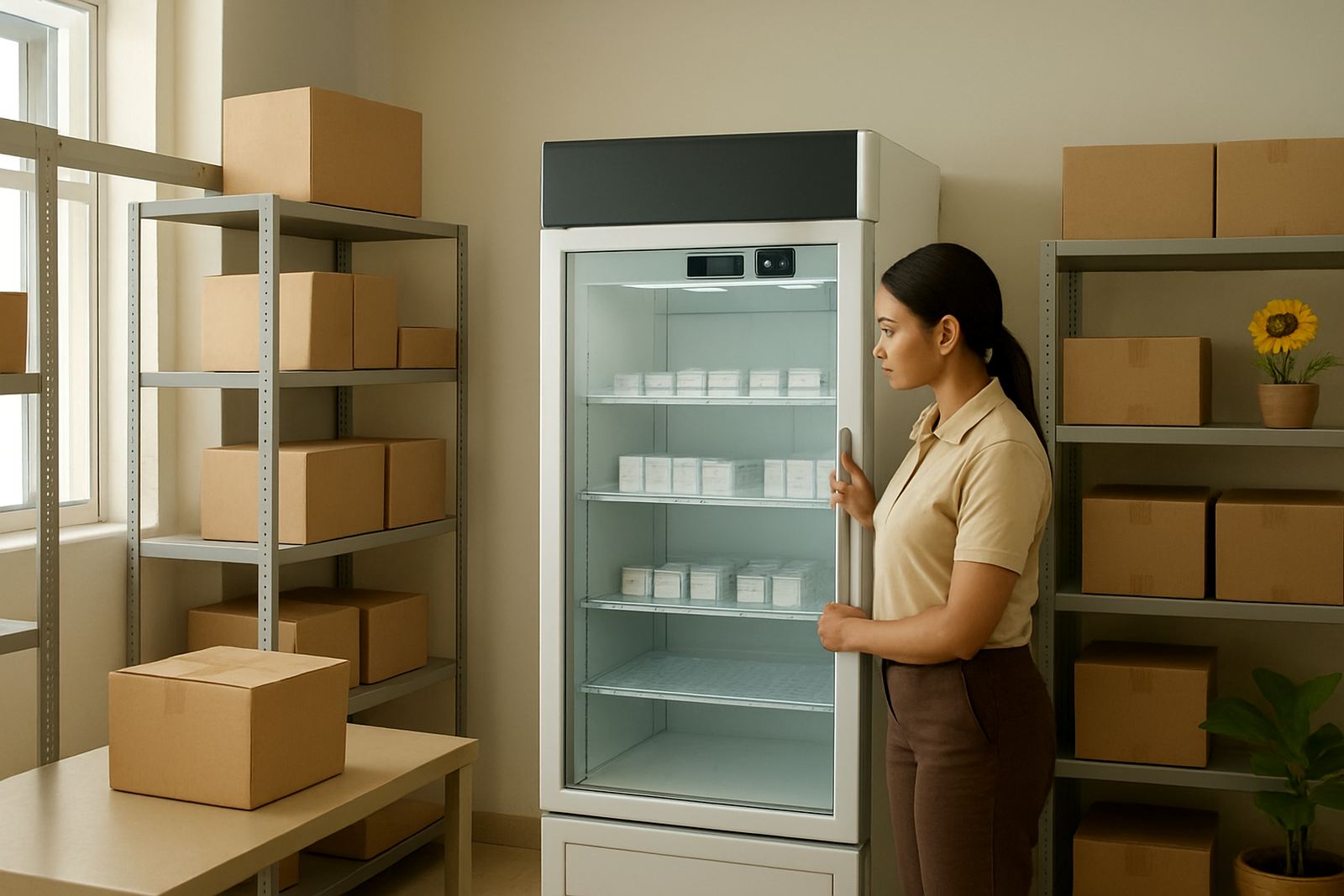
Most clinic sites use a mix of small and medium cooling equipment. Some units are tucked into treatment areas, others sit in store rooms or a back-of-house plant space. We service single fridges, undercounter medical fridges, mortuary cabinets, small cold rooms and compact chillers linked to the building or process cooling.
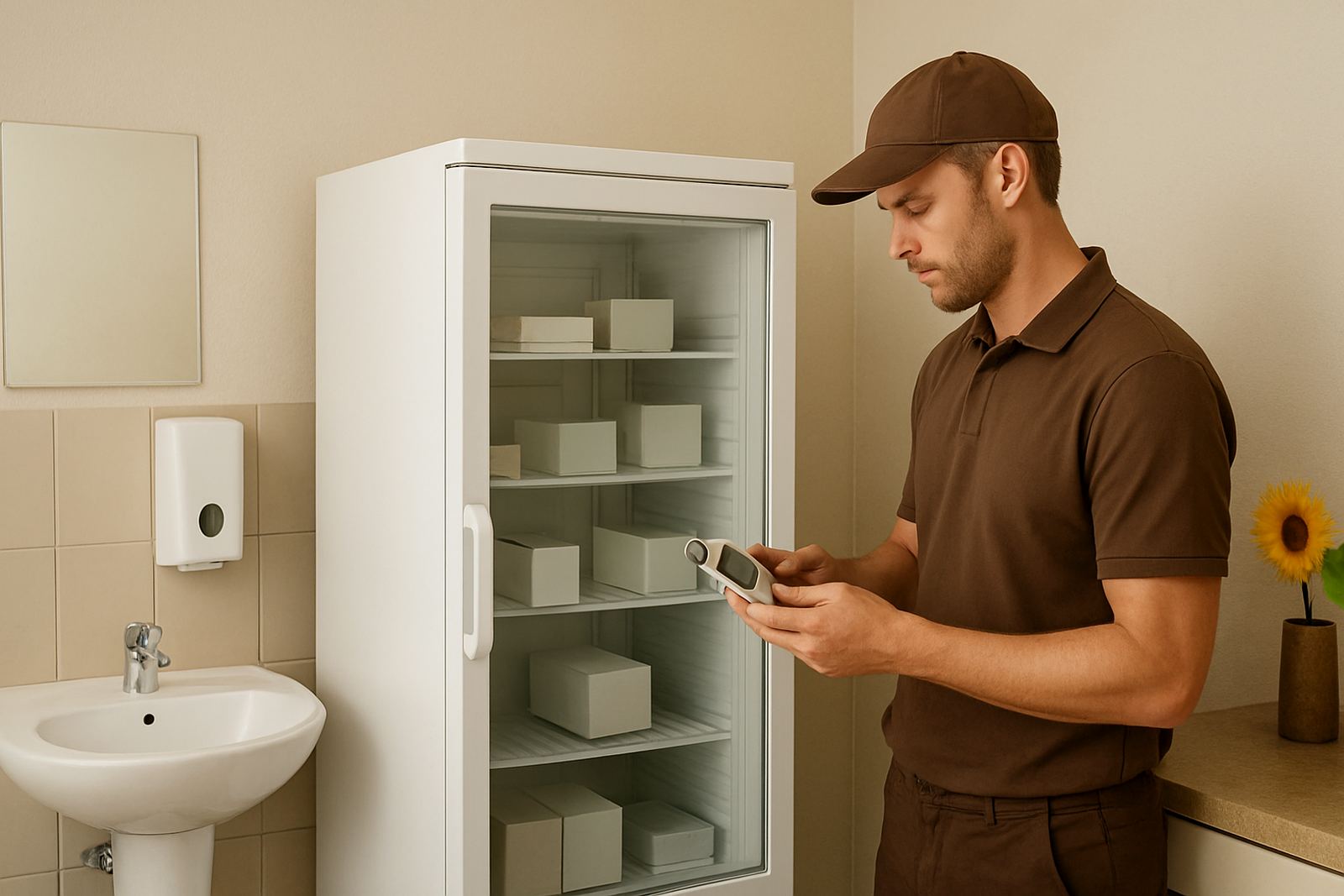
We also deal with controls, alarms, probes and temperature logging. In many clinics the fault is not the compressor at all, it is a bad thermostat, blocked condenser coil, failed fan, or a door that no longer seals properly. On coastal sites in Gqeberha, salt air can shorten the life of electrical parts and create corrosion around terminals, hinges and fixings.
- Medication fridges and vaccine storage cabinets
- Mortuary cabinets and body holding units
- Small cold rooms for consumables and stock
- Chillers with basic control panels and alarms
- Temperature monitoring probes and data loggers
We keep the work practical. If a unit is older but sound, it may only need a coil clean, gas check or control adjustment. If the cabinet is wasting power and tripping after load-shedding, we will say so plainly and explain the options.
Planning A Clinic Layout That Makes Maintenance Easier
Good layout saves time, money and stress. A fridge or cold room should be placed where staff can reach it without blocking a passage, but where service access is still possible. We often see cabinets pushed tight against walls, with no room for airflow or cleaning. That causes overheating, noisy operation and higher running costs.
For new or upgraded clinic spaces, allow space around the condenser side of the unit, and leave a clear path for filters, panels and cable access. If the equipment sits in a back room, make sure the room has ventilation and that it does not become a heat trap during summer. In many Eastern Cape towns the afternoon heat and humidity can push a small system harder than expected.
It also helps to think about power supply early. A fridge that must hold critical stock should be on a protected circuit, with surge protection and a recovery plan for load-shedding. Where possible, keep the temperature monitoring device separate from the main refrigeration controls so staff can see a real reading even if the cabinet has been opened often.
For mortuary cabinets and small cold rooms, floor drainage, washable surfaces and service access around the evaporator matter. Municipal inspections and hygiene rules can differ by site, so the cooling installation should support cleaning and safe operation, not fight against it.
Common Mistakes We See In Clinic Fridge Systems
A lot of avoidable callouts start with small oversights. A fridge may be too full, the door seals may be worn, or staff may prop a door open while moving stock. That seems minor, but it creates temperature swings and extra compressor run time. Over a month, that can push electricity use up and shorten the life of the machine.
Another common issue is poor cleaning. Dust builds up on condenser coils, especially in busy clinics where air circulation is already limited. In coastal areas, that dust often combines with salt and moisture and forms a stubborn layer that makes the system work harder. We also see units installed with no plan for emergency backup during extended outages, which is a real problem when load-shedding hits after hours.
- Blocked condenser coils and poor airflow
- Wrong temperature settings after staff changes
- Faulty seals on doors and drawers
- Missing alarms or inactive monitoring probes
- No plan for power cuts or overnight failures
If a cabinet is running warm, do not keep resetting it and hoping for the best. A quick inspection can often show whether the issue is mechanical, electrical or control related. Catching it early usually saves stock and keeps the repair bill smaller.
Maintenance, Emergency Repairs And Energy-Saving Upgrades
We offer planned maintenance for clinics that want predictable service visits, plus emergency breakdown support when a cabinet or cold room stops holding temperature. Routine work can include coil cleaning, leak detection, temperature checks, control calibration and electrical inspection. For sites with older plant, we can also discuss low-GWP gas conversions where suitable and lawful for the equipment type.
Chiller retrofits and control upgrades can make sense where a system still has a serviceable frame, but the controls are dated and the power use is too high. In some cases, adding better monitoring and smarter controls is enough to reduce callouts and help staff spot issues earlier. If a compressor or fan motor is on the edge, though, we will not dress it up. Replacement may be the better spend.
Our service team works with clinic schedules in mind. We can plan work early morning, between patient blocks or after hours, depending on the site and access. Where there are multiple cold points on one property, it helps to keep a simple service record with serial numbers, set points and last visit dates so nothing gets missed.
What Clinics Can Expect To Spend
Budgets depend on the age of the equipment, how many units are on site, and whether the problem is a simple service issue or a bigger retrofit. A basic planned maintenance visit for one or two clinic fridges may start from about R950 to R1 800, while a more detailed visit with temperature checks, coil cleaning and control inspection can sit between R1 800 and R3 500.
Emergency breakdown callouts are usually higher because they need faster response and fault-finding outside normal scheduling. Small repairs can land from around R1 200, but once parts are involved, a compressor, fan motor, thermostat or control board can take the total into the R3 500 to R12 000 range depending on the machine. Low-GWP conversions and control upgrades are more site-specific and are often quoted after inspection.
For small cold rooms and chiller systems, a service plan is often cheaper over the year than waiting for failures. If a clinic is running more than one unit, we can group visits to cut travel time and reduce downtime. That is especially useful in outlying Eastern Cape areas where urgent parts and repeat trips can add up quickly.