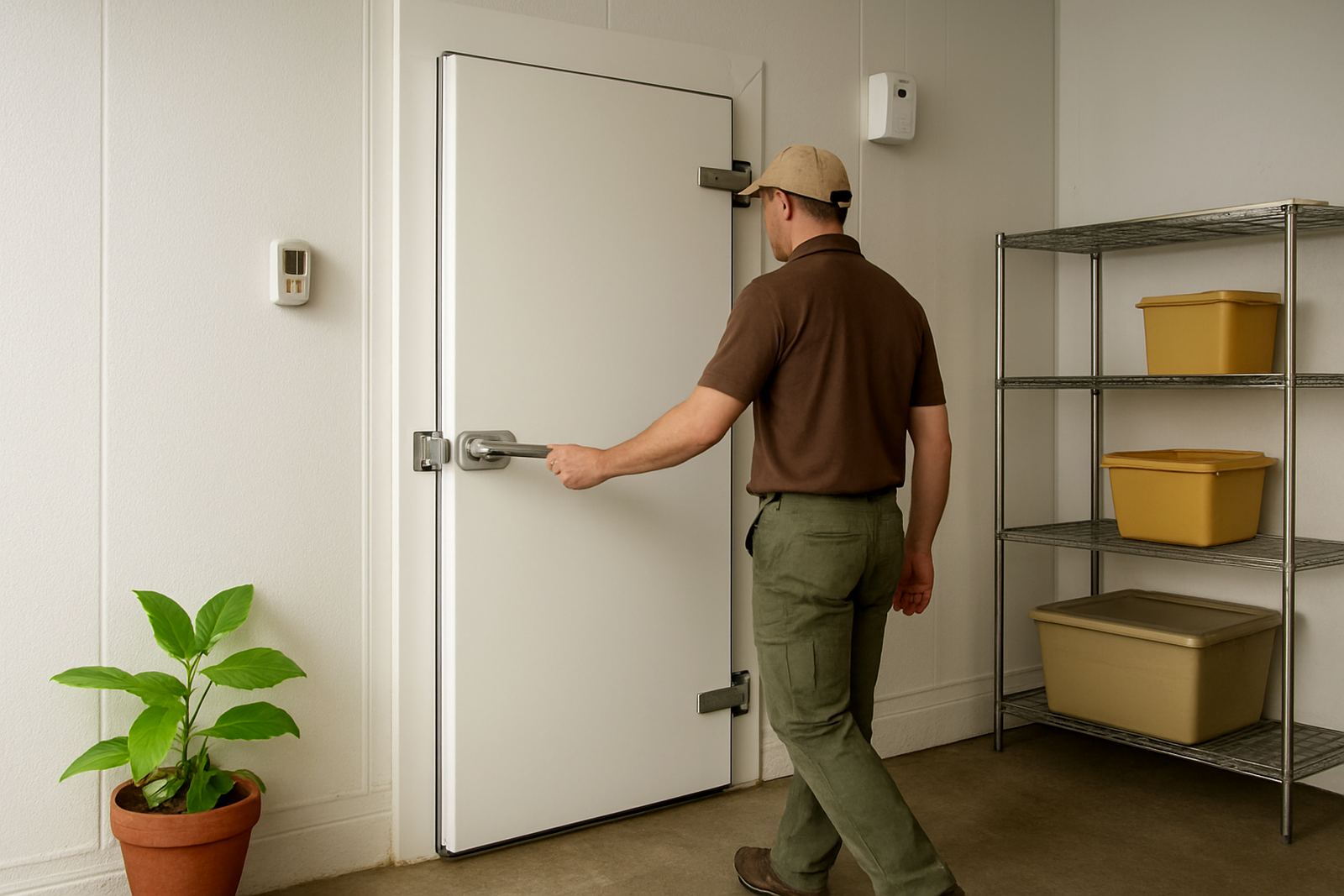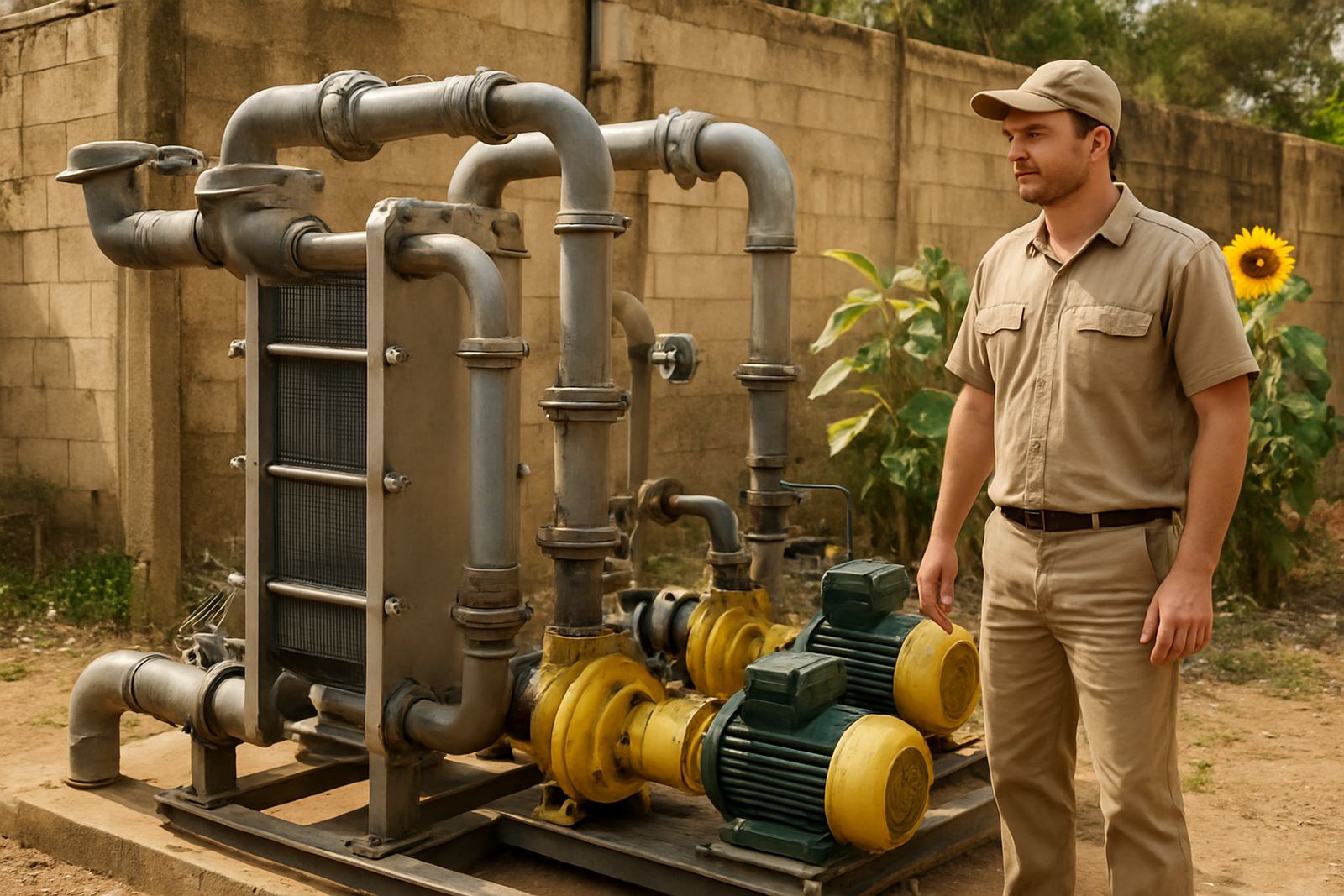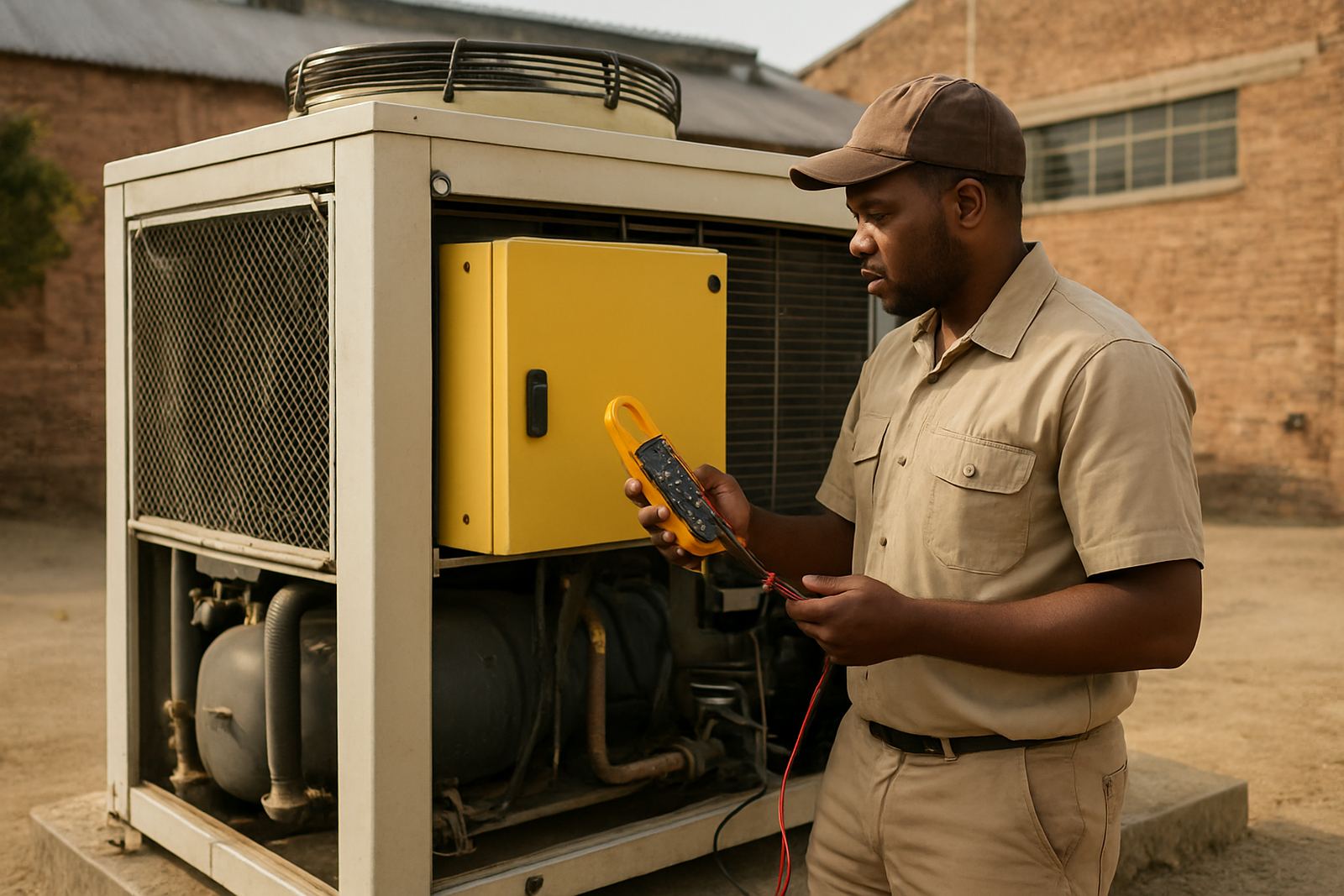
Factory chiller retrofit in Greenbushes, Gqeberha
The site was a busy production facility in Greenbushes, Gqeberha, running a process chiller that had reached the point where every start-up felt like a risk. The unit was still cooling, but the client was dealing with nuisance trips, uneven process temperatures and higher electricity use than they could justify on an older plant. They wanted a practical upgrade, not a full replacement, and they needed it done without upsetting daily production.
We met the maintenance team on site and worked through the history of the chiller, the recent fault pattern and the operating hours. The brief was simple: protect the compressors better, reduce wear on the plant, and add smarter control so the chiller could match demand instead of cycling hard all day. The client also needed the work to suit local conditions in Gqeberha, where summer heat, dust and occasional load shedding can push older equipment harder than it should be pushed.
What the client needed to fix
The chiller was serving a process line that could not afford long interruptions or wide temperature swings. The operators were seeing inconsistent return temperatures, especially during early morning starts and hot afternoons when the ambient conditions climbed. There were also concerns about compressor stress at start-up, which had already led to a few costly call-outs.
- Reduce compressor start stress and protect the motor circuit
- Hold process temperature more steadily across shifts
- Cut unnecessary running time during light load periods
- Improve response to changing ambient temperatures
- Keep the plant serviceable without major civil work
Because the unit sat inside an active production area, the client also asked for a tidy installation with as little downtime as possible. They did not want a long shut down, and they certainly did not want a system that would need constant hand holding from the operators.
What we supplied and installed
Our team at Nvirocool planned the retrofit around the existing chiller frame and pipework so the factory could keep as much of the original plant as possible. We upgraded the compressor protection package and added variable speed control to better manage cooling demand. That meant the chiller could ramp more smoothly, run less aggressively, and avoid the hard on off behaviour that had been causing wear and instability.
The installation included control changes, protection settings and field testing to confirm the new operating range. Siyabonga Mthembu led the refrigeration side of the work, with Ruan Smit managing the retrofit sequence and integration. Nokulunga Dlamini checked the energy related performance points so we could see whether the new setup was actually doing what the client needed, not just looking good on paper.
- Compressor protection upgrades to reduce trip risk and stress on start-up
- Variable speed control for better part-load operation
- Setpoint review and control tuning for process stability
- Checks on sensors, wiring and safe operating limits
- Commissioning tests under real site load conditions
We also cleaned up a few control issues that had built up over time, including inconsistent setpoint behaviour and a couple of worn components in the control circuit. Small fixes like that matter, because a chiller can only perform as well as its controls and sensors allow. One loose signal can make the whole plant feel unreliable.
How the job was phased over three weeks
The project ran over three weeks from initial assessment to final sign off. Week one was for inspection, measurements and control review. Week two covered the physical retrofit and protection changes. Week three was used for testing, tuning and operator handover.
We planned the work around production hours and arranged the shutdown windows with the site contact and maintenance staff. That way the factory did not lose a full day simply because a valve needed checking or a cable needed re-terminating. The team stayed on top of the sequence and kept the client updated through Ayabulela Ndlovu, who managed service coordination, and Yolanda Jacobs, who handled client communication and follow-up.
That pace suited the site. It gave us enough time to verify the system properly, but not so much time that the client had to carry an awkward half-finished plant for weeks on end. A few of the checks took place early in the morning before the line started up, which helped us see the chiller under real conditions.
Results on the plant floor
After the upgrade, the chiller started more cleanly, held temperatures more steadily and stopped hammering the compressors through repeated hard starts. The client reported fewer nuisance trips and a more predictable process temperature profile across the day. The energy draw was also better behaved, especially during lighter load periods when the variable speed control could do its work instead of forcing full output all the time.
In practical terms, the operators got a plant that was easier to live with. There was less chasing of alarms, less manual intervention and less anxiety when ambient conditions changed. The maintenance team also had clearer protection logic to work with, which makes fault-finding quicker when something does go wrong. The site manager said the main difference was that the chiller now behaved like part of the process again, not like a separate problem to manage.
For a factory in Greenbushes, that meant better production consistency and less risk during load shedding recovery, when equipment can be asked to restart under awkward conditions. The new setup gave the site more control and less waste, without forcing a full replacement of the chiller package.
What we would repeat on the next retrofit
We would handle this one the same way again: start with a full site review, protect the existing assets where it still makes sense, and only replace what is truly limiting performance. That approach kept the budget sensible and made the result easier for the client to support in-house.
For similar factory chillers in Gqeberha, Uitenhage, Despatch and the wider Eastern Cape, we would again recommend a proper condition assessment before any upgrade. A lot of older plants do not need a complete strip out. They need better controls, stronger protection and a clearer maintenance plan so the equipment can keep earning its keep.
If the plant is operating near the coast, we would also prioritise corrosion checks, panel housekeeping and coil cleaning, because salty air and dust can undo good refrigeration work faster than people expect. That is the kind of detail that saves trouble later, and it is worth doing while the system is already open.
Nvirocool carries out planned maintenance, emergency breakdowns, cold room repairs, chiller servicing, low-GWP conversions, leak detection, energy audits, coil cleaning, control upgrades and temperature monitoring from our Newton Park base in Gqeberha.
Key facts
| Project type | Factory chiller retrofit and control upgrade |
|---|---|
| Location | Greenbushes, Gqeberha |
| Timeline | 3 weeks from survey to handover |
| Scope | Compressor protection upgrades and variable speed control |
| Site type | Active production facility |
| Primary outcome | Steadier process temperatures with lower wear and better load response |