A Coastal Plant With Tight Temperature Limits
The client was a manufacturing operation in the Coega industrial area near Gqeberha, running a process line that depended on steady cooling water for product quality and uptime. Their existing loop was struggling to hold temperature during high ambient days, and the pressure drop across the system was making the pumps work harder than they should. In a coastal site like this, with salt air, windblown dust and long production hours, small faults soon become daily problems.
The brief was clear: stabilise the loop, improve heat transfer, and keep the plant moving without major civil work or long shutdowns. They also wanted a solution that would use less electricity than the old arrangement, because the site was dealing with load-shedding, rising tariffs and the usual pressure to keep operating costs under control.
What Was Failing In The Existing Loop
The original system had aged as a patchwork of add-ons. The old exchanger had fouled badly, the pump set was under-sized for the actual duty point, and control of the bypass line was not keeping the return temperature where it needed to be. The result was unstable supply temperatures, noisy pump operation, and short cycling that put extra wear on motors and valves. On some shifts the operators were forced to compensate manually, which is never ideal when you need repeatable output.
We carried out a site assessment, measured flow and temperature differentials, and checked the pipework layout against the actual process demand. That showed two main issues: heat transfer surface was no longer enough for the load, and the pumps were running too close to their limits. There were also signs of scale build-up and minor leakage at flanges, so the system needed more than a quick service.
- Unstable supply temperature under peak load
- Pump strain from poor duty matching
- Fouling and reduced exchanger performance
- Minor leakage points and control drift
- High energy use during extended production hours
Plate Exchanger And Pump Skid Upgrade
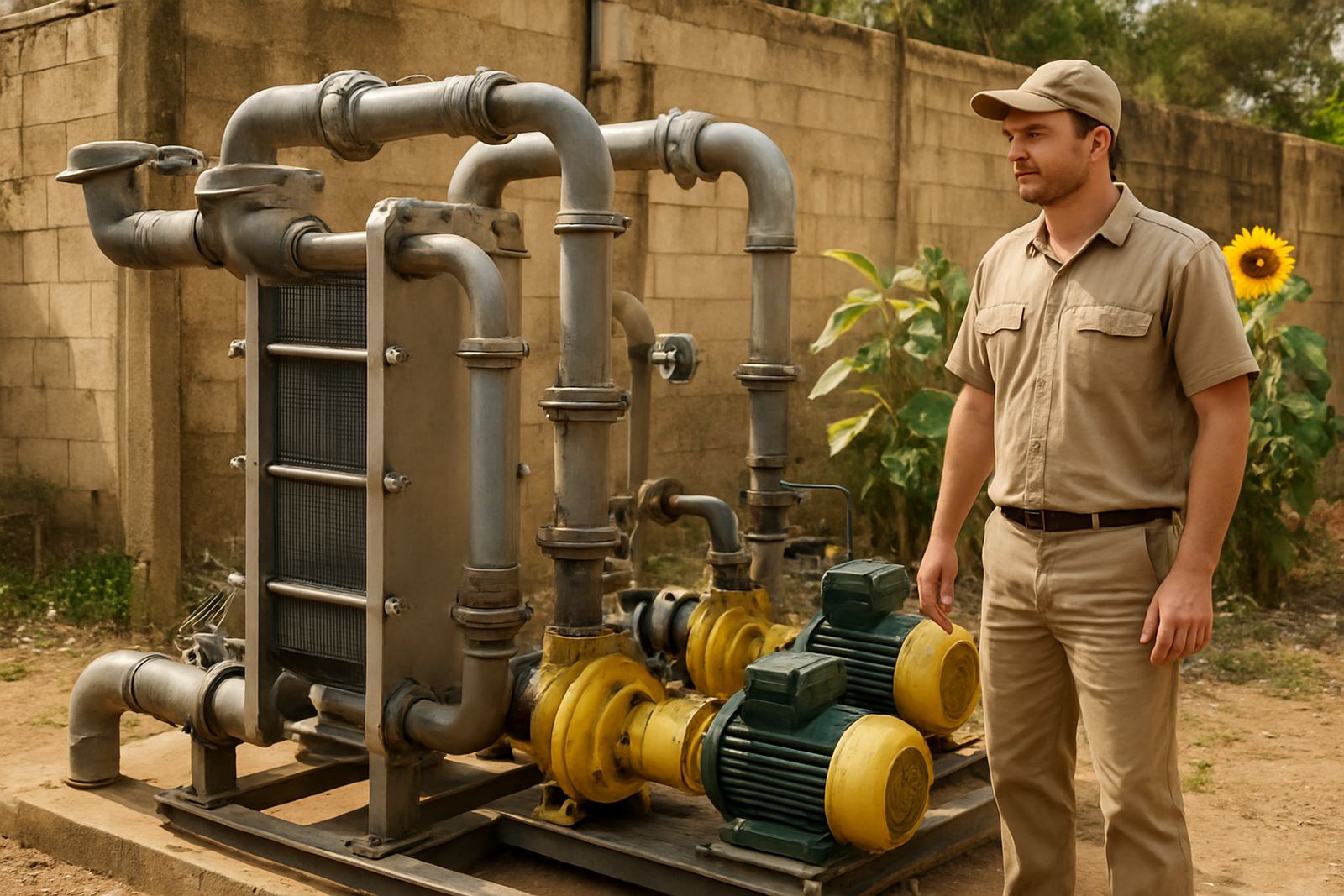
We supplied and installed a new plate heat exchanger sized for the process duty, together with a pump skid upgrade to match the real flow requirement. The new exchanger was selected for strong heat transfer in a compact footprint, which suited the available plant room space. We also reworked the isolation valves, strainers and test points so the system could be maintained without unnecessary downtime. Where needed, we used flexible connectors to reduce vibration transfer, because that helps on coastal sites where equipment already takes a beating.
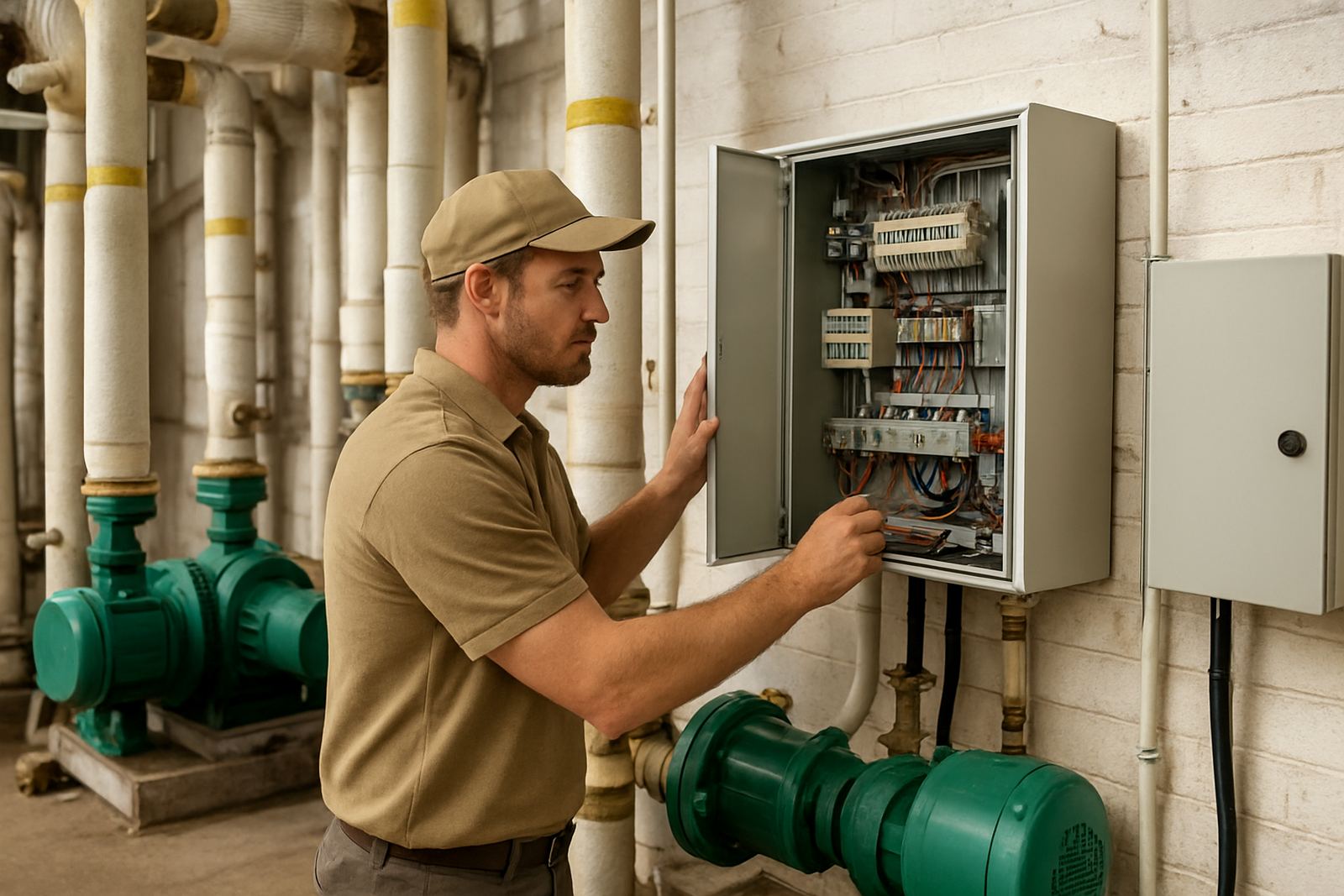
The pump skid was built for easier access and better control. It included duty and standby pumping arrangement, local isolation, non-return protection and a revised control set-up so the pumps could stage according to demand rather than hammering away flat out. A differential pressure logic was added to keep the loop stable across varying production loads, and the set-up allowed the maintenance team to see what was happening before a trip became a shutdown.
- New compact plate exchanger matched to process load
- Duty and standby pumps on upgraded skid
- Improved valve arrangement and access for maintenance
- Revised control logic for staged pump operation
- Strainers and test points added for easier servicing
Timeline, Shutdown Planning And Commissioning
The full job ran over three weeks from assessment to handover. Week one was site measuring, final selection and planning around the production window. Week two covered fabrication, supply of components and pre-assembly of the pump skid. Week three was the shutdown, mechanical tie-in, flushing, pressure testing and commissioning. The client could not afford a drawn-out stop, so we split the work into neat stages and kept the tie-in period as short as practical.
We also planned around load-shedding and the local supply conditions, which matters when you are testing controls and motor rotation. The team kept temporary measures ready so the plant could be brought back on line if the grid changed mid-task. Once commissioned, we checked temperatures at different loads, confirmed flow stability and fine-tuned the control settings over several production cycles. The last step was operator handover and a maintenance schedule the site could actually follow.
Results At Full Production Load
After the upgrade, the process loop held temperature more steadily and the operators had far less need to manualy intervene. The return temperature became more predictable, the pumps ran quieter, and the client saw a noticeable drop in nuisance alarms. Energy use improved because the new pump arrangement no longer had to fight an undersized or poorly matched system. That gave the plant better operating margin during hot weather and on extended shifts.
From a maintenance point of view, the change was just as important. The exchanger can now be isolated and cleaned more easily, and the skid layout gives technicians proper access to strainers, gauges and valves. In practical terms, that means less time lost to chasing faults and more time keeping production steady. For a site in Coega, where downtime is costly and the marine environment is unforgiving, that is a proper win.
- More stable process temperature across the shift
- Reduced pump strain and lower nuisance tripping
- Better energy use and control response
- Improved access for cleaning and future servicing
- Less manual adjustment from operators
What We Would Do Again
If we were doing the same project again, we would follow the same approach: measure first, design to actual duty, and keep the maintenance team in the loop from the start. That is the sensible way to handle process cooling in the Eastern Cape, where ambient conditions, dust and power interruptions all affect performance. A system only works well if it is matched to the real site, not just the nameplate figure on paper.
We would also keep the emphasis on serviceability. On industrial sites, the best cooling setup is the one that can be inspected, cleaned and adjusted without needing a major shutdown every time something small drifts out of range. At Nvirocool, that is the sort of practical thinking we bring to planned maintenance, emergency breakdowns, energy audits and retrofit work across Gqeberha, Uitenhage, Despatch and the surrounding areas.
Key facts
| Project type | Process cooling loop stabilisation |
|---|---|
| Location | Coega, Gqeberha |
| Main equipment | Plate heat exchanger and pump skid |
| Project duration | 3 weeks |
| Control upgrades | Staged pump control and differential pressure logic |
| Outcome | Stable temperature, better flow control and lower energy use |