What Went Wrong In The Freezer
The freezer was used for daily stock holding by a local food business in Algoa Park, Gqeberha. It had taken a knock over time, with damaged wall and ceiling panels, weak joints at the corners, and a door system that was no longer closing cleanly. In a cold room or freezer, those small faults add up fast. Once warm air gets in, the compressor runs longer, frost builds quicker, and product temperature starts drifting.
The client brief was simple enough on paper: make the room dependable again and reduce the repeated callouts that had become a monthly headache. The challenge was that the freezer sat in an active work area, so we had limited downtime, tight access around the room, and only a short window to strip back the damaged sections without disrupting operations more than necessary. Coastal humidity in Gqeberha made the sealing problem worse, especially at the threshold and panel joins.
Site Conditions And Project Constraints
This was not a full new build. The existing shell had to be assessed, retained where sound, and rebuilt in a way that would improve performance without forcing the client into a full replacement. We checked the floor line, panel alignment, door frame opening, and the condition of the insulation core before touching any fixtures. A few sections looked fine on the surface, but had hidden moisture staining and weak bonding behind the liner.
Access and timing mattered. The site had traffic coming through most of the day, and the freezer contents had to be moved in stages. That meant we planned the work in clear phases and kept the rebuild moving so the door stayed open for as little time as possible. Load-shedding also shaped the sequence, because every interruption increases the risk of temperature rise. The client needed a practical solution, not a drawn-out site full of half finished work.
- Active site with limited shutdown time
- Moisture affected panel joints and threshold areas
- Existing room had to be improved, not replaced in full
- Work had to account for load-shedding and stock handling
What We Supplied And Rebuilt
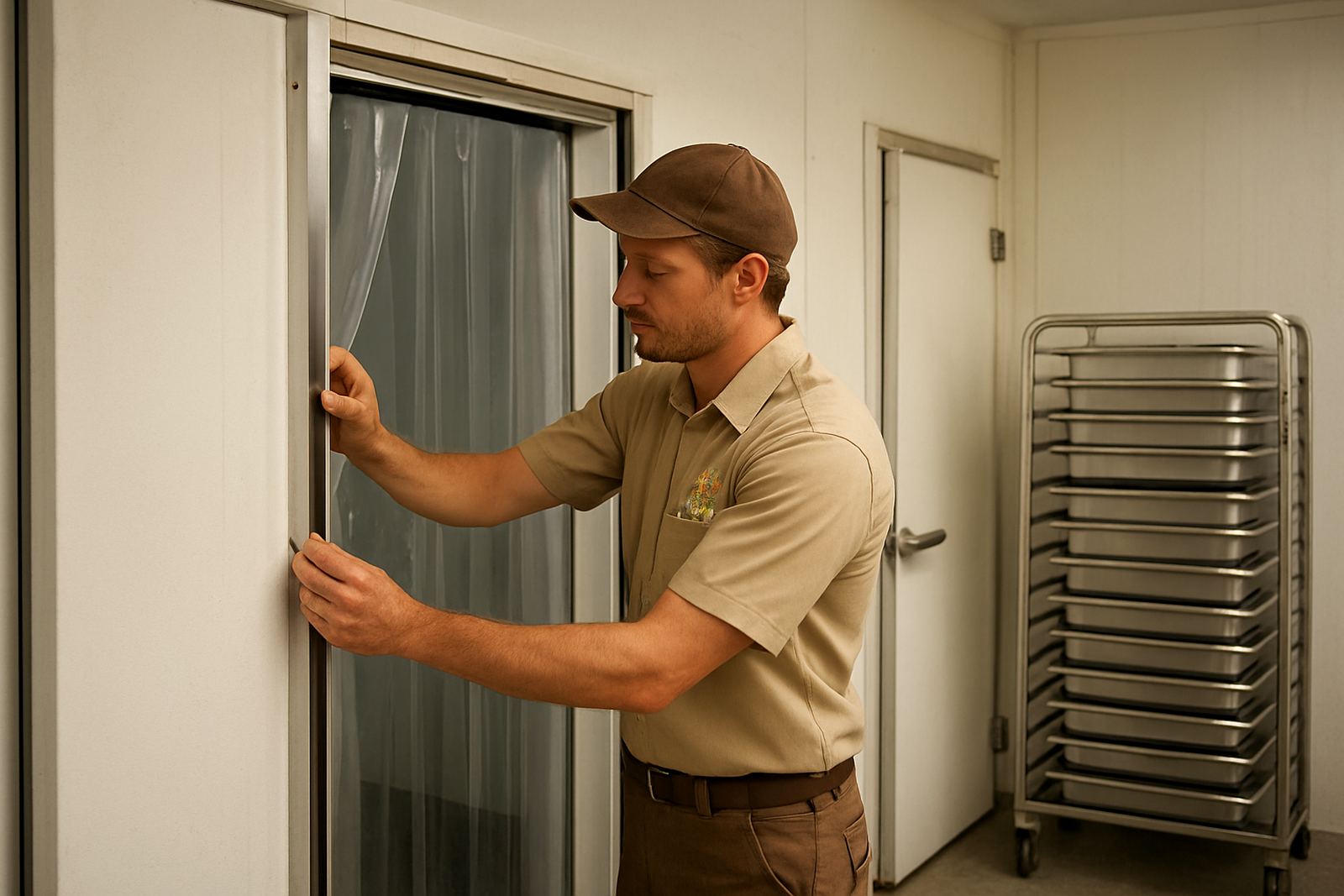
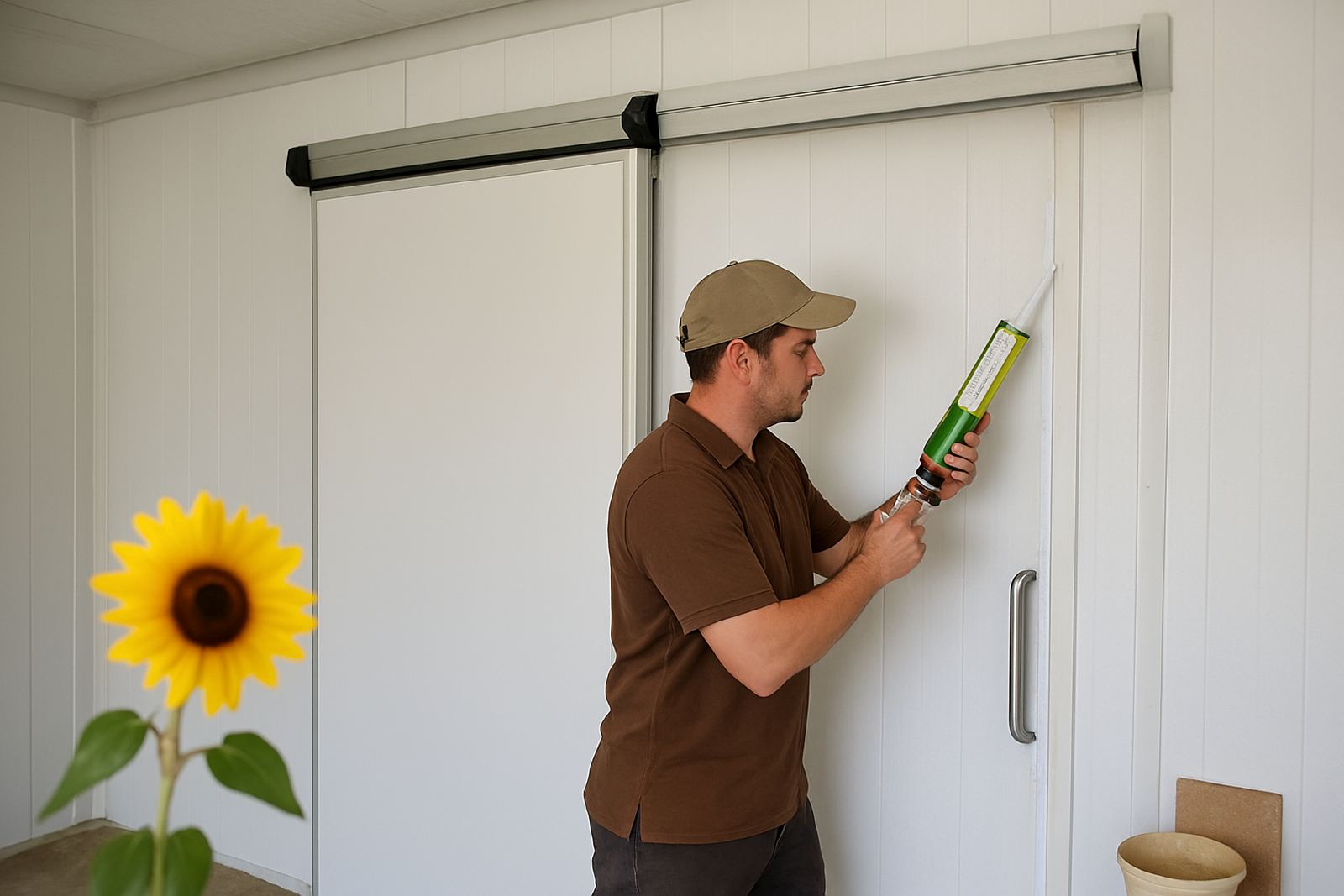
We removed the damaged freezer panels and replaced them with new insulated sections matched to the existing room layout. The rebuild included improved insulation detailing at the joints, better vapour control, and a revised door system with stronger closing action and cleaner compression on the seals. Where the old setup had gaps, we closed them out properly so the room would hold cold air where it should.
The insulation build-up was specified to suit freezer duty, with careful attention to thermal bridges around the frame and door opening. We also renewed the threshold detailing so the base of the door would not keep picking up frost and dirt. The work was done with serviceability in mind, because a room that is hard to clean becomes a problem again later.
- Replacement freezer wall and ceiling panels
- Improved insulation detailing at corners and panel joins
- New door system with adjusted closing and sealing action
- Threshold repair to reduce frost ingress and wear
- Cleaner access for ongoing maintenance and hygiene
How The Rebuild Was Carried Out
We started by isolating the affected area and stripping out the failed panel sections in a controlled sequence. Once the old material was out, we cleaned the interfaces, checked the frame lines, and corrected any minor alignment issues before the new panels went in. This part matters, because if the base or frame is out by even a few millimetres, the door will fight you every day afterwards.
After the structural side was sorted, we installed the new insulation panels, sealed the joints, and set the door gear so the closing pressure was even from top to bottom. Final commissioning included a temperature stability check and a review of air leakage points around the perimeter. We also walked the client through basic checks, such as watching for seal wear, checking the latch action, and keeping the threshold clear of debris. A freezer like this only stays right if the small things are noticed early.
Timeline, Delivery And Working Hours
The project ran over 2 weeks from assessment to handover. The first week covered strip-out, measurement, material supply and preparation. The second week covered panel installation, door fitting, sealing, and final checks. Because the business was trading, we phased the work to keep the freezer down for the minimum practical time and arranged the most disruptive tasks for quieter periods where possible.
For a site in Algoa Park, that kind of planning saves money as much as it saves stock. A freezer rebuild done in one rush often ends with poor finishing. We prefer to keep the sequence tidy, even if it takes a little more coordination up front. It means fewer return visits and a better result the first time around.
- Week 1: assessment, measurements, strip-out and preparation
- Week 2: panel fitment, door system installation, sealing and commissioning
- Practical handover completed after temperature and access checks
Results For The Client
Once the rebuild was complete, the freezer held temperature more consistently and the door closed properly without the old drag and bounce. The improved insulation detailing reduced unwanted heat gain, which cut the compressor run time and helped steady power use. For the client, that meant fewer alarms, less frost build-up, and better protection for stock during normal trading and during municipal or load-shedding interruptions.
The room also became easier to manage day to day. The new threshold and door sealing reduced cold loss when staff moved in and out, and the cleaner panel finish made routine cleaning less of a chore. In practical terms, the freezer went from being a trouble spot to being a space the team could trust. That is usually the real measure of the job.
What We Would Do Again On A Similar Site
We would use the same phased approach again, especially where a freezer sits inside a busy operation. Start with a full condition check, then replace only what is failing but make sure the insulation details are right at every join. On older rooms, the corners, thresholds and door frames are where most of the problems start, so those need proper attention from the outset.
We would also keep the handover focused on maintenance habits. If the client knows what to watch for, such as seal damage, frost lines, or a door that no longer pulls in square, small issues can be caught before they turn into another rebuild. That is the kind of work that lasts longer and keeps the running cost under control.
Key facts
| Project | Algoa Park Freezer Rebuild |
|---|---|
| Town | Algoa Park, Gqeberha |
| Client type | Local food storage and distribution business |
| Project duration | 2 weeks |
| Scope | Damaged panel replacement, improved insulation detailing, door system rebuild, sealing and commissioning |
| Outcome | Better temperature hold, reduced cold loss, improved day to day reliability |