

Home / Guides / Cold Room Buying Guide

Guides

Cold Room Buying Guide

Choosing a cold room is not only about metres and price. The right package should fit your stock, workflow, power supply and the way your team works every day.

Cold Room Buying Guide

Start with what you are storing and how often it moves

Before you look at panels or compressors, write down what will go inside the room and how quickly it turns over. Fresh produce, meat, dairy, flowers and mixed cartons all behave differently. A room for daily dispatch in Gqeberha will need faster access and more door openings than a reserve store in Graaff-Reinet where stock moves slower.

Check the product temperature range, pallet count, crate size and whether stock is delivered in bulk or picked in smaller loads. If your team opens the door many times a day, you will need better door seals, a stronger air curtain plan and controls that recover temperature quickly after each opening.

  • What is the target temperature, for example 0 to 4 C or frozen storage?
  • How many pallets, crates or trays must fit at one time?
  • How many times a day is the door opened?
  • Will stock be loaded by hand, trolley or forklift?
  • Do you need separate areas for receiving, storage and dispatch?

Check the room size, layout and clear working space

Cold room capacity is not only floor space. Ceiling height, aisle width, door position and the space needed for cleaning all affect the final fit. A room that is too tight slows work and creates warm spots where air cannot move properly. That costs money every month in higher power use and more wear on equipment.

For busy sites in Despatch or Uitenhage, allow enough space for two people to work without blocking the door. If you use trolleys or pallets, measure the turning circle before you commit. Also think about the floor finish and drainage. A room set up for wet products needs different drainage planning than a dry goods store.

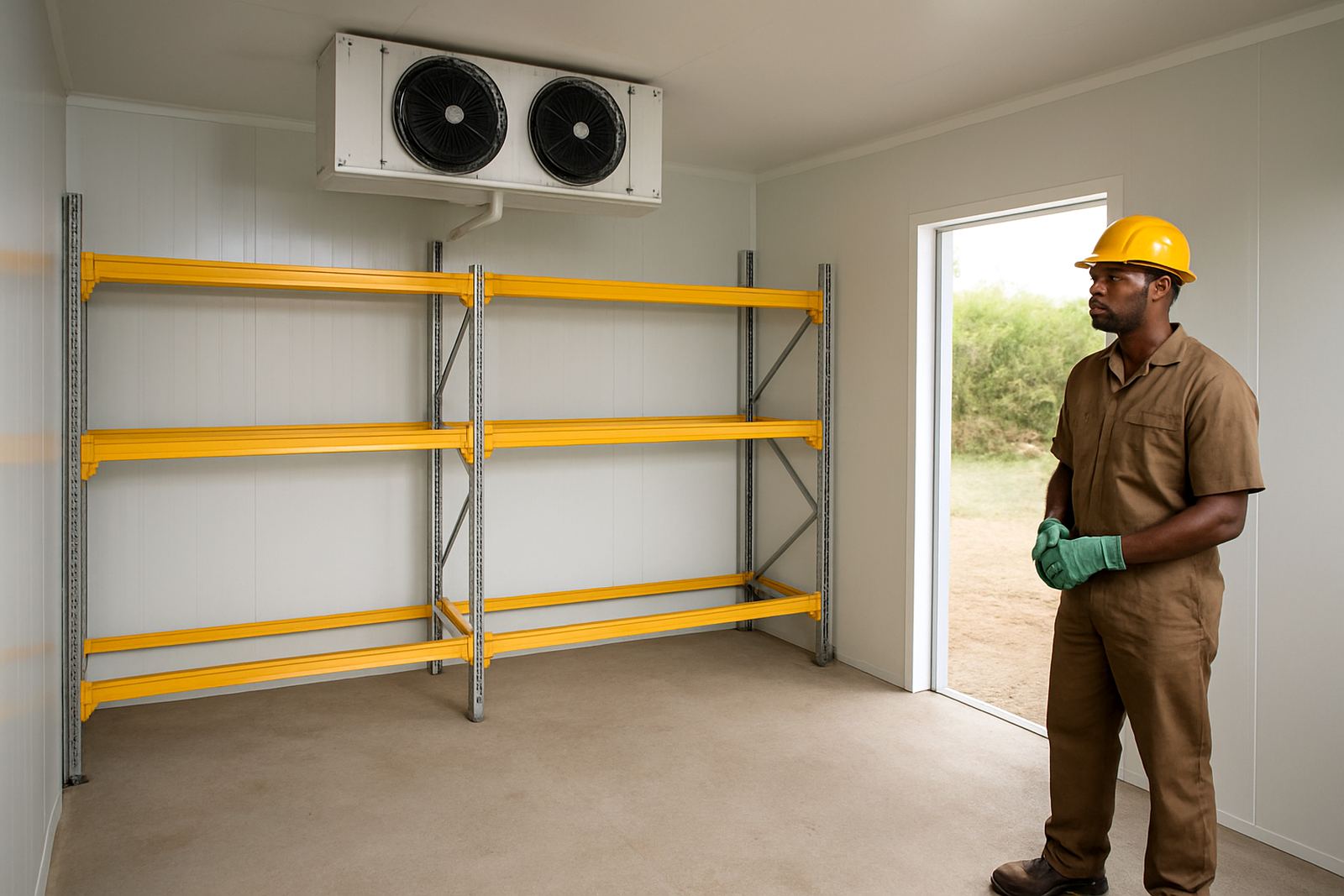
  • Allow clear access around evaporators and service panels
  • Leave space for future racking, not just today’s stock
  • Make sure the door opens in the right direction for workflow
  • Check if the floor can handle the load from pallets and trolleys
  • Plan cleaning access for the corners, floor joints and door frame

Compare insulation, doors and floor build quality

Good insulation keeps the room stable when the weather changes, which matters in coastal areas like Port Alfred and Jeffreys Bay where humidity can be high. Ask about panel thickness, joint sealing and how the floor is insulated if the room sits on a slab. Thin or badly joined panels lead to sweating, ice build-up and more strain on the plant.

Doors are one of the weak points in any cold room. A solid door with proper seals, heating where needed and reliable hardware will save power and reduce breakdowns. If the room is in a salty coastal zone, hinges and fittings should be chosen with corrosion in mind. One bad seal can undo a lot of good work.

Also ask how the supplier handles vapour barrier details, because a poor barrier can cause hidden moisture problems inside the walls. That sort of fault is often expensive to fix later and can lead to damage long before anyone spots it.

Match the refrigeration package to local power and operating costs

The refrigeration set-up must suit your site power and your load-shedding plan. A room that works well on paper can struggle if the compressor cycles badly, the controls are old, or the site has voltage dips. In the Eastern Cape, that matters in small factories, butchery stores and agricultural packhouses alike.

Ask for a package that is sized properly for the room and the product load, not just the room volume. Oversized equipment can short cycle and waste energy. Undersized equipment runs hard, struggles in summer and wears out sooner. Controls should keep temperatures steady and give useful alarms if the room drifts out of range.

  • Ask about power draw during start-up and normal running
  • Check whether the controls can restart safely after an outage
  • Confirm the backup plan for product safety during load-shedding
  • Consider energy-saving upgrades such as variable control and efficient fans
  • Request expected running costs, not only installation cost

Think about maintenance access before you sign off

A cold room should be easy to service. If technicians have to remove half the room lining or work in a cramped corner, routine maintenance becomes slower and more expensive. Good access matters for coil cleaning, leak detection, fan checks and electrical inspections. It also helps when a fault happens after hours and the team needs a quick response.

For sites with frequent deliveries, choose equipment that can be maintained without shutting down the whole operation for long periods. Ask where isolators, valves, control panels and drain points will sit. If your business is near the coast, plan for regular cleaning and corrosion checks, especially on motors, frames and electrical connections.

It helps to ask for a maintenance schedule from the start. A room that gets planned care usually runs colder, uses less power and gives fewer surprises during peak season.

Use a short buying checklist before you request quotes

Once you know your storage needs, compare quotes on the same basis. A cheaper quote may leave out insulation details, door quality, controls or after-sales support. That makes it hard to compare properly and often pushes up the total cost later.

Use this checklist when you speak to suppliers in Gqeberha, Newton Park, Jeffreys Bay or further inland:

  • Confirmed room size, temperature range and product type
  • Panel thickness, floor build and vapour barrier detail
  • Door type, seal quality and hardware finish
  • Refrigeration size, controls and alarm options
  • Energy use estimate and load-shedding response
  • Maintenance plan, service access and response times
  • Warranty terms and who handles repairs locally

If two quotes look close, compare the detail line by line. Ask what is excluded. Ask who commissions the system and who shows your team how to use it. A neat installation is useful, but a room that keeps temperature and stays serviceable is what really pays back.

Questions we get asked

How do I know what size cold room I need?

Start with the product volume, turnover rate and how many pallets or crates you need to hold at peak. Then add space for airflow, safe access and future growth.

Should I choose the cheapest cold room quote?

Not on price alone. Compare insulation, door quality, refrigeration size, controls, energy use and maintenance access. A low quote can become costly if it leaves out key parts.

What matters most in coastal areas like Gqeberha and Jeffreys Bay?

Humidity and corrosion protection matter a lot. Good seals, protected fittings and regular maintenance help prevent sweating, rust and unnecessary breakdowns.

Planning something? Email the team.

hello@nvirocool.co.za