What a refrigeration alarm should catch first
Start with the risks that cost money quickest. In most sites that means high temperature, low temperature, power failure, door left open, short cycling and compressor or fan faults. If the alarm only tells you the room is already warm, it is too late for some stock. A better setup gives an early warning when temperatures start to drift, so the issue can be checked before product loss. That matters in bakeries, butcheries, food storage yards and any cold room that runs through the night.
For chillers and cold rooms in the Eastern Cape, alarms should also account for frequent door openings, coastal humidity and unstable supply during outages. A simple buzzer in the plant room is not enough if nobody hears it after hours. You need local notification, clear fault text and a contact list that reaches the right person first time.
Alarm features worth asking for on site
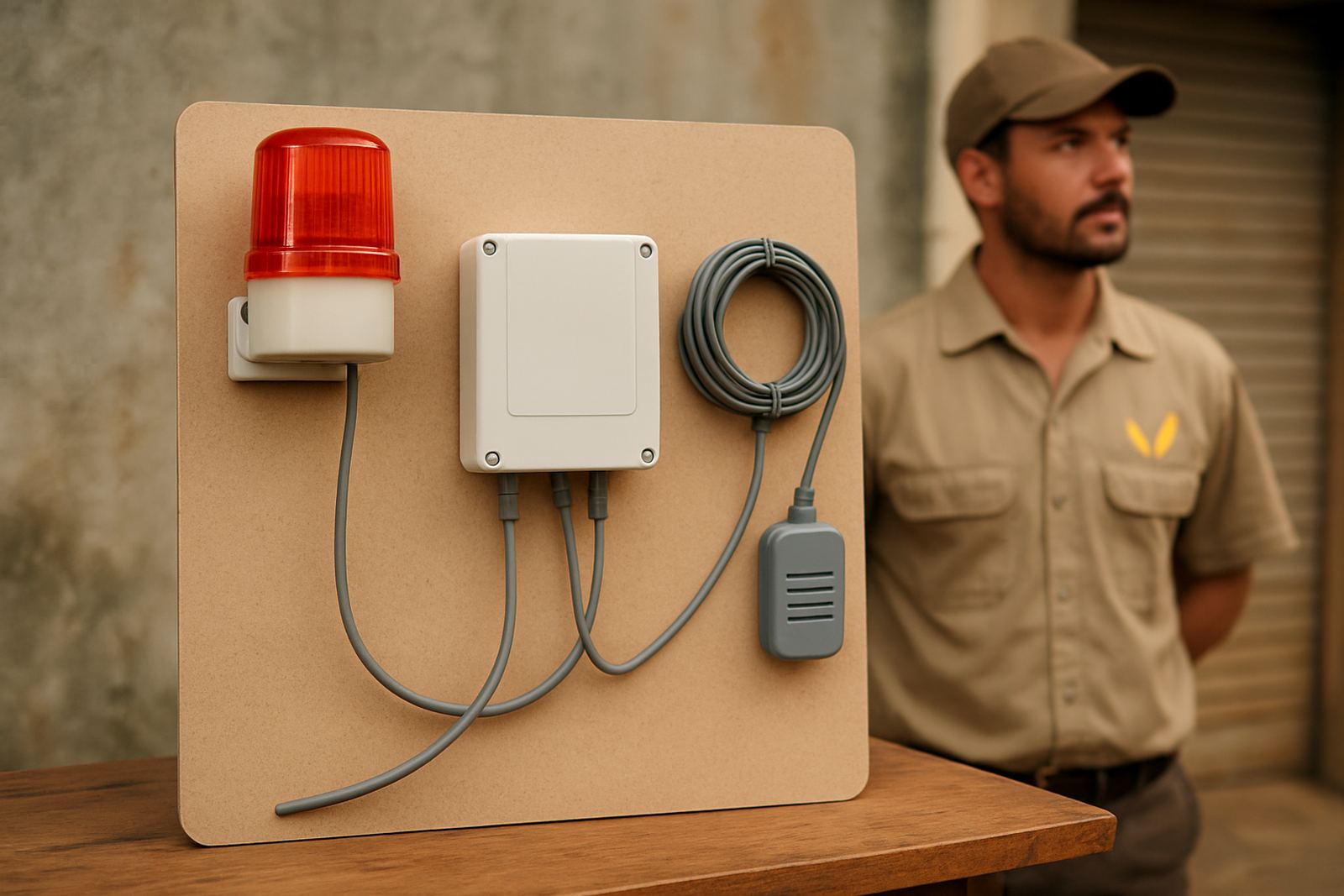
When a system is being upgraded or checked, look beyond the siren. The best alarms are specific, easy to read and tied to real action. An alarm that says only 'fault' can waste half an hour while someone guesses the cause. A temperature alarm with the actual reading, the affected room and the time of the event is much more useful. If the system can send messages to more than one person, even better.
- Remote alerts by text or app message for after-hours response
- Power failure alarms with battery backup on the control side
- Door open alarms with a sensible delay for normal loading
- High and low temperature set points that can be adjusted per room
- Alarm history so repeat faults can be traced
- Sensor fault alerts, because a broken probe can look like a cooling problem
Ask whether the alarm still works during load-shedding. If the power is off and the alarm loses its memory or comms then it is not doing the job. In many sites, the control gear needs its own backup supply or at least a clean shutdown and restart process.
After-hours response needs a clear chain
Alarm systems fail in practice when nobody knows who must answer them. A good response plan starts with one person on duty, then a second contact, then a technician if needed. The callout list should be tested monthly and updated when people change roles. If the alarm goes to a shared phone that is switched off at home, you have no protection. It is worth checking what happens on weekends, public holidays and municipal outages too.
Keep the response steps simple. Who checks the reading, who authorises a callout, who opens the site and who signs off the job. If those roles are not clear, the room can sit warm for hours while everyone assumes someone else is handling it. For busy operations in Gqeberha, Uitenhage or Despatch, a clear chain saves time and stops a small fault turning into a stock write-off.
- List three contact numbers, not one
- Write down the alarm threshold for each room
- Keep gate codes and site access details current
- Test the escalation path after staff changes
- Record every alarm with time, temperature and action taken
Steps to test alarms before they are needed
Testing is where many sites fall short. The alarm should be checked in normal conditions, not only when something has already failed. A monthly test is usually enough for smaller sites, while larger cold storage or high-value stock rooms may need a weekly check on the control panel and notifications. The point is to verify that the alarm can be seen, heard and responded to by the right person.
Use a simple checklist. Confirm the sensor reads accurately against a known thermometer. Trigger the door alarm. Simulate a high temperature condition if the controller allows it. Test the power fail alert and the backup supply. Check that the signal reaches the phone or control room without delay. If the messages come through late, or not at all, sort that out before the next outage.
It is also worth checking whether the alarm resets itself after a brief interruption. Some controllers can be too sensitive and send false alarms during compressor starts or brief voltage dips. That can create alarm fatigue, then people start ignoring the alerts. A well-set system should warn early without crying wolf.
How alarms support maintenance and energy savings
Good alarm data helps with planned maintenance as much as emergency callouts. If a room keeps tripping on high temperature at the same time each week, there may be a door discipline issue, a blocked coil, or a control setting that needs adjustment. If the alarm shows long compressor run times, you may be looking at dirty condenser coils, low gas charge or poor airflow. That is useful before the unit starts failing on a hot Friday afternoon.
For energy-saving retrofits, alarm trends can show whether the system is running harder than it should. After a low-GWP conversion or control upgrade, the alarm history should be watched for the first few weeks. That tells you if the new settings are holding, if the temperature bands need fine tuning, and if the site is saving power without risking product. In coastal areas, salty air and humidity can also affect electrical parts quicker than people expect, so ongoing checks matter.
A practical checklist for cold rooms and chillers
If you are reviewing an alarm setup, work through the basics in order. This keeps the system practical, not overcomplicated. A lot of sites do not need fancy extras, they need accurate sensors, reliable notification and a technician who can get to the root of the fault quickly.
- Is the alarm easy to hear on site and easy to read on a phone?
- Does it alert more than one contact after hours?
- Does it cover power loss, temperature drift and door faults?
- Are the set points suitable for the goods stored in the room?
- Has the backup supply been tested during a power cut?
- Are the sensors clean, secure and free from damage?
- Is the fault log reviewed after every incident?
If the answer to any of those is no, the system needs attention. A proper alarm setup is not about adding noise, it is about protecting stock, keeping response times tight and reducing avoidable breakdowns.