Why coil cleaning matters in coastal and inland conditions
Coils are the part of the system that does the actual heat exchange. When fins are blocked with dust, fluff, cardboard fibres, grease or coastal salt, the equipment has to run longer and harder to get the same result. That means higher electricity use, more wear on fans and compressors, and a bigger chance of high pressure trips or poor pull down on product.
In Gqeberha, Despatch, Uitenhage and along the coast, salt air can cake onto condenser fins fast. In places like Graaff-Reinet and inland parts of the Eastern Cape, fine dust is often the bigger issue. We clean both condenser coils and evaporator coils, depending on where the restriction is and what the site needs. If a coil is only lightly dirty, a proper wash may be enough. If it is packed with grease or lint, we use a deeper clean and straighten bent fins where possible.
What is included in a standard coil clean
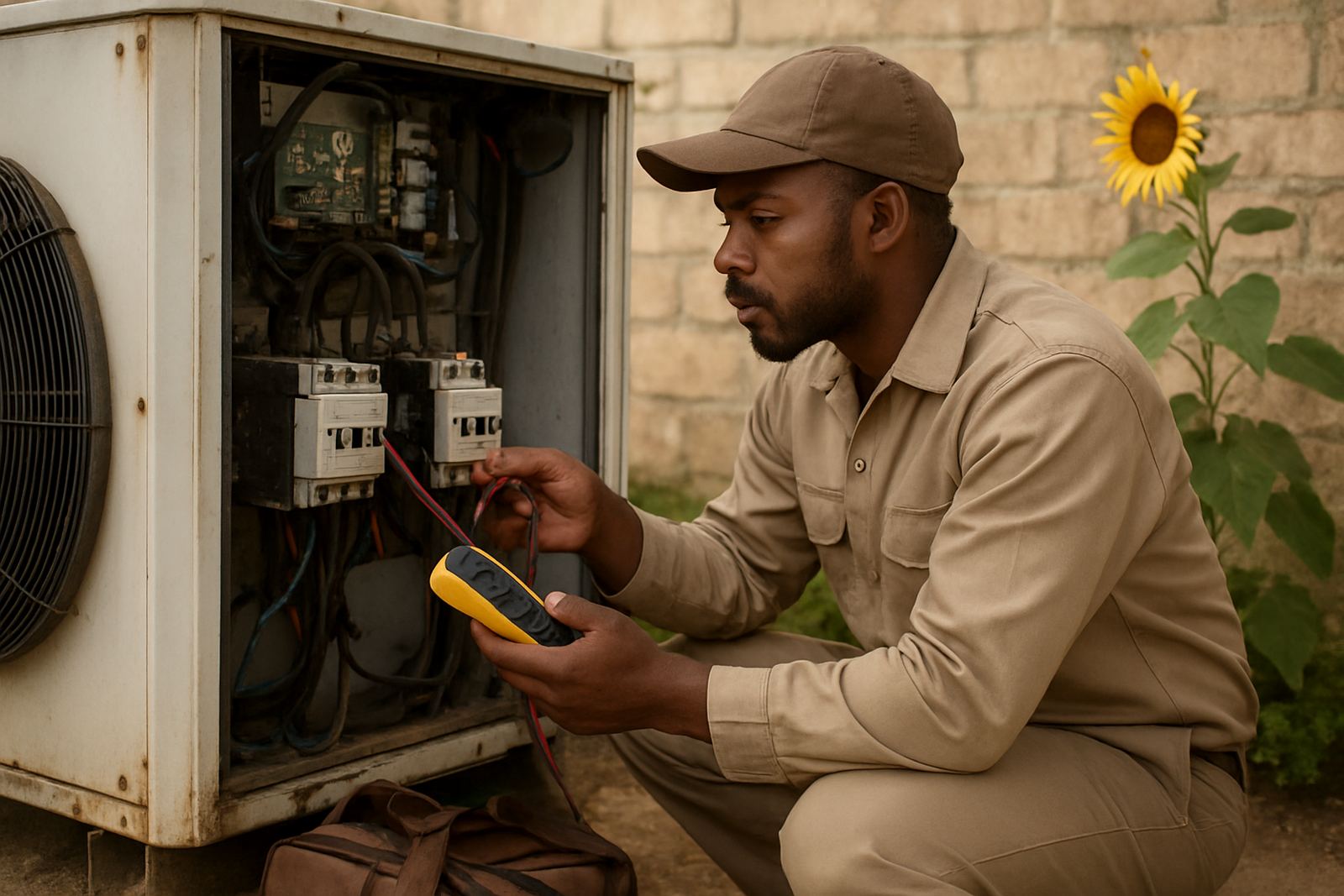
Our coil cleaning service is set up for cold rooms, freezer rooms, packhouses, bottle stores, kitchens and air-cooled chillers. We work on the equipment in place, with care around electrical components, drip trays and nearby stored goods. Where needed, we isolate sections, protect controls and keep the work area tidy.
- Visual inspection of condenser and evaporator coils
- Removal of loose dust, debris and buildup from fins
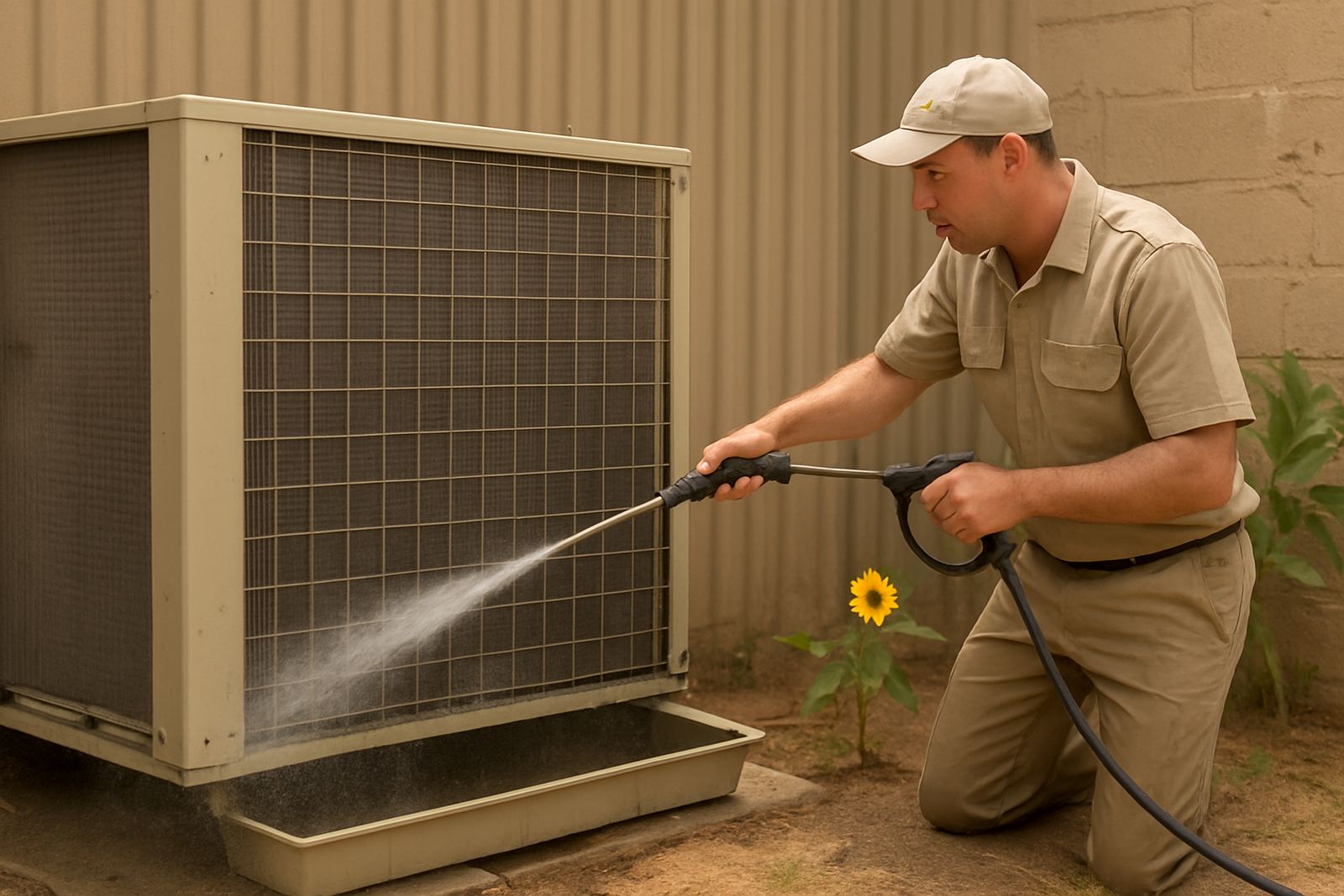
- Safe washing with the correct pressure and cleaning agent for the coil type
- Fan and motor area clean-up where accessible
- Checking for bent fins, blocked airflow and drain issues
- Basic condition notes on corrosion, oil marks or signs of leakage
- Before and after feedback so you can see what changed
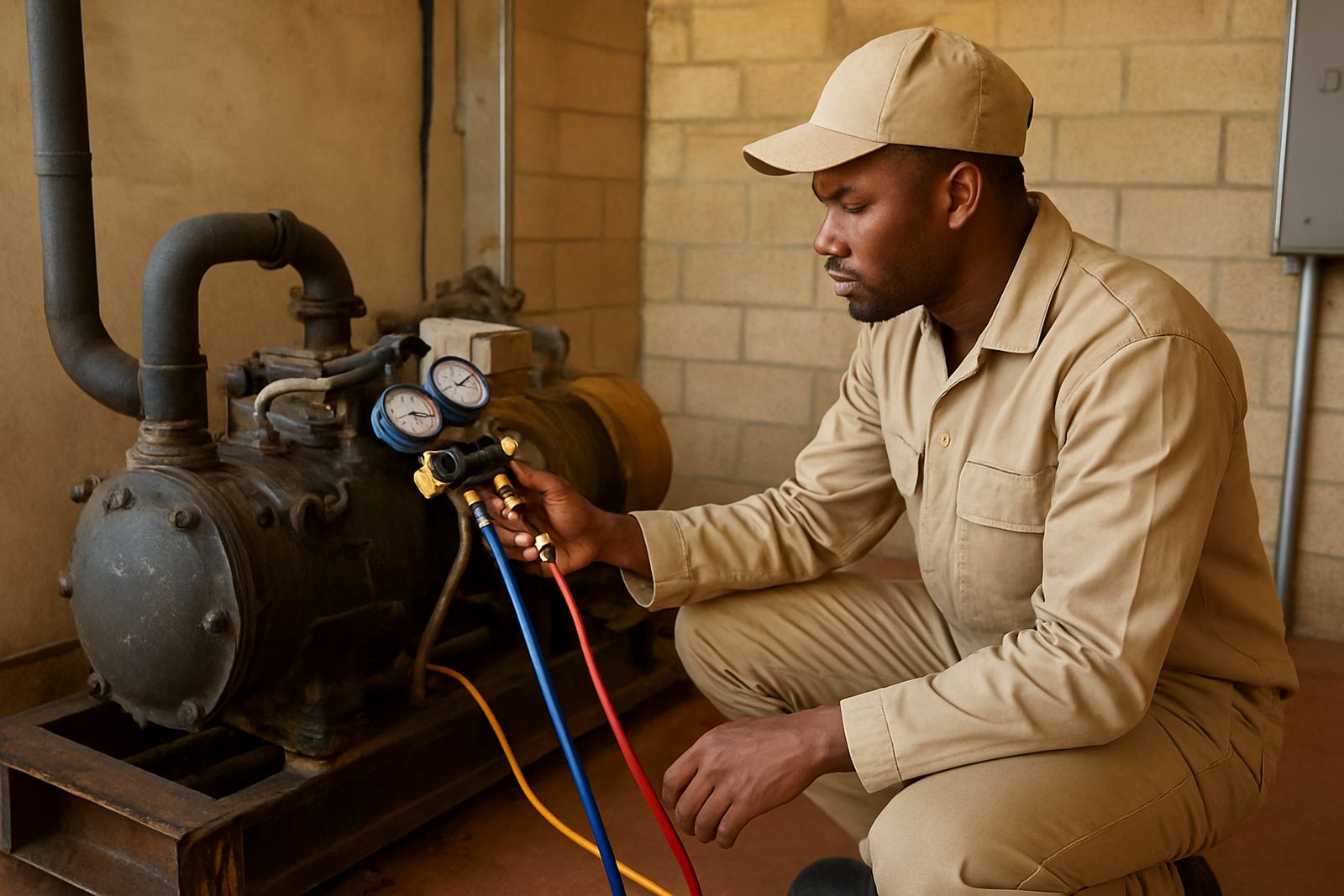
If we find frost patterns, oil residue or a section that is not accepting a clean properly, we will flag it. A dirty coil and a refrigerant fault can look similar on a hot day, so it is worth checking properly instead of just rinsing and hoping for the best.
Our cleaning process from site check to restart
We start with a site check to confirm the unit type, access and any food safety or tenant rules. On a live site, we plan around trading hours, stock movement and, where needed, load-shedding backup arrangements. Some sites in Newton Park and the industrial areas have tight access, so we also check whether ladders, panels or access hatches are needed before we arrive.
The process usually follows these steps:
- Switch off and isolate the relevant equipment safely
- Open access panels and assess the coil condition
- Protect electrical parts, motors and nearby surfaces
- Apply the correct cleaner and rinse at a safe pressure
- Clear drain paths and inspect for airflow obstruction
- Allow the coil to dry, then restart and confirm operation
Once restarted, we check temperature pull down, fan operation and basic operating noise. If the system is struggling after cleaning, that can point to low gas, control faults or a failing fan motor. We do not leave a site with an obvious issue unmentioned.
Turnaround times and how we schedule work
Most standard coil cleaning jobs can be completed the same day, depending on access and the number of units on site. A single split condensing unit may take under an hour, while a large chiller bank or a cold room with restricted access can take several hours. If the coil is heavily blocked, we may need extra drying time before restart.
For planned maintenance clients, we slot coil cleaning into a service visit so it fits with other checks like temperature monitoring, leak inspection and control testing. That helps reduce downtime and keeps the site on a sensible maintenance cycle. Emergency callouts are available for systems that are already tripping on high head pressure or struggling to hold temperature, but emergency work is priced differently from planned service.
We cover Gqeberha, Uitenhage, Despatch, Jeffreys Bay, Port Alfred and Graaff-Reinet, with travel and timing discussed upfront. If your site has municipal water limits or after-hours access rules, we work around those as part of the booking.
Pricing approach and what affects the cost
We price coil cleaning based on the number of units, coil size, access, dirt level and whether the work is on a condenser, evaporator or both. A small, easy-to-reach coil costs less than a roof-mounted condenser bank or a freezer evaporator that needs careful thawing and panel removal. Sites with heavy grease, salt build-up or bent fins can take longer, so we quote according to the actual condition rather than a flat guess.
Where coil cleaning is done as part of planned maintenance, the cost is usually better value because we can combine it with other checks in one visit. For multi-site clients, such as retailers, cold storage facilities and food processors, we can agree a maintenance schedule that spreads the cost across the year instead of waiting for a breakdown. That usually works out cheaper than running the plant dirty and paying for a higher power bill and more callouts.
We are upfront about extras before we start. If a coil needs chemical treatment, deeper fin straightening or access equipment, we explain why and get approval first. No surprises on the invoice, just clear work done and the reason for it.
How often coils should be cleaned
The right interval depends on the site. A coastal chiller room near salt air may need cleaning every 3 to 4 months. A busy kitchen or processing area with grease and fluff may need attention every quarter. Cleaner inland sites may manage on a 6 month cycle, but only if the operating conditions stay stable. If the plant runs in a dusty yard, near packaging lines or next to loading bays, the interval should be shorter.
Signs that cleaning is due include longer running times, warmer product temperatures, high head pressure, iced evaporators, noisy fans and rising electricity use. If you see the unit cycling more often than normal or the room temperature drifting by 2 to 4 degrees under load, it is time to check the coils before the issue gets worse. On freezer rooms, dirty evaporator fins can also cause poor defrost recovery and uneven temperatures across the room.
We can set coil cleaning as part of a planned maintenance plan so it is not left to chance. That keeps the system easier to manage, especially where staff are busy and no one has time to watch the plant every day.
Why clients call Nvirocool for coil cleaning
Nvirocool is based in Newton Park, Gqeberha and has been working in refrigeration and cooling since 2011. Our team handles cold rooms, chillers and related service work across the Eastern Cape, so coil cleaning is not treated as a quick spray and go job. We look at the coil, the airflow around it, the operating conditions and the effect on the whole system.
Our service team includes Siyabonga Mthembu on technical work, Ruan Smit on retrofit projects, Nokulunga Dlamini on energy audits and Ayabulela Ndlovu on scheduling. That means a dirty coil can be linked back to real operating costs, not just a note saying it was cleaned. If your plant needs better efficiency, less strain during load-shedding and more stable temperatures, coil cleaning is often the first practical step.
For planned maintenance, emergency breakdown support, or a once-off clean, send us the site details and we will advise the best way forward.
Key facts
| Service type | Condenser and evaporator coil cleaning |
|---|---|
| Typical turnaround | 30 minutes to 4 hours per site, depending on access and dirt level |
| Equipment covered | Cold rooms, freezer rooms, chilled water systems, air-cooled chillers, rooftop condensing units |
| Cleaning method | Manual debris removal, safe chemical wash and controlled rinse |
| Recommended interval | Every 3 to 6 months, site dependent |
| Coverage area | Gqeberha, Uitenhage, Despatch, Jeffreys Bay, Port Alfred, Graaff-Reinet |