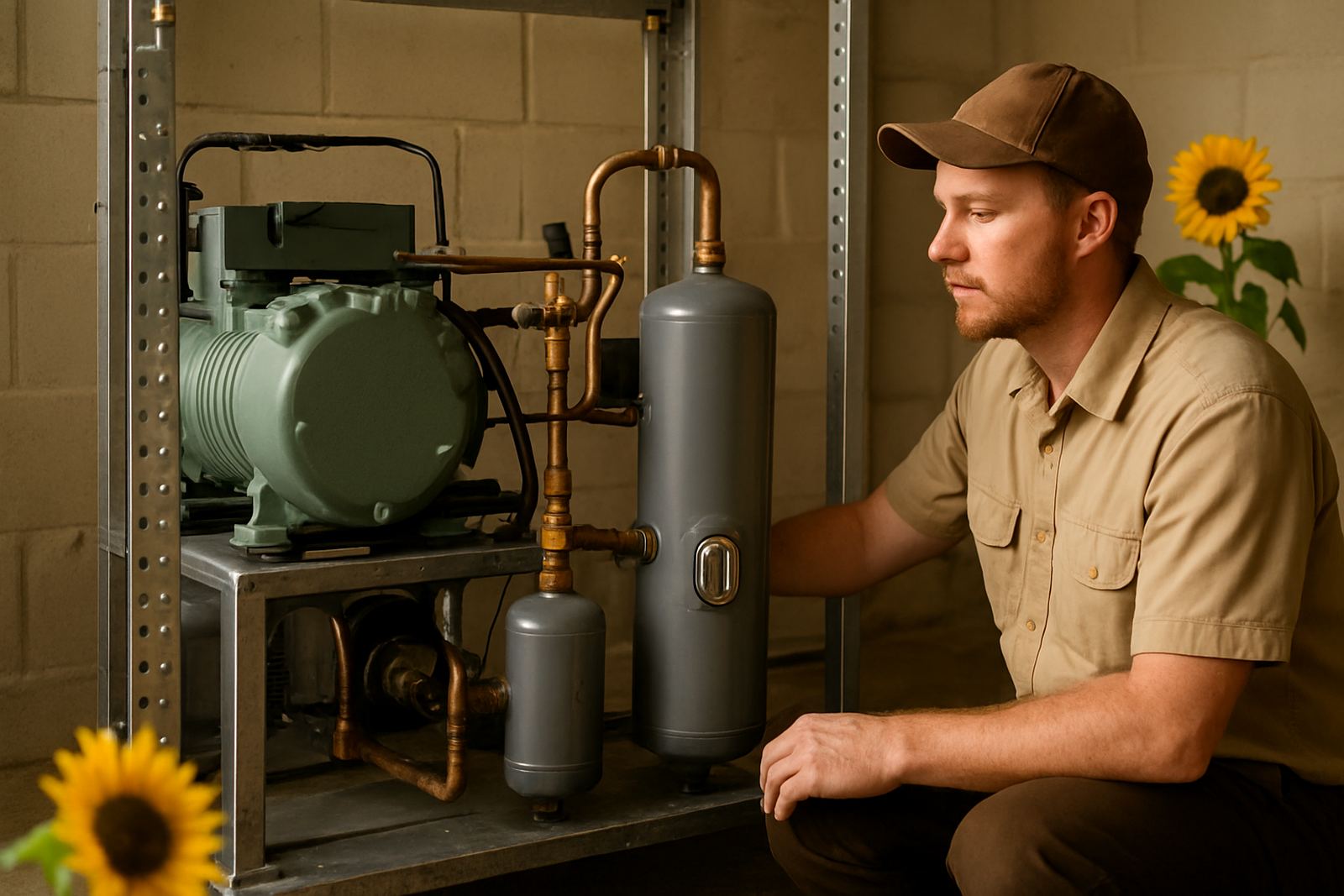
What oil return actually does in a cooling system
Every compressor needs a controlled amount of oil to lubricate moving parts, seal internal clearances, and carry heat away from the compressor body. The trouble starts when oil leaves the compressor and does not make it back fast enough. It can collect in evaporators, suction lines, low points, or pipe runs with poor velocity, then the compressor is left running with less lubrication than it needs.
That problem is easy to miss at first because the plant may still hold temperature. But over time the wear builds up, and what looked like a small circulation issue becomes an expensive breakdown. In humid coastal areas like Gqeberha, where systems often work hard and doors open often, the risk is higher if the pipework, refrigerant charge, or controls are not kept in order.
Signs oil is not getting back where it should
Technicians often spot oil return trouble before a customer does, but there are practical signs that should never be ignored. A plant that seems louder than usual, a compressor that runs hotter, or a system that trips on pressure more often can all point to circulation issues. In a cold room, you may also notice uneven cooling or frosting patterns that dont make sense for the load.
- Oil level in the compressor sight glass dropping without a clear reason
- Repeated compressor overload trips after long run times
- Frost or sweating on suction lines near low spots
- Oil staining around joints, separators, or service valves
- Poor temperature pull-down after defrost or after load-shedding recovery
Why pipework and velocity matter more than people think
Oil return is not only about the compressor itself. It depends on the whole circuit, especially suction line sizing, pipe slope, trap placement, and refrigerant velocity. If the lines are oversized for the load, the gas can move too slowly to carry oil along. If lines sag or have careless bends, oil can pool and stay behind.
That is why a system that was fine on day one can start acting up after a room is expanded, a chiller load changes, or a conversion is done without checking the pipework. The refrigerant choice matters too, because some low-GWP gases behave differently in the field and need proper setup, not guesswork.
- Keep suction lines graded correctly and supported at proper intervals
- Use oil traps where the vertical lift demands them
- Check whether the compressor, evaporator and line sizes still match the actual load
- Confirm that separator and return components are working as intended
What happens when oil stays out of the compressor
When oil does not return, the compressor loses lubrication first. Bearings, pistons, scrolls or screws are then asked to work under conditions they were never meant to handle for long. Heat rises, friction rises, and efficiency drops. Power use goes up too, which is exactly what nobody wants during high tariff periods or when generators are already carrying extra load.
In practical terms, poor oil return can shorten compressor life, cause nuisance trips, and lead to contaminated refrigerant circuits. Once a compressor fails badly, cleaning out the system and putting it right can take far longer than a planned service. That means more downtime for a fish room in Jeffreys Bay, a produce store in Uitenhage, or a food outlet in Port Alfred that cannot afford warm stock.
A Gqeberha example from the field
We recently looked at a cold room setup in the greater Gqeberha area that had started tripping after longer run cycles. The room was still pulling down, but the compressor was running hot and the oil level kept drifting lower than expected. On inspection, the suction line had a few low points, the load had changed after a room fit-out, and the separator setup needed attention.
After adjusting the line support, checking the charge, and carrying out a proper service on the controls and associated components, the system settled down. The key point was simple: the cold room did not need a bigger compressor, it needed better oil movement. That sort of fault is common enough, and it often gets overlooked because the symptoms look like a general performance issue.
Practical checks that help oil return stay on track
Oil return problems can be reduced with regular planned maintenance. A monthly check is often enough for busy commercial plant, while coastal or high-duty sites may need closer attention. If the plant is working through load-shedding, or starting and stopping more often than usual, it is worth inspecting the system after those events as well.
Good maintenance is not complicated, but it does need discipline. Keep the system clean, watch the operating pressures, and do not ignore small leaks. Even a minor refrigerant loss can upset oil movement and put extra strain on the compressor.
- Inspect oil levels and compressor condition during each service visit
- Check for leaks, blocked filters, and signs of poor suction return
- Clean coils so the system is not running harder than needed
- Review controls and monitoring alarms for repeat faults
- Schedule energy audits when power use starts creeping up
Why this matters for long-term efficiency
Good oil return protects the compressor, but it also protects the whole operating budget. A well-circulating system usually runs cooler, draws less current, and lasts longer between major repairs. That matters for businesses in the Eastern Cape where cold rooms, chilled storage, and process cooling have to cope with warm days, humidity, and unreliable power interruptions.
For Nvirocool, oil return is never treated as a side issue. It is part of the bigger picture that includes planned maintenance, emergency breakdown support, leak detection, energy-saving retrofits, and temperature monitoring. If the oil is not getting back, the system is already telling you something is wrong, and the safest time to act is before the compressor pays the price.