When frost turns into a repeated fault
A light layer of frost on the evaporator is normal during operation, but heavy ice that keeps returning is a different matter. Once ice starts to build on coils, fans and pipework, the system loses airflow, pulls temperature down slower and uses more power to do the same job. In some sites the first sign is a warmer product room, in others it is water on the floor after a defrost cycle or a compressor that seems to run all day.
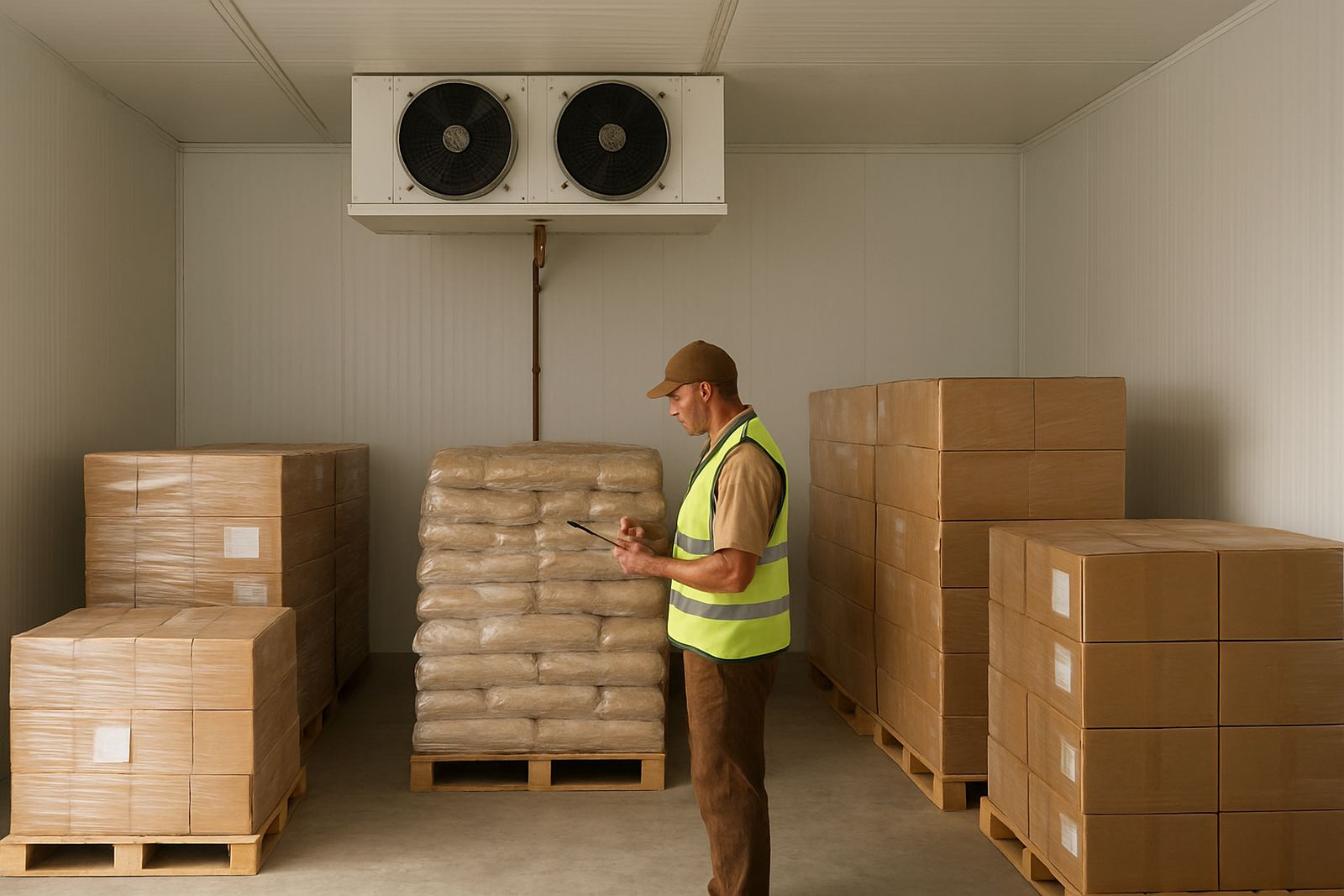
For food stores, packhouses, butcheries and chilled storage rooms, repeated ice build-up should be treated as a fault chain, not a single symptom. The ice itself is only the result. The real cause is usually something simple enough to find if you know where to look. A site in Uitenhage, for example, had ice returning every few days on a cold room evaporator because pallet stacking was too close to the unit and the door was being left open during busy receiving periods. The equipment was blamed at first, but the airflow was the real issue.
Airflow problems are the first place to look
Restricted airflow is one of the commonest reasons for ice build-up. If air cannot move freely across the coil, moisture freezes on the colder parts of the system and starts forming a block. Dirty filters, clogged coils, damaged fan motors, bent fan guards and product stacked too close to the evaporator all reduce circulation. Even a curtain or plastic sheeting placed badly can push air back into the wrong part of the room.
- Check that products are not touching walls or hanging into fan discharge paths.
- Look for dirty coils, blocked drain trays and dust on the fan blades.
- Listen for fan motors that sound slow, uneven or rattly.
- Make sure return air has a clear path back to the unit.
On the coast, salt in the air can make this worse. In Gqeberha and Jeffreys Bay, fine corrosion and airborne dust can coat coils faster than many owners expect. That means coil cleaning should not be left until the room is already struggling. It should form part of planned maintenance, especially before summer when humidity rises.
Moisture gets in through doors, seals and habits
Ice forms when warm moist air enters a cold space and the moisture freezes on the coil or other cold surfaces. So if a cold room door is opening too often, not closing fully, or has a damaged seal, the system keeps pulling in humid air. The same applies when staff prop doors open during receiving, decanting or stock checks. In some sites the problem is not the hardware but the routine.
Look closely at the door itself, the strip curtains if fitted, and the floor threshold. If you can feel air movement around the frame, there is a leak that should be dealt with. The same goes for damaged hinges, warped doors and worn magnet seals. A small gap can let in enough moisture to cause repeated frosting, especially in the damp winter months along the coast.
- Check the door closes squarely and latches every time.
- Inspect seals for splits, flattening or dirt build-up.
- Reduce unnecessary door openings during peak operating hours.
- Confirm the room is not being overfilled, which blocks door movement.
Defrost faults often hide behind the ice
If the system is supposed to defrost but the ice keeps returning, the fault may sit in the control side of the installation. Defrost timers, probes, heaters, termination settings and drain line heating all need to work together. When one part slips, the coil may not clear properly and the next cycle starts from a frozen base. After a few cycles, the ice becomes thicker and harder to remove.
Temperature monitoring helps here because it shows patterns that a quick visual check can miss. If coil temperature is staying too low for too long, or if the room never recovers after defrost, there may be a probe fault, a timer setting issue or a heater problem. Control upgrades can often solve recurring nuisance icing on older systems, but only if the underlying cause is confirmed first. Guessing at settings can make the problem worse.
Load-shedding also complicates matters. When power cuts interrupt defrost cycles, systems may restart with incomplete thawing and then begin icing again. Sites that rely on backup supply need to check how the controls behave after a power interruption, not only during normal running.
Low gas, leaks and poor charge make icing worse
Loss of refrigerant is another common reason for ice build-up. A system with a leak or a low charge often runs with reduced pressure and a colder coil than intended. That can freeze moisture too quickly and create ice in the wrong place. Sometimes the symptom looks like poor cooling, but the coil is actually over-frosting because the system is not balanced properly.
Leak detection should not be left until gas has already been topped up several times. If a room keeps losing performance, check joints, valves, service ports and pipework for leaks, then confirm the charge is correct after repairs. For sites moving to low-GWP gas conversions, the conversion itself must be matched to the right oil, controls and operating conditions. A conversion done badly can leave a room struggling with icing, oil return problems or unstable temperatures.
Chiller retrofits and gas changes should be planned around actual load, not just nameplate size. What works for a dry inland site may behave differently in a humid coastal environment or in a room with frequent door openings.
What a practical site check should cover
When ice keeps coming back, a proper inspection should follow the fault, not just the frost. That means checking the full air path, the door habits, the drain line, the defrost settings and the refrigerant condition together. On a working site, small issues stack up fast, so it pays to test the system under normal operating pressure and during busy hours if possible.
- Inspect coil condition and fan operation.
- Test door seals, door closer action and curtain coverage.
- Confirm defrost times, heater operation and probe readings.
- Check for signs of oil staining, gas leakage or uneven frosting.
- Review product stacking, loading practice and room traffic.
For businesses in Graaff-Reinet, Port Alfred and the wider Eastern Cape, this approach saves time and prevents repeat callouts. It also protects stock, because once a cold room starts icing heavily, temperatures can drift fast and spoilage risk climbs. Planned maintenance is usually cheaper than waiting for an emergency breakdown at peak trading time.
Why the same fault keeps returning in East Cape conditions
Ice build-up often comes back because the site conditions stay the same. Humidity, dusty air, frequent door openings and power interruptions all push refrigeration equipment harder. That is why the fix has to be practical and local. A room in the Newton Park area will not behave exactly like one near the coast, and a chiller in Despatch may need a different maintenance rhythm to one in Jeffreys Bay.
The best results usually come from combining cleaning, control checks, leak detection and sensible operating habits. If the same room keeps icing, there is almost always a reason that can be traced and corrected. Once that is done, the system runs quieter, uses less power and holds temperature more consistently, which is what the business really needs.