Why a small gap turns into a big bill
In refrigeration, a seal is not just a strip of rubber around a door. It is part of the barrier that keeps cold air in and humid air out. When the seal is cracked, flattened or pulling away from the frame, the unit has to run longer to hold temperature, and every extra minute adds cost.
In Gqeberha and the coastal towns around it, salty air and moisture speed up wear. Add frequent door openings, trolley traffic and load shedding recovery after power returns, and a weak seal can become one of the first places where a system starts losing control.
- More compressor run time
- Ice build-up around the door
- Uneven product temperatures
- Higher humidity inside the room
What seal failure looks like on site
Most seal problems show up slowly. Staff often get used to the signs and do not link them to the door itself. By the time the issue is noticed, there may already be frost around the frame, water on the floor or a room that struggles to pull down after a busy shift.
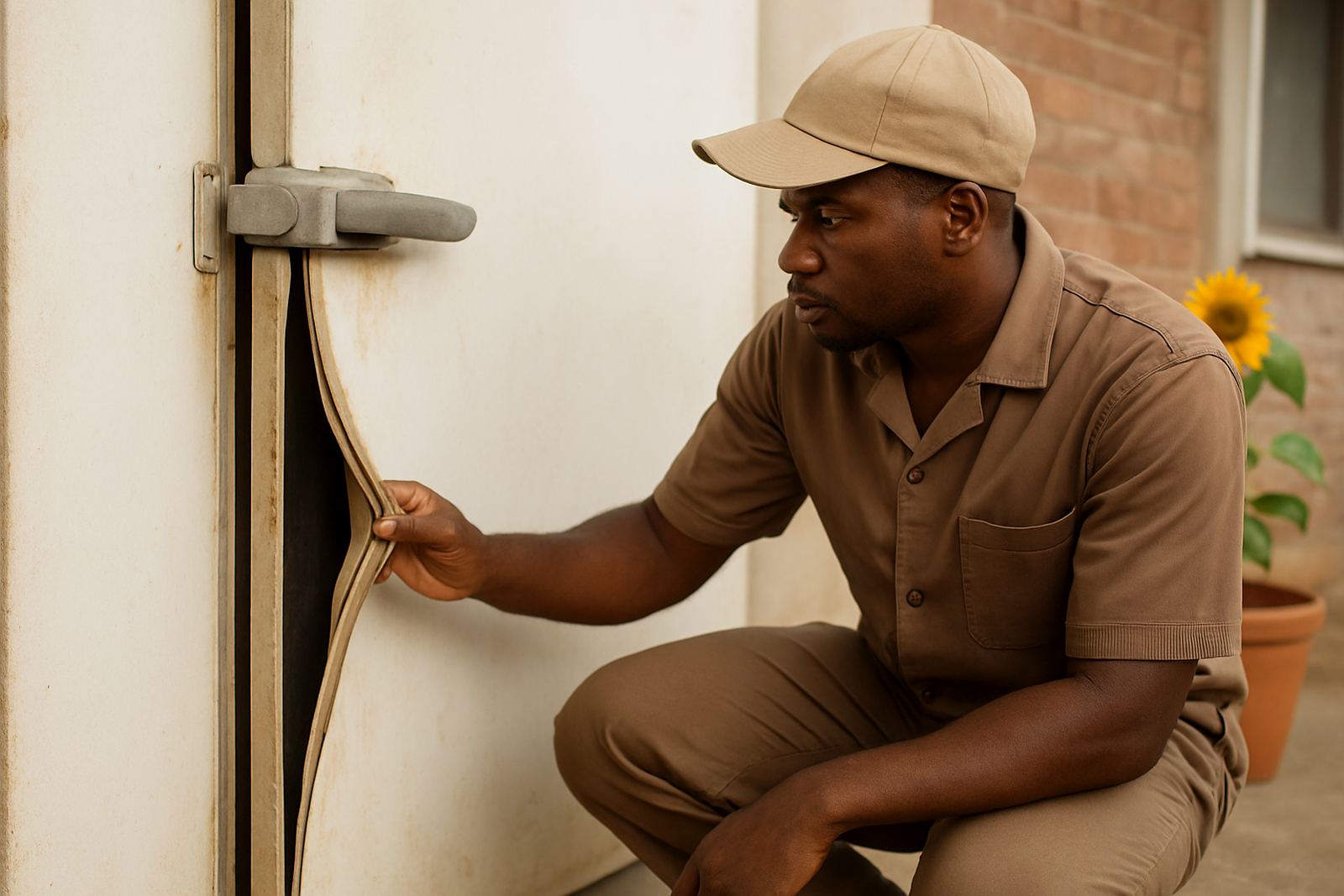
A technician will usually look for uneven closing pressure, torn corners, damaged hinges, warped doors and dirt trapped in the gasket channel. If the seal is dirty but still sound, cleaning can help. If it is hard, split or no longer sits evenly, it needs attention before it starts costing more than the repair.
- Door not closing flush
- Visible light around the edge
- Sweating on the frame
- Frost build-up on the threshold
The hidden spoilage risk people miss
Temperature drift does not always mean a room has failed completely. Often it is a slow loss of hold time, which means the compressor runs longer to recover after each opening. That extra strain can be enough to push sensitive stock outside the safe range, especially in a busy cold room where goods come in and out all day.
For food businesses, pharmacies and flower cold storage, the danger is not only waste. It is also compliance pressure, customer claims and staff time spent moving stock, checking readings and trying to work around the problem.
In practice, one bad seal can create a chain of small losses that are hard to see on a single invoice.
A Gqeberha example from a busy cold room
We see this often in Newton Park, along the industrial routes and at depots serving Despatch and Uitenhage. A cold room may be holding setpoint on the control screen, but the compressor is cycling harder than it should. On closer inspection, the door seal has flattened on one side and there is warm air leakage near the bottom corner.
After replacement, plus a hinge adjustment and a quick coil clean, the room stops frosting at the doorway and the unit shortens its run time. It is not a dramatic fix, but over a month it can make a real difference to the power account and the amount of wear on the system.
- Reduced compressor strain
- Better temperature recovery after opening
- Less ice at the threshold
- Lower chance of product spoilage
What to check before the problem gets worse
A good maintenance routine catches seal failure early. The best time to check is during planned maintenance, before summer heat or a long weekend puts extra pressure on the system. You do not need fancy tools for the first look, just a careful eye and a hand along the frame.
Ask staff to report any door that needs a second push, any seal that feels brittle, and any patch of frost that keeps returning in the same place. If the room is in a coastal area like Jeffreys Bay or Port Alfred, check more often because corrosion and moisture can shorten the life of door hardware. It happens faster then most people expect.
- Inspect seals monthly
- Check hinges and closers
- Clean dirt from the gasket channel
- Watch for recurring frost after defrost cycles
Repair, replace, or adjust the whole door set
Not every seal needs a full door rebuild. Sometimes a proper clean and adjustment solves the issue. Other times the seal has aged to the point where replacement is the only sensible option. If the frame is warped, the hinges are worn, or the door is no longer square, then the problem is bigger than the rubber strip.
The point is to treat it as a refrigeration fault, not just a joinery issue. Seal failures affect energy use, temperature stability and equipment life, so they deserve the same attention as a compressor warning or a control fault. That is how you keep costs under control and avoid surprise breakdowns in the middle of a busy week.
For sites in Graaff-Reinet, Despatch and the wider Eastern Cape, regular checks help keep cold rooms dependable through heat, humidity and power interruptions.