Why air circulation matters more than people think
A cold room does not cool the same way everywhere. Air has to move across the evaporator, travel between the racks and return without being blocked by cartons, crates or tightly packed stock. When that path is clear, the room settles faster after a door opening and the compressor does less work.
When the layout is wrong, you get warm corners, iced-up coils and uneven product temperatures. That shows up quickly in meat rooms, produce stores and small distribution rooms where stock turns fast and staff are in and out all day. In Gqeberha, where humidity can climb near the coast, poor circulation also pulls more moisture into the room and gives frost a chance to build up on the wrong surfaces.
Start with the evaporator and leave its throw path open
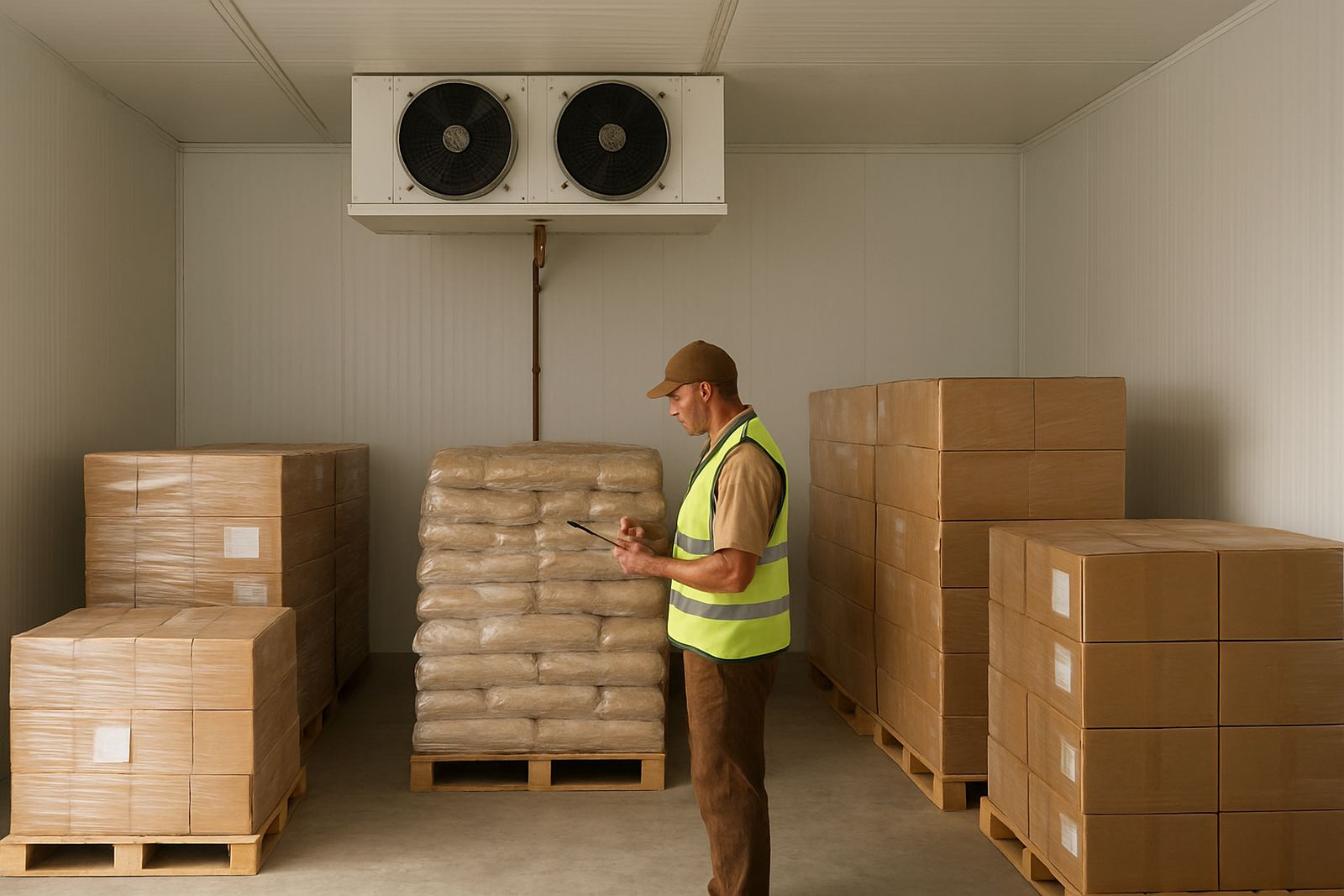
The first rule is simple: do not block the discharge air from the evaporator. That cold air needs a clear run across the room so it can wash over the stock and come back to the unit warm enough to be cooled again. If a rack sits too close to the fan bank, or a pallet is stacked right under the unit, the air short-circuits and the room starts behaving like two or three different spaces.
Keep a sensible clear zone under and in front of the evaporator. In many rooms, 600 mm to 1 m makes a practical difference, depending on the room size and the air throw pattern. Also leave enough space above top shelves so air can move over the stock instead of hitting a solid wall of packaging. A good installation or retrofit should look at this before the first pallet goes in, not after complaints start.
- Keep the area directly below the evaporator open.
- Do not push tall racks right against the fan throw.
- Allow return air to move back freely, with no plastic sheeting hanging into the stream.
Put the fastest-moving stock where the room can recover quickest
High-turn stock should sit in the easiest-to-cool part of the room, usually near the door side but not in the path of warm outside air. That sounds small, but it matters when teams are loading from a bakkie or handling mixed deliveries in the morning. The aim is to reduce the time doors stay open and keep the most accessed stock from sitting in the warmest corner.
Low-turn stock can go deeper into the room, provided it still gets clean airflow. If product is shoved into dead spots and left there for days, the room may read fine at the sensor but the product core can be several degrees higher. We see this in smaller operations around Despatch and Uitenhage where floor space is used for convenience, not for temperature control. A sensible layout is part stock control, part refrigeration control.
- Place fast-moving stock for short pick times.
- Keep slow-moving product out of the return-air path.
- Avoid building stock against the back wall if that wall carries the coldest air return.
Use racks, not solid walls of product
Open racking usually performs better than solid stacking because air can move through it. Solid stacks create resistance, and once one part of the room becomes stagnant the temperature starts to drift. This is especially common with cartons wrapped too tightly, plastic bags packed flat, or bulk items stacked right down to the floor. The room may look organised but the airflow is doing the heavy lifting.
Leave clearance between rows so a person can move through safely and air can circulate. Even a 100 mm to 150 mm gap between product faces and the rack back can help in smaller rooms. Keep items off the floor on suitable shelving or pallets where hygiene rules allow, and never let stock touch the walls unless the room is specifically designed for it. In coastal conditions, that contact point often becomes a moisture trap, then mould starts showing up where no one expected it.
Doors, strip curtains and loading habits change the whole layout
Good airflow layout is not only about what happens inside the room. It also depends on how the door is used. If loading happens in bursts, with the door held open while stock is sorted, warm moist air floods in and the evaporator has to pull it back out again. That puts pressure on the system and raises the chance of ice forming near the coil.
Strip curtains, air curtains and a simple staging area outside the door can reduce that problem. The point is to slow down heat and moisture entry before it spreads through the room. For businesses working through load-shedding or voltage dips, this becomes even more important because every opening during a restart period makes pull-down slower. A better layout means the room recovers faster after each interruption, which saves time and sometimes product.
- Set up a loading zone outside the door for short staging.
- Keep the door clear so it closes fully every time.
- Check that curtains hang straight and do not snag on trolleys or crates.
A Gqeberha example from a mixed-food store
We worked with a mixed-food store in Newton Park that was struggling with uneven temperatures across one cold room. The sensor near the door looked acceptable, but the back left corner was running warmer and the coil needed frequent defrosts. The issue was not the refrigeration plant alone. Racks had been placed too tight against the evaporator throw and the fastest-moving stock was stacked deep in the room, right where the air had the hardest time returning.
We adjusted the rack spacing, moved the high-turn items closer to the door side, and opened a clearer return path. We also checked the controls and cleaned the coil at the same visit. The room did not need a bigger unit. It needed a better airflow plan. The client saw more even product temperatures within days, and the compressor cycle steadied out after that. Small layout changes, properly done, can save more energy than people expect, and the effect is often strongest in humid months when the room is under pressure anyway.
Layout checks that should be part of every maintenance visit
A planned maintenance visit should include more than gas pressures and temperatures. It should also look at how the room is being used. Over time, staff change habits, new racks arrive and stock lines shift. A cold room that worked well last year may now be struggling because the airflow path has quietly been blocked.
That is why layout checks belong in routine maintenance, especially for businesses in Gqeberha, Jeffreys Bay, Port Alfred, Graaff-Reinet and the inland towns where summer heat and winter start-up conditions are different. A technician should look for blocked returns, damaged shelving, product too close to the ceiling, and any signs that the room is fighting its own layout. If the airflow is wrong, even the best control settings will only partly help.
At Nvirocool, we look at cold-room airflow alongside repairs, energy audits, control upgrades and temperature monitoring. In many cases the fix is practical: shift stock, open a gap, clean a coil, reset a sensor and keep the room easy to breathe. That is where consistent temperatures usually begin.