Why a proper vacuum matters after repairs
When a refrigeration system is opened for a compressor change, leak repair, valve replacement or control work, air and moisture get inside. Those two contaminants do a lot of damage. Moisture reacts with refrigerant and oil, can form acids, and may freeze at the expansion device. Air, or non-condensable gas, pushes up condensing pressure and makes the plant work harder than it should.
In Gqeberha, where many cold rooms and chillers run close to the coast, the risk is higher because humid air gets into pipework quickly during repairs. A system that is not properly evacuated may appear fine on the day, then start showing poor cooling, longer run times and pressure faults a week later. That is why vacuuming is not just a box to tick, it protects the full repair and the client’s stock and power bill.
What happens inside the system when moisture is left behind
Moisture in a refrigeration circuit can sit quietly until the plant pulls down to low temperatures. Then it starts to freeze at the restriction point and the system struggles to feed refrigerant. You may see unstable suction pressure, poor cabinet temperatures and a compressor that cycles too often. Over time, acid build-up can damage insulation, bearings and winding life, which usually means more downtime and a bigger repair later.
- Ice can form at the expansion valve or capillary tube
- Oil can lose its lubricating quality when acids develop
- Sensors and controls may react to false temperature readings
- The compressor can run hotter and fail earlier
Even a small amount of moisture can affect reliablity. In food stores, butcheries and cold rooms around Despatch or Jeffreys Bay, that can mean product risk as well as extra call-outs. A proper vacuum helps remove vapour from the system before the new refrigerant charge goes in.
Why non-condensables are a problem you can hear and feel
Non-condensables are gases that should not be in the circuit, mostly air. They do not change into liquid like refrigerant does, so they gather in the condenser and raise head pressure. The plant then uses more power to do the same work. In a hot machine room, or during a summer afternoon in Port Alfred, that extra pressure can push equipment close to its limits.
Technicians often notice the signs during commissioning. The unit may struggle to pull down, the discharge line may be unusually hot, and gauges may show pressures that do not make sense for the ambient temperature. If the system had been open for a while before the repair was finished, the chance of trapped air is even higher.
Good evacuation removes that air before it becomes a daily operating problem.
The vacuum process should be done with care, not hurry
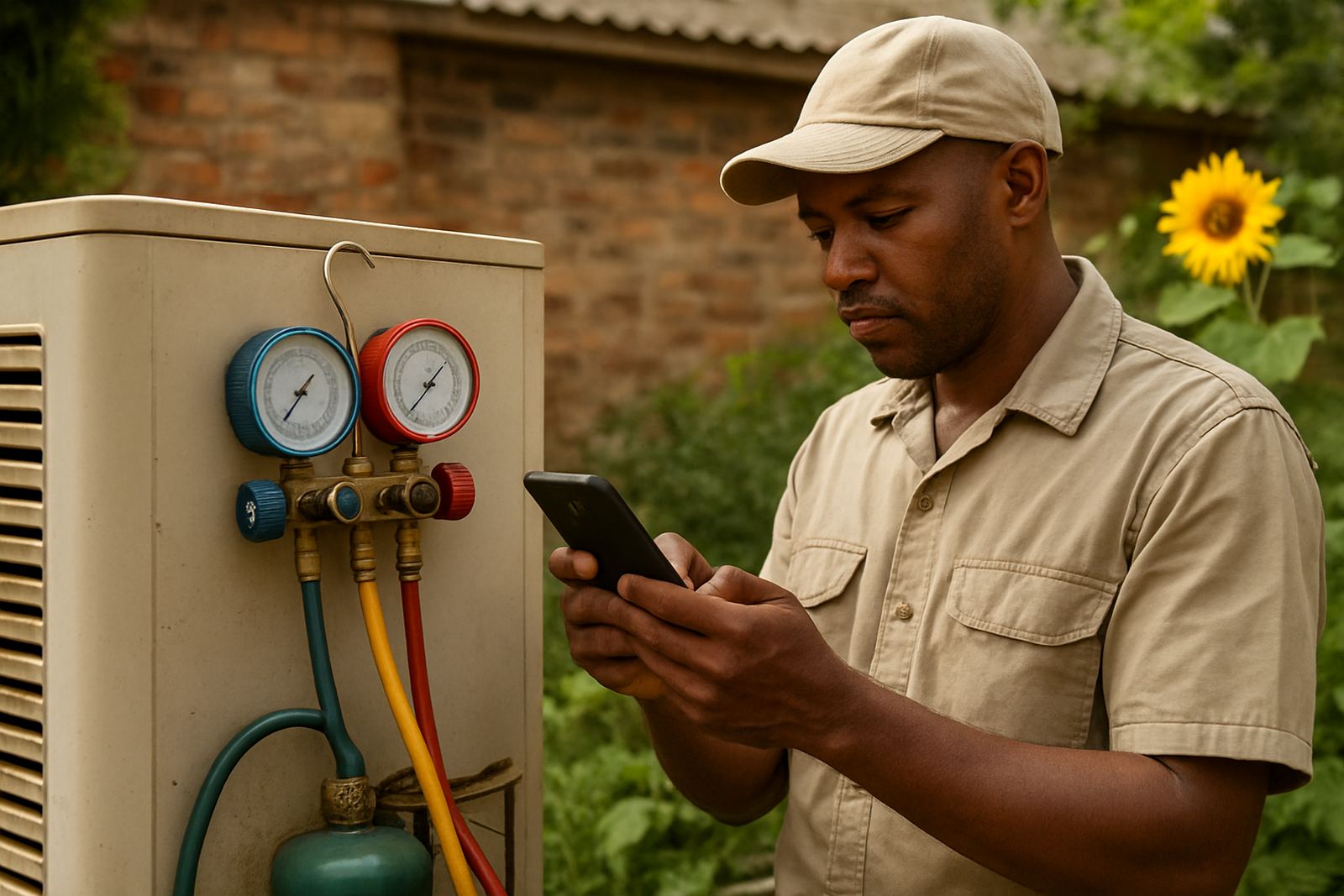
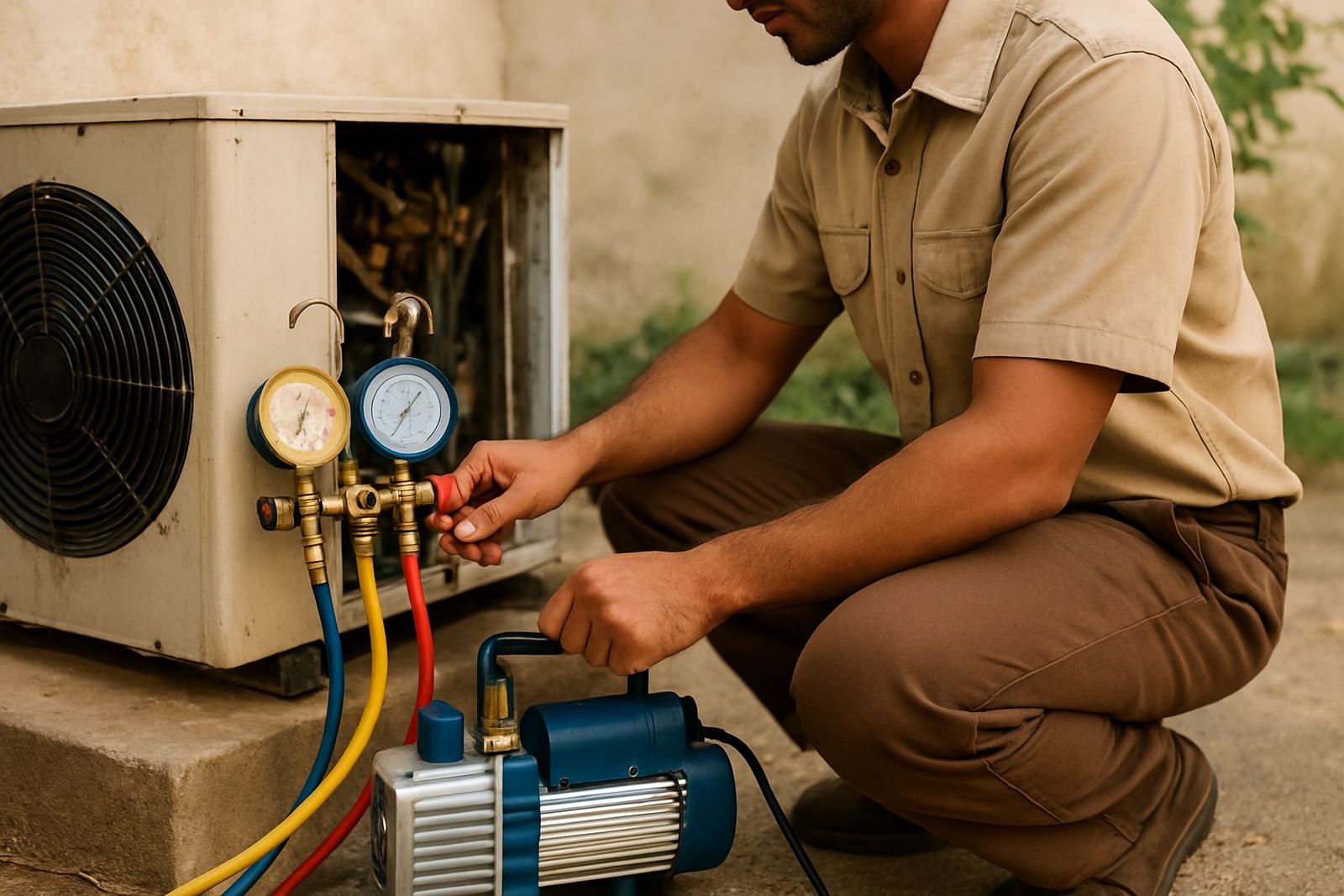
Vacuuming is only useful when it is done properly. That means using the right hoses and fittings, keeping connections tight, and allowing enough time for the pump to remove vapour from the whole system. A quick pull on a small gauge that looks good on paper may not be enough when there are long linesets, multiple evaporators or oil trapped in low points.
- Repair the leak or replace the part first
- Replace contaminated driers where needed
- Pull down to a deep vacuum and hold it for a test period
- Check for rise in pressure, which can point to moisture or an unresolved leak
- Only charge refrigerant once the system is proven dry and tight
On a cold room in Newton Park, for example, a technician may find the system had been standing open overnight after a failed compressor. In that case the pipework can absorb moisture and the oil can pick up acid. Rushing the vacuum may save an hour on site, but cost days of breakdowns later.
Local conditions in the Eastern Cape change the job
Vacuuming during repairs is especially important in the Eastern Cape because of humidity near the coast, dust in some industrial areas and load-shedding that can stop plants at the worst time. When power cuts interrupt a repair, the system can sit exposed longer than planned. Every extra hour open to the air increases the amount of moisture that can enter.
In places like Gqeberha, Uitenhage and Jeffreys Bay, we also see equipment that runs hard during summer and then has to restart after a fault or power event. If the evacuation step was done badly, the first restart may look normal but the system can still carry hidden contamination. That is when clients phone back with high temperature alarms, iced-up evaporators or a condenser that seems to be working too hard.
A careful vacuum procedure is one of the simplest ways to protect a repair against local weather and unstable supply conditions.
How Nvirocool approaches vacuuming during repairs
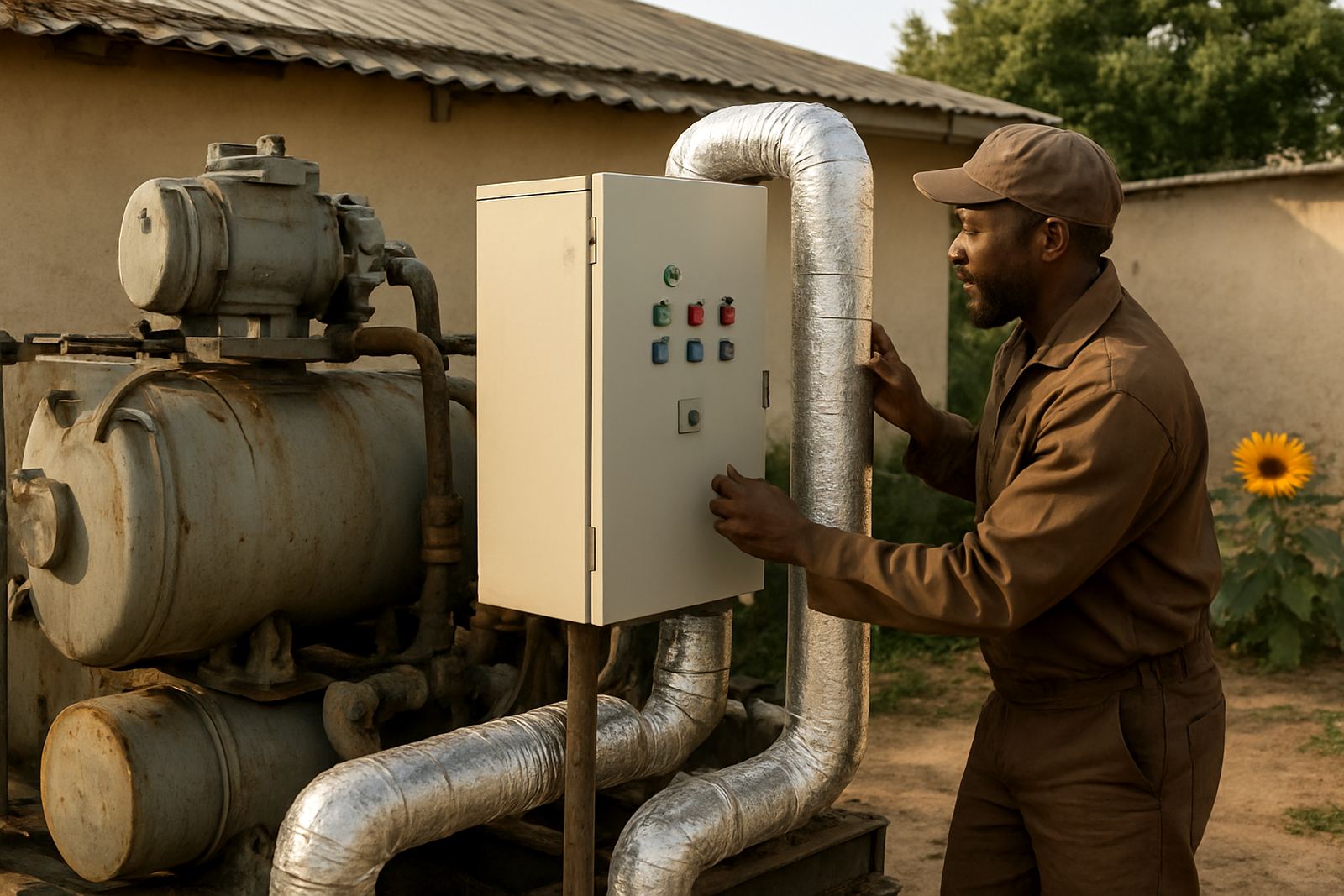
At Nvirocool, vacuuming forms part of planned maintenance, cold room repairs, chiller servicing and low-GWP conversions. The team checks for the source of contamination, carries out the repair, and then evacuates the circuit before putting the plant back into service. For some systems, that also includes leak detection, control upgrades or coil cleaning if the equipment has been under strain for a while.
Nokulunga Dlamini may flag energy losses during an audit, while Siyabonga Mthembu or Ruan Smit handles the technical repair and evacuation process on site. Ayabulela Ndlovu keeps the job moving, so clients know when the plant will be down and when it can come back online. That matters for bakeries, packhouses, retail stores and small factories that cannot afford guesswork.
- Base: Newton Park, Gqeberha
- Service areas: Gqeberha, Uitenhage, Despatch, Jeffreys Bay, Graaff-Reinet and Port Alfred
- Support for emergency breakdowns and planned repairs
- Options for energy-saving retrofit work after repeat failures
The goal is simple: dry system, tight system, stable operation.