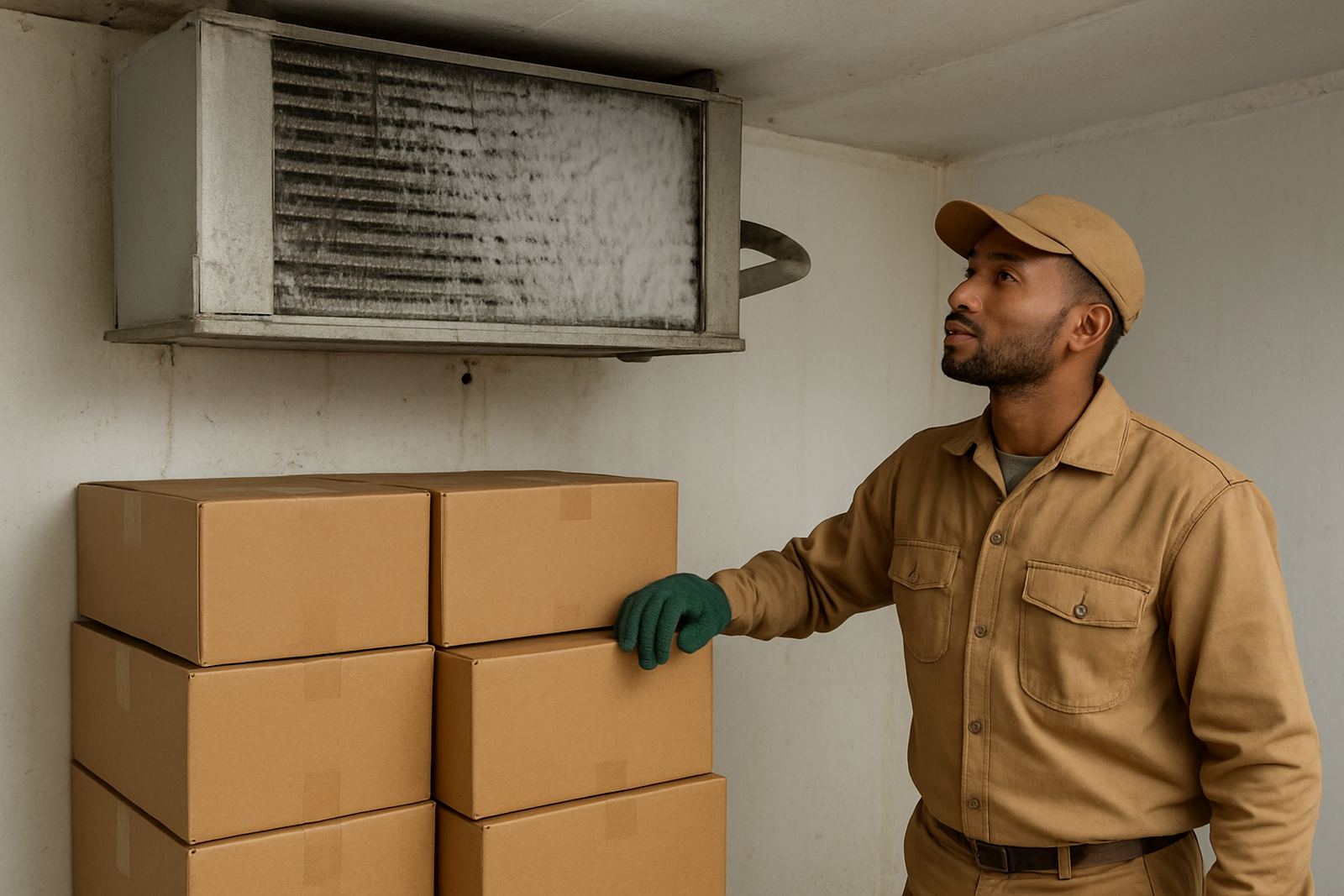
What frost on an evaporator is really telling you
An evaporator works by pulling heat out of the air, and in humid conditions moisture in that air will condense and freeze on the coil. In a controlled amount, that frost is expected. It is usually thin, even, and removed by the defrost cycle before it becomes a problem.
When the frost starts building up fast, turns to solid ice, or forms in patches, the system is no longer moving air and heat the way it should. That can lead to warmer product, longer running hours, and extra strain on compressors and fans. In a place like Gqeberha, where coastal moisture can be high and doors open often, frost can appear quicker than many owners expect.
When frost is normal and when it is not
A light white coating on the coil after a run period is not a fault by itself. It often clears during defrost and the unit returns to normal operation. The key is whether the frost clears fully, and whether temperatures stay within the set range after each cycle.
Frost points to trouble when you notice reduced airflow, uneven cooling, or ice hanging off the fins and fan guards. A cold room that used to recover quickly after a delivery suddenly taking much longer is another sign. Small changes matter, and often the first clue is in the product temp logs, not the machine room.
- Normal: thin frost, even coverage, regular defrost, stable temperatures
- Warning: solid ice, blocked air paths, long run times, temperature swings
- Urgent: warm rooms, tripping fans, water leaks after defrost, alarms
The common causes behind heavy frost
Heavy frost usually comes from a mix of airflow problems, moisture entry, and system faults. A damaged door seal can let in damp air all day. A dirty coil can stop heat transfer. A failed defrost heater or timer can let ice stay on the coil until it chokes the system. Low gas charge and a restricted expansion device can also leave part of the coil too cold, which encourages freezing.
Sometimes the issue is simple, like a fan motor not pushing enough air across the coil. Sometimes it is more involved, such as a control setting that does not suit the load. On retrofitted chillers, poor commissioning after a gas conversion can show up as odd frost patterns that look minor at first then become a headache after a few weeks.
- Air leaks through doors, strip curtains, or panel gaps
- Dirty fins, lint build-up, or grease on the coil
- Faulty defrost heaters, timers, or sensors
- Low refrigerant charge, leaks, or blocked components
- Weak airflow from fans or poor air direction
Why frost matters more during load-shedding and humid weather
Load-shedding can make a marginal system worse. When a cold room cycles off and on, moisture can settle on the coil, then freeze harder when power returns. If the room is already running close to capacity, each restart can add more stress to the evaporator and the compressor. That is where a small frost issue becomes a service call at the worst time.
Coastal humidity adds to the challenge, especially in Gqeberha, Jeffreys Bay and Port Alfred. A site may look fine in dry weather but start icing badly in a damp spell. We often see this in food stores, small abattoirs and distribution rooms where doors open for deliveries all day. In one Newton Park example, a cold room owner thought the defrost was failing, but the real issue was a torn door seal and a coil packed with fine cardboard dust, which was easy to miss.
What to check before frost becomes downtime
There are a few practical checks that can be done before the evaporator icing turns into product loss. Keep them simple and record what you see. If the same fault keeps coming back, there is usually a deeper cause underneath.
- Check door seals, hinges and strip curtains for gaps
- Look for blocked coils, dirty filters and fan obstructions
- Confirm defrost cycles are starting and ending as set
- Listen for fan noise changes or motors cycling off
- Review room temperatures against the last 24 hours
- Inspect for water leaks, ice on the drain pan, or ice bridging
If a unit is icing heavily, do not chip at the coil with a hard tool. That can damage fins, tubing and sensors. A damaged coil is far more expensive than a proper inspection, and it often creates another leak down the line.
How Nvirocool handles frost problems on site
At Nvirocool, we look at frost on evaporators as a symptom, not just a dirty coil. Our team checks airflow, refrigerant condition, controls, defrost settings and the room itself, because the fault is often shared across more than one part of the system. A quick gas top-up without finding the leak is not a proper fix, and it usually comes back within weeks.
We support cold rooms and chillers across Gqeberha, Uitenhage, Despatch, Graaff-Reinet and the surrounding Eastern Cape. That includes planned maintenance, emergency breakdowns, leak detection, coil cleaning, temperature monitoring and control upgrades. If a site needs a low-GWP conversion or a chiller retrofit, frost behaviour is one of the first things we check during commissioning. It tells us a lot about how the system is breathing.
How to keep evaporators clear and efficient
Prevention is cheaper than recovery. A clean coil, regular service intervals and working controls will usually keep frost under control. For businesses that rely on stable temperatures, a planned maintenance schedule is worth more than waiting for a flat-out failure on a Friday afternoon.
Good habits also help staff spot trouble sooner. Train teams to report unusual ice, warm product, repeated defrost alarms or water where there should not be water. If you catch a frost problem early, the repair is often limited to a seal, sensor, fan or cleaning visit, not a major outage.
- Book routine servicing before summer humidity peaks
- Keep doors closed as much as possible during loading
- Replace worn seals and broken strip curtains promptly
- Use temperature monitoring to spot slow drift early
- Have the system checked after every major breakdown