Why repeated door openings strain a freezer
Every time a freezer door opens, warm, moist air moves in and cold air spills out. That sounds simple, but the effect builds quickly when staff are in and out for picking, receiving, cleaning and stock counts. The extra moisture turns to frost on evaporators, hinges, floor edges and around the frame. Once frost starts building, the door seals less well and the plant has to run longer to hold temperature.
In a small shop freezer this may only look like a thin layer of ice at first. In a larger cold room, the same pattern can cause uneven temperatures across the room, with the door zone feeling softer while the back of the room stays colder. That matters because product near the entrance is usually the first to suffer. If the room is already working hard during a summer afternoon in Gqeberha, or during a load-shedding recovery cycle, the strain is even higher.
What high traffic does to stock and energy use
Door traffic does not only affect the machinery. It changes how the stock holds up. Ice cream, frozen bakery items, seafood, meat and pre-packed meals all lose quality faster when the door is opened often and for too long. Temperature swings can lead to soft edges, ice crystals, carton damage and shorter shelf life. If product is held too close to the doorway, the risk goes up again.
There is also the electricity side. A freezer that is constantly fighting warm air will use more power, and in older sites that already run on tight margins this can become a steady waste. A compressor that starts more often, a fan motor that runs longer and a defrost cycle that works harder all add to running cost. In some rooms, the issue is not a major breakdown, it is simply poor door control and too much traffic through one point.
- Keep fast-moving stock closer to the loading side, not right at the door opening.
- Separate pick paths from restocking paths where possible.
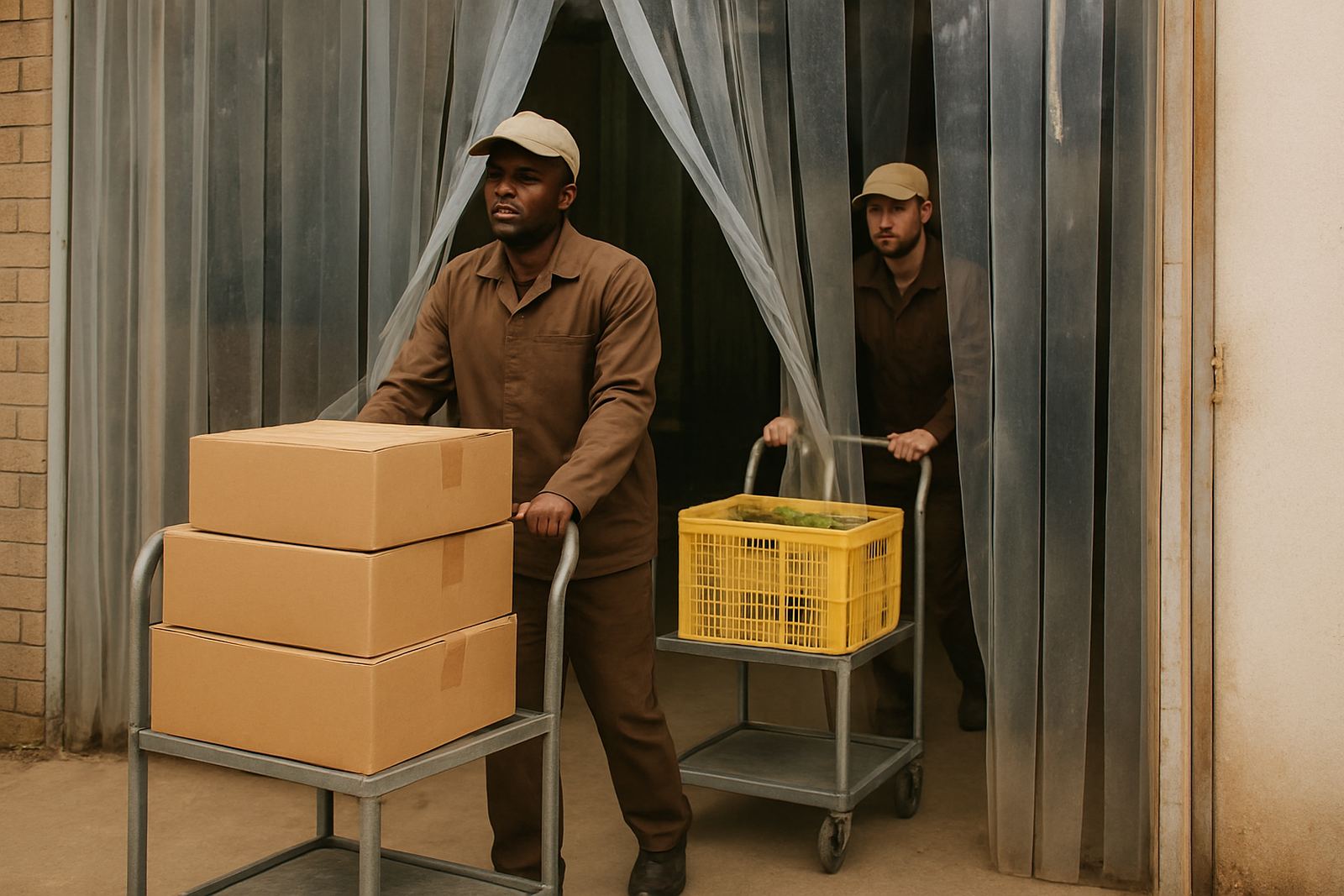
- Move full trolleys through quickly, rather than keeping the door open while sorting items.
- Check that strip curtains, seals and closers are working properly.
Practical fixes that cut frost build-up
There are simple changes that can make a real difference before you spend on major repairs. Staff habits are usually the first place to look. A freezer door should not be left open while someone goes looking for an item, and stock should be staged before the door is opened. If one person is picking and another is receiving, that needs a clear flow so the room is not held open longer than necessary.
Hardware matters too. Damaged door seals, misaligned hinges, worn door heaters, faulty closers and broken strip curtains all let in more moisture. A freezer with an unreliable latch can become a daily headache, and the frost often shows up near the base or along the handle side first. If the floor threshold is not sealing properly, cold air leaks low down and the room works against itself. It is worth checking these points during planned maintenance, not only after a fault appears.
- Inspect seals for gaps, splits and hardening.
- Make sure the door closes fully on its own.
- Keep the frame, gasket and threshold clean and dry.
- Replace worn strip curtains before they tear wide open.
- Do not stack product where it blocks the door path.
When traffic patterns hide a bigger refrigeration problem
Sometimes a busy door is blamed for everything, but the real issue is underneath. If a freezer frosts up too fast even after traffic is reduced, the room may have airflow problems, low gas charge, a failing defrost timer, a weak contactor or a control setting that no longer matches the load. In older rooms, repeated door use can expose a fault that was already there, it just was not obvious before.
In Gqeberha and surrounding industrial areas, we often see rooms where the product side of the business has grown but the freezer layout has not been updated. More orders come through, more staff use the same door and the system never got checked for the extra load. At that point a proper service visit should look at the whole pattern, not only the symptoms.
Temperature monitoring helps here because it shows the difference between short spikes and a real drift. A door that opens 40 times a day may be manageable. A door that stays open for 90 seconds at a time, with warm stock moving in and out, tells a different story. Once you know the pattern, you can fix the right thing instead of guessing.
A local example from a busy Gqeberha freezer room
A food supplier in Gqeberha was calling for repeat attention to frost on the evaporator and soft stock near the entrance. The first reaction was to suspect the refrigeration circuit. After a site check, the bigger issue turned out to be traffic. Staff were using one freezer door for both dispatch and returns, and cartons were being sorted while the door stood open. The room was also missing one strip curtain panel, so every opening pulled in more moisture from the loading bay.
The fixes were practical. The team reworked the pick sequence, replaced the damaged curtain panel, adjusted the door closer and moved fast-turnover stock away from the doorway. After that, frost slowed down and the room held temperature better through the day. Energy use dropped as well, though not overnight. That sort of result is common when the problem is traffic and not just equipment.
For businesses in Despatch, Uitenhage, Jeffreys Bay, Port Alfred and Graaff-Reinet, the same principle holds. A freezer room has to suit the way people actually use it, not only the way it was drawn on paper.
What Nvirocool checks during a door traffic review
At Nvirocool, we look at how the room is being used, not just how the machine is performing. That includes access times, door condition, stock layout, seal quality, airflow and the effect of any power interruptions. If the system has had frequent breakdowns, we also check whether repeated warm air ingress has contributed to icing, control faults or compressor strain.
- Door seals, hinges and closers
- Strip curtains and threshold condition
- Evaporator frost pattern and defrost performance
- Temperature recovery after each opening cycle
- Control settings, probes and monitoring points
Where needed, we can also link the findings to planned maintenance, coil cleaning, leak detection, control upgrades or energy-saving retrofit work. That way the freezer is not only repaired, it is made easier to live with on a busy day. In coastal conditions around Gqeberha, keeping moisture out is half the battle, and in summer that matters even more.
How to keep access busy without losing cold room control
High traffic does not have to mean poor freezer performance. The answer is usually a mix of better habits, better layout and regular servicing. Train staff to open the door with a purpose, keep pathways clear, and mointain a simple rule that product must move in and out fast. Make sure the room is checked before peak periods, especially when the weather turns hot or when load-shedding has put extra strain on the system. If the door traffic is part of normal trade, the freezer has to be maintained for that reality.
If your cold room or freezer in the Eastern Cape is showing heavy frost, warm spots near the door or higher power use than expected, it is worth having the traffic pattern reviewed. Sometimes the fix is a seal. Sometimes it is a control issue. Often it is both. The sooner it is checked, the less stock you lose and the less the system has to fight to keep up.