Why the handover point matters more than the storage room
Most temperature problems do not start with a failed machine. They start when product changes hands, doors stay open too long, pallets block airflow, or staff assume the room will recover later. In Gqeberha and the wider Eastern Cape, that risk is higher because coastal humidity, hot loading bays and load-shedding can all push a system harder than expected.
A cold room may be set correctly and still lose control at the handover point. If chilled goods arrive late from a supplier in Despatch, then sit on a truck while the offloading bay is busy, the product can warm before it ever reaches the store racking. Once that happens, the refrigeration plant has to pull down a bigger heat load, and that takes time and energy.
The handover should be treated as a control point, not a routine task. That means checking the temperature of incoming stock, confirming the receiving bay is ready and making sure the path from truck to storage is short, clear and supervised.
What goes wrong between receiving and storage
Handover issues are usually practical, not technical. A supplier arrives while staff are still clearing yesterday’s stock. A cold room door is propped open for a quick count. A forklift waits with warm pallets in the sun because there is no staging area. In Jeffreys Bay or Port Alfred, where afternoon heat can build quickly, these delays matter more than people think.
There are a few common weak points we see during cold room maintenance visits:
- Door seals are worn and the room leaks cold air during repeated openings.
- Air curtains are missing, switched off, or poorly matched to the doorway.
- Incoming stock is not pre-cooled to the correct range before offloading.
- Thermometers are fitted, but no one records the readings at handover.
- Staff place cartons against evaporator outlets, blocking circulation.
When those issues happen together, the system may look fine on paper yet still fail the handover test. The product is what tells the truth.
A receiving bay needs rules, not just space
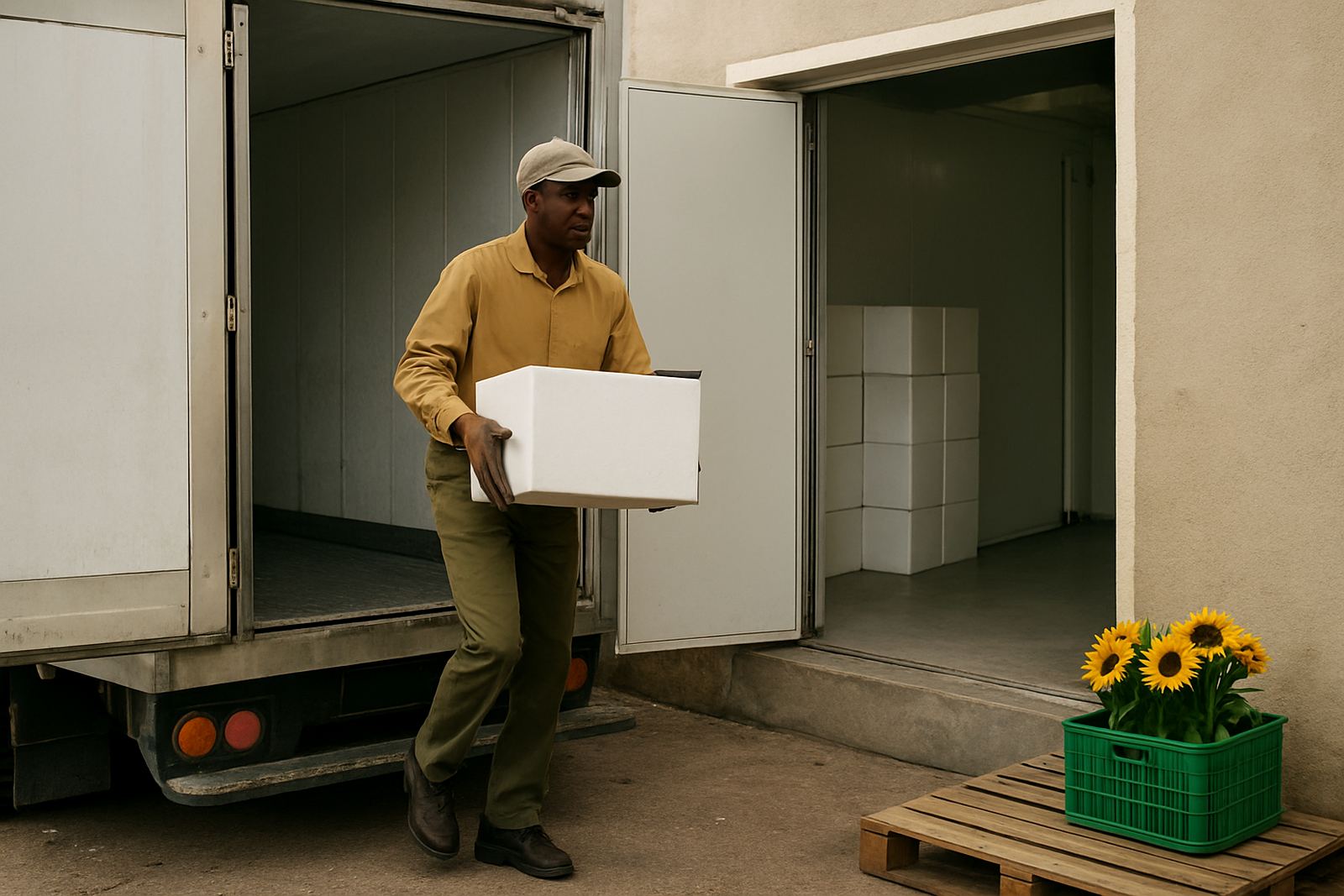
Good handover starts in the receiving bay. Whether it is a food site, a pharmaceutical store, or a distribution point serving Graaff-Reinet and surrounding farms, the bay should be organised so that chilled goods move in fast and warm air moves out slowly. That sounds simple, but it needs rules that everybody follows.
We advise clients to mark out receiving zones, set a maximum door-open time where possible, and keep a handheld probe or data logger at the bay. If stock is arriving in mixed loads, chilled items should be separated from ambient items immediately. If there is a delay, product must stay in the vehicle under the right conditions rather than waiting beside the door.
- Check the load before unloading and record the temperature.
- Confirm the cold room is at set point before receiving starts.
- Move stock in one flow, with no side trips or sorting on the floor.
- Close and latch doors straight after each batch.
A receiving bay with clear rules saves more than time. It reduces compressor run time, cuts wear on door hardware, and lowers the risk of stock rejection later.
How humidity and power cuts change the handover risk
Along the coast, humidity makes a cold room work harder because moisture enters every time the door opens. That moisture freezes on coils, adds strain to fans and can lead to poor airflow if maintenance is skipped. In Newton Park, for example, a room that runs well in winter may struggle in a damp summer if coil cleaning is overdue or if the controller is not cycling correctly.
Load-shedding adds another layer. If the room loses power while receiving is underway, the team may be tempted to keep moving product in and out as if nothing has changed. That is when temperatures drift. A proper handover plan should include backup procedures, door discipline and a simple decision on when receiving must stop. It is better to pause for 20 minutes than to lose an entire batch.
We also recommend checking temperature monitoring after every outage. A room that recovered slowly once may do so again, especially if there is a refrigerant leak or a weak control setting hiding behind the main issue.
Practical checks that protect stock and reduce waste
Temperature control at handover is about consistency. The same checks should happen every day, whether you are receiving five crates or five tonnes. This is where planned maintenance and staff habits need to work together.
Simple checks can prevent a lot of waste:
- Inspect door seals, hinges and closers weekly.
- Keep coils clean so the system can recover after each door opening.
- Test alarms and temperature probes on a regular schedule.
- Make sure lights, strip curtains and pallet layout do not block airflow.
- Log receiving temperatures and dispatch temperatures in the same book or system.
If the room is constantly overworking, a control upgrade may be needed. In some cases a low-GWP conversion or a chiller retrofit gives a better long term result than trying to keep an old system running on hope and frequent breakdown calls. The right fix depends on the age of the plant, the product being stored and the operating hours.
A local example from Gqeberha storage and dispatch
One Eastern Cape client handling chilled food between Gqeberha and inland routes had recurring spoilage at the point of dispatch. The cold room itself tested well, but the issue showed up when stock waited near the door while paperwork was completed. On busy days the receiving and dispatch teams were using the same space, and the room was opening too often.
We reviewed the handover flow, carried out an energy audit, and found that the biggest losses came from door dwell time and poor pallet staging. After a few changes, including moving paperwork out of the cold area, setting a fixed receiving window and cleaning the coil more often, the room held temperature better and the compressors ran less often. The client did not need a bigger room, just a better handover process.
That sort of improvement is common. Cold chain problems often look like equipment trouble, but the real fault sits in the workflow.