What a plate heat exchanger does in a cooling circuit
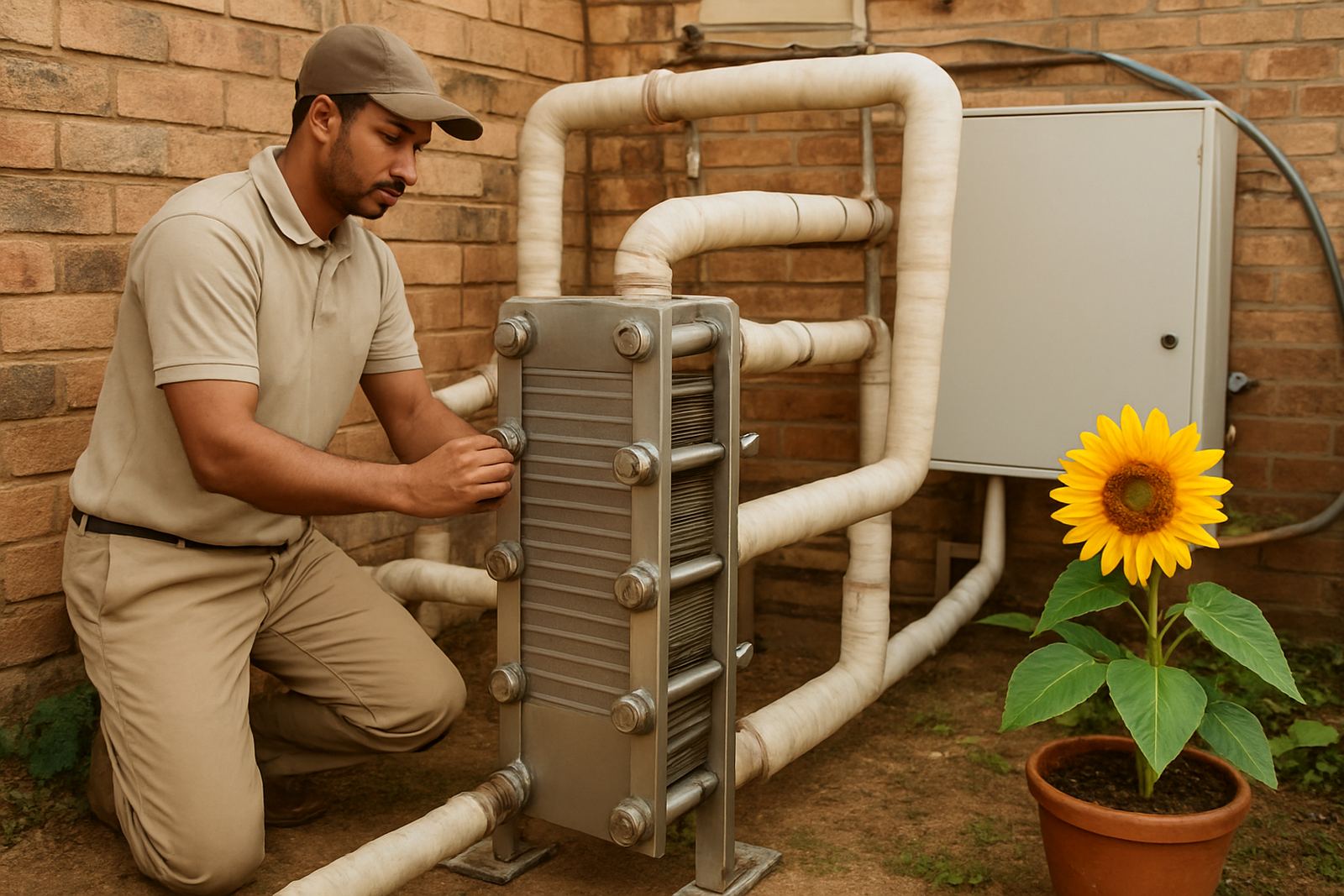
A plate heat exchanger uses a stack of thin metal plates to transfer heat from one liquid stream to another. The fluids pass through separate channels, so the heat moves across the plate surface while the circuits stay apart. In practice, that means chilled water can cool product, glycol can protect pipework, and process water can be managed without putting the whole system on one loop.
For factories, food rooms, dairies, packhouses and commercial cooling plants, this gives better control over temperatures and often lower running costs than a larger direct system. It also helps when space is tight or where a retrofit has to fit into an existing plant room in Gqeberha, Uitenhage or Despatch. Because the unit is compact, it works well where floor space is limited and access is awkward.
We supply plate heat exchangers as part of planned maintenance, chiller servicing, control upgrades and energy audit recommendations. In coastal areas, stainless construction and correct water treatment matter because humidity, salt air and scale can shorten service life if the system is ignored.
Sizes, plate counts and connection options
Plate heat exchangers are not one-size-fits-all. The right unit depends on flow rate, tempertaure difference, pressure drop and how much space is available for pipework and maintenance access. Some projects only need a small unit for a localised process, while others require a larger frame with more plates and higher duty.
Common options include:
- Small brazed units for compact chilled water or secondary coolant circuits
- Gasketed units with removable plates for servicing and future expansion
- Single-pass or multi-pass arrangements to suit flow and duty
- Stainless steel plates for higher corrosion resistance
- Frame-mounted assemblies for easier cleaning and inspection
- Insulated pipe sections and flanged or threaded connections, depending on the plant
As a guide, units may be selected with connection sizes from 20 mm to 100 mm and beyond, with plate packs built up to match duties from small process loops to higher-volume retrofit work. The exact plate count is set by the heat load, entering and leaving temperatures, and the allowable pressure drop across the circuit.
Where plate heat exchangers suit local work best
These units suit any site that needs efficient heat transfer without a bulky shell-and-tube arrangement. They are often used on chilled water skids, process cooling loops, heat recovery systems and secondary circuits where temperature control has to stay steady through long operating hours and load-shedding events.
In the Eastern Cape we commonly see them specified for:
- Cold rooms and packhouse cooling systems
- Food processing and wash-down areas
- Milk cooling and product pre-cooling circuits
- Chiller retrofits where the old exchanger is underperforming
- Hydronic systems that need a smaller footprint
- Heat recovery where waste heat can be reused
They are also practical where a site has hard water or variable municipal supply, because a controlled secondary circuit can reduce fouling on the process side. That said, the water quality still needs attention. If the system scales up or carries debris, heat transfer drops off quickly and energy use climbs.
Installation needs, power supply and gas side checks
Plate heat exchangers themselves do not use gas and only need power indirectly through pumps, controls and sometimes a chilled water plant. For a retrofit, the key is making sure the pump duty matches the exchanger pressure drop and that the control valves can hold stable flow. If the pump is undersized, the unit will never perform properly. If it is oversized, you waste power and create noise and wear.
Installation usually needs good pipe supports, isolation valves, strainers, air vents and pressure gauges on both sides. We also look at whether the system can be drained, flushed and recommissioned without shutting the whole plant for too long. On occupied sites this matters, especially when the business cannot afford long downtime during a peak production week.
For conversions or retrofit work, we check refrigerant and glycol compatibility, design temperatures, frost risk and the control logic used for the chilled side. If the exchanger forms part of a low-GWP upgrade, it must fit the new operating envelope cleanly or the energy gain is lost.
Care, cleaning and maintenance intervals that actually help
Plate heat exchangers work well when they are kept clean and the system water is managed properly. Small fouling layers can cut performance fast, so planned checks are worth it. In coastal towns and humid plant rooms, this is especially true because corrosion and scale can move quicker than people expect.
Good care usually includes:
- Checking inlet and outlet temperatures against the design values
- Measuring pressure drop across the exchanger
- Inspecting for leaks at gaskets, joints and fittings
- Cleaning strainers and flushing debris from the circuit
- Testing water treatment and glycol strength
- Recording any drop in duty before it becomes a breakdown
For gasketed units, plate cleaning and gasket inspection are part of normal service work. For brazed units, the main focus is on water quality, strainer maintenance and monitoring of performance. We also recommend checking after any major power interruption or pump fault, since poor circulation can leave deposits inside the unit. A little planned attention saves a bigger callout later, which is just common sense.
What to confirm before you order
Before a plate heat exchanger is selected, the supplier should know the actual duty, not just the name of the plant. The more accurate the figures, the better the match and the lower the risk of rework after delivery. If you are replacing an old exchanger, old nameplate details are useful, but we still verify the live system conditions.
Please have these details ready:
- Fluid types on both sides, including glycol percentage if used
- Required flow rates in litres per second or litres per minute
- Entering and leaving temperatures for each circuit
- Allowable pressure drop on each side
- Connection size, orientation and available installation space
- Operating pressure, corrosion concerns and cleaning access
If the site is in Newton Park, Gqeberha or out toward Jeffreys Bay, Graaff-Reinet or Port Alfred, we can also factor in the local water supply, ambient conditions and maintenance access. That helps avoid buying a unit that is technically correct but difficult to service later.
Nvirocool support for Eastern Cape plant rooms
Nvirocool has worked in refrigeration and cooling since 2011, from our Newton Park base in Gqeberha across the broader Eastern Cape. We support planned maintenance, emergency breakdowns, cold room repairs, chiller servicing, low-GWP conversions, leak detection, energy audits, coil cleaning, control upgrades and temperature monitoring. Plate heat exchangers often sit inside that mix as part of a sensible retrofit or a maintenance replacement.
If you need advice on a new unit or want to compare options for an existing circuit, we can assess the system on site and recommend a practical size and arrangement. The aim is simple: better heat transfer, lower energy waste and fewer surprises when the plant is under pressure. It should fit the job, not fight it.
Key facts
| Product type | Compact plate heat exchanger for process cooling and secondary circuits |
|---|---|
| Construction | Gasketed or brazed stainless plate assemblies, depending on duty |
| Typical sizes | Small localised units to larger frame-mounted units with multiple plates |
| Connection range | Approx. 20 mm to 100 mm plus, subject to design |
| Operating use | Chilled water, glycol, process water and heat recovery circuits |
| Service focus | Cleaning, gasket checks, pressure drop checks and performance testing |