What freezer curtains do in daily use
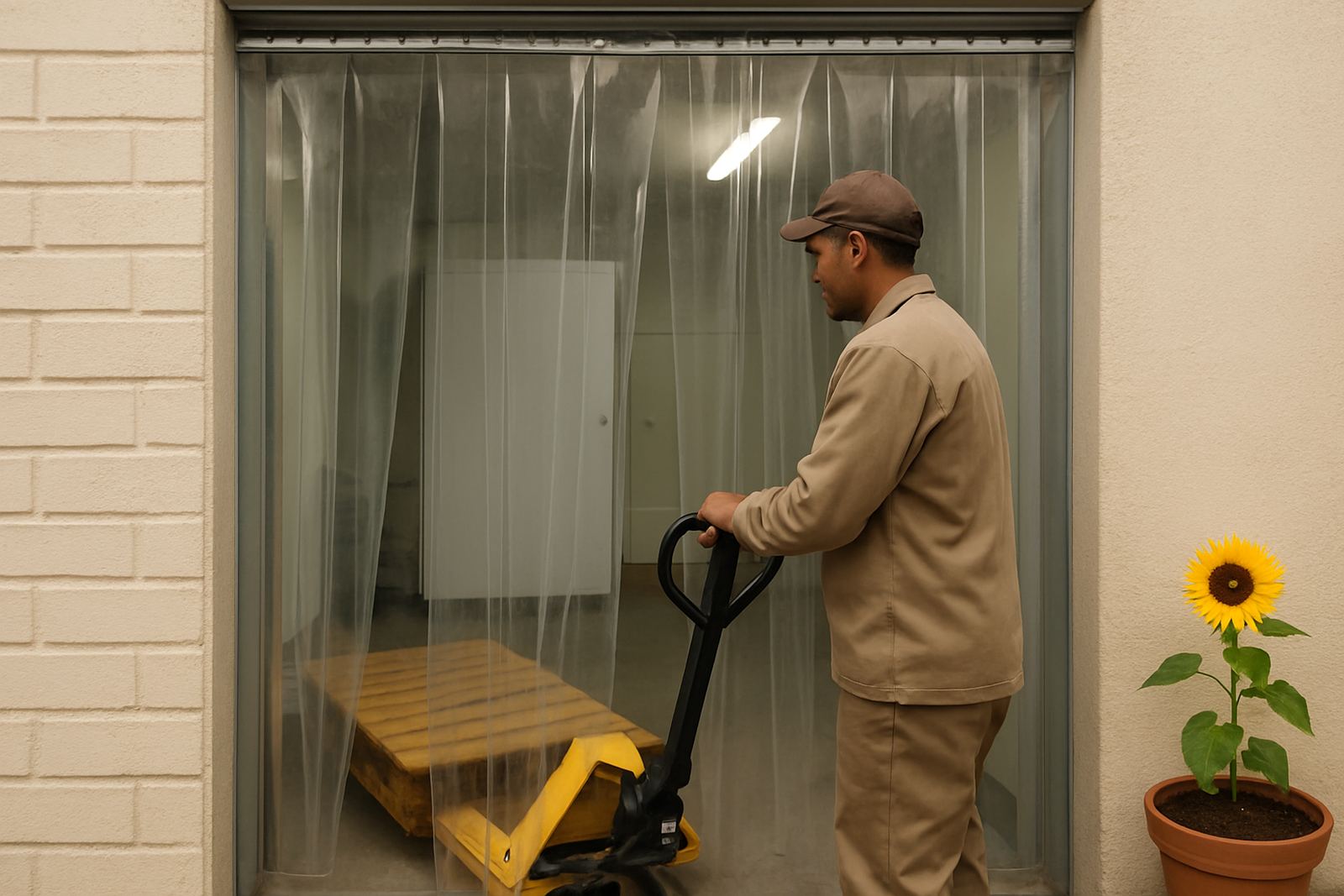
Freezer curtains are flexible strip barriers fitted across a doorway or opening to slow down air movement between a cold room and the outside area. They are used on freezer rooms, chiller rooms, dispatch doors, packing areas and service openings where staff or trolleys move through many times a day. In plain terms, they help keep the cold air in and the warmer, moist air out.
In coastal areas like Gqeberha, Jeffreys Bay and Port Alfred, humidity makes this job more important because moist air turns to frost quickly on cold surfaces. That leads to heavier ice build-up, more defrost demand and higher electricity use. A good curtain set does not replace a proper insulated door, but it cuts the gap losses that happen between openings.
Freezer room doors are often opened far more than we think, so strip curtains earn there keep. They also help staff move faster in load-shedding recovery periods, when the room has to hold temperature for longer without extra strain on the refrigeration system.
Sizes, strip types and fixing options
We supply freezer curtains in common strip widths and thicknesses to suit pedestrian doors, trolley entries and wider openings. The right choice depends on the room temperature, traffic level and whether the opening is used by people only or also by trolleys and pallet jacks.
- Strip widths: 200 mm, 300 mm and 400 mm
- Strip thickness: 2 mm to 4 mm
- Strip finish: clear, ribbed or smooth depending on visibility and wear
- Mounting: top rails with overlapping strips, fixed brackets, or removable clip systems
- Opening sizes: standard doorways through to wider service openings
For very busy points we often recommend wider, heavier strips with more overlap. For smaller room entries, lighter strips can work well and still reduce cold loss without slowing staff down. In a wet fish, meat or produce area, we also look at splash exposure, floor traffic and how often trolleys pass through because those details affect how long the strips last.
Where freezer curtains suit best
Freezer curtains suit any place where a chilled or frozen room is opened often and the door has to stay practical for daily work. They are especially useful in bakeries, butcheries, food stores, wholesale depots, fruit and vegetable packhouses, takeaway prep rooms and warehouse cold rooms. They also help in back-of-house areas where one door serves both staff movement and stock movement.
We see good results in Newton Park, Uitenhage and Despatch where industrial sites need better temperature control without major building work. They are also useful in smaller operations in Graaff-Reinet and inland parts of the Eastern Cape, where power supply interruptions can push equipment harder and any cold retention helps.
- Freezer rooms with frequent staff entry
- Cold rooms that open onto loading bays or yards
- Rooms that lose cold because the door stays open during picking
- Prep areas that need a cleaner temperature barrier
- Sites trying to reduce frost, drip and floor condensation
Installation details and what the room needs
Most freezer curtains do not need dedicated power or gas. They are a passive barrier, so they work without motors, compressors or wiring. That makes them useful where you want a simple improvement without altering the refrigeration circuit. Installation is usually mechanical and the main job is getting the fixing rail level, the overlap correct and the strip length set for the actual floor height.
Before fitting, we check the doorway width, clear height, traffic direction and whether the strips need a gap for a trolley wheel or fork entry. If the floor is uneven or has a drainage channel, the lower strip lengths must be set carefully so they do not drag, tear or leave a large open gap. On some sites we fit the curtain after other cold-room work such as seal replacement, door closer adjustments or control upgrades, because all three work together.
There is no gas charge for the curtain itself, but it should be assessed alongside the refrigeration load. If the room already struggles because of low refrigerant charge, blocked coils or poor door seals, the curtain will help but it will not fix the root issue.
Care, cleaning and servicing on busy sites
Freezer curtains last longer when they are kept clean and checked often. Dust, grease and salt air can make strips stiff over time, especially in coastal Gqeberha where doors are opened many times a shift. A simple wipe down with mild detergent and clean water is usually enough. Harsh solvents should be avoided because they can cloud or harden the material.
Regular checks should include torn edges, loose fixings, strips pulling apart at the overlap and marks where trolleys are catching. If a strip splits at the bottom, it can start to drag and that creates more wear on the next few strips too. We suggest checking the curtain during planned maintenance visits or when the cold room is serviced.
- Wipe down monthly in low-traffic rooms
- Inspect weekly in high-traffic food handling sites
- Replace damaged strips before gaps become wide
- Check rail fixings after door repairs or building work
- Confirm the curtain still clears the floor after any floor resurfacing
What to check before you order
To size freezer curtains correctly, measure the clear opening width and height, not the wall to wall size. Also note the traffic type, because a pedestrian door and a pallet entry need different overlap and strip weight. If the room uses a rapid roller door or a hinged door that stays open during loading, tell us that as well because the curtain may need to sit behind the main door line.
It helps to know the room temperature, the floor finish, and whether the doorway faces wind, rain or direct sun. In places like Jeffreys Bay and Port Alfred, weather exposure can affect how often the entry is opened and how much moisture moves in. If the site has municipal health or food handling inspections, we can also help plan the layout so the curtain does not block visibility or safe movement.
- Door opening width and clear height in millimetres
- Room type: freezer, cold room or chilled prep area
- Traffic: people only, trolleys or pallet movement
- Mounting surface: concrete, steel or timber header
- Any nearby drainage, steps or floor slopes
How we support freezer curtain projects
At Nvirocool, we fit freezer curtains as part of practical cold-room work, not as a stand-alone sales job. If a site needs a better result, we can combine curtain fitting with cold-room repairs, leak detection, coil cleaning, temperature monitoring and control upgrades. That gives you one team looking at the full cold chain instead of only one door.
For businesses across Gqeberha, Uitenhage, Despatch, Graaff-Reinet, Jeffreys Bay and Port Alfred, this matters because every extra degree of temperature swing costs money. A well-chosen curtain can reduce compressor run time, soften the impact of load-shedding and limit frost around the doorway. It is a small fitting, but on a busy site it can pay its way quickly.
Key facts
| Product type | Strip curtain barrier for freezer and cold room openings |
|---|---|
| Typical strip widths | 200 mm, 300 mm, 400 mm |
| Typical strip thickness | 2 mm to 4 mm |
| Mounting | Top rail or bracket fixed, overlapping strips |
| Use temperature range | Suitable for freezer and chilled room doorways |
| Maintenance | Clean, inspect and replace worn strips as needed |