Keep stock within range, day and night
Temperature monitoring is not only about seeing a number on a screen. It is about knowing when a cold room, freezer room or process chiller starts drifting out of range and acting before the load is affected. For food, pharmaceuticals, flowers, dairy and retail stock, even a short spike can mean spoilage, customer complaints or a failed audit. In coastal areas like Gqeberha, where humidity and frequent door openings put extra strain on plant, continuous monitoring gives you a clear record of what is happening on site.
We set up logging and alarm solutions that suit the size of your operation, from one small cold room in Newton Park to multi-site storage across Despatch, Uitenhage, Jeffreys Bay, Graaff-Reinet and Port Alfred. The aim is simple: you need reliable readings, early warning and a record you can use for compliance, service checks and internal control. It should be easy to read, easy to check and ready when load-shedding or a plant fault pushes temperatures up.
What our temperature monitoring service includes
We start with the space you already have, then match the system to the way you store product. That means looking at room size, door use, insulation condition, product sensitivity and whether you need local alarms, remote alerts or full logging across several points. We also check where sensors can be fitted so they are accurate and protected from knocks, wash-downs and day to day handling.
- Digital temperature logging for cold rooms, chillers and freezer storage
- High and low alarm set points matched to your product range
- Remote alert options for responsible staff by SMS or email
- Sensor installation and calibration checks
- Power-loss and temperature excursion history where required
- Review of door-use patterns, set points and recovery times
Where useful, we can add humidity or door-open tracking for sites that struggle with condensation, product drying or staff traffic. The system is then linked back to your maintenance schedule so a recurring fault does not keep catching you out. A small typo here and there in data entry can be costly, so we also help clients standardise how readings are logged and signed off.
How we install and commission the system
Our process is straightforward and practical. We first assess the room, the existing refrigeration equipment and the way your team works. After that we recommend the number of sensors, the alarm method and the logging frequency. For most sites in the Eastern Cape, we can complete a standard install without long interruptions to operations. If the site is busy, we plan around receiving, dispatch and cleaning windows.
Once the equipment is fitted, we test the readings against a known reference point, set the alarm thresholds and confirm who receives alerts. We then explain the response steps, because a monitoring system only works if someone knows what to do when the alarm sounds. If needed, we can also review the room set points and suggest changes that reduce compressor run time and improve recovery after door openings or load-shedding.
- Site assessment and sensor layout
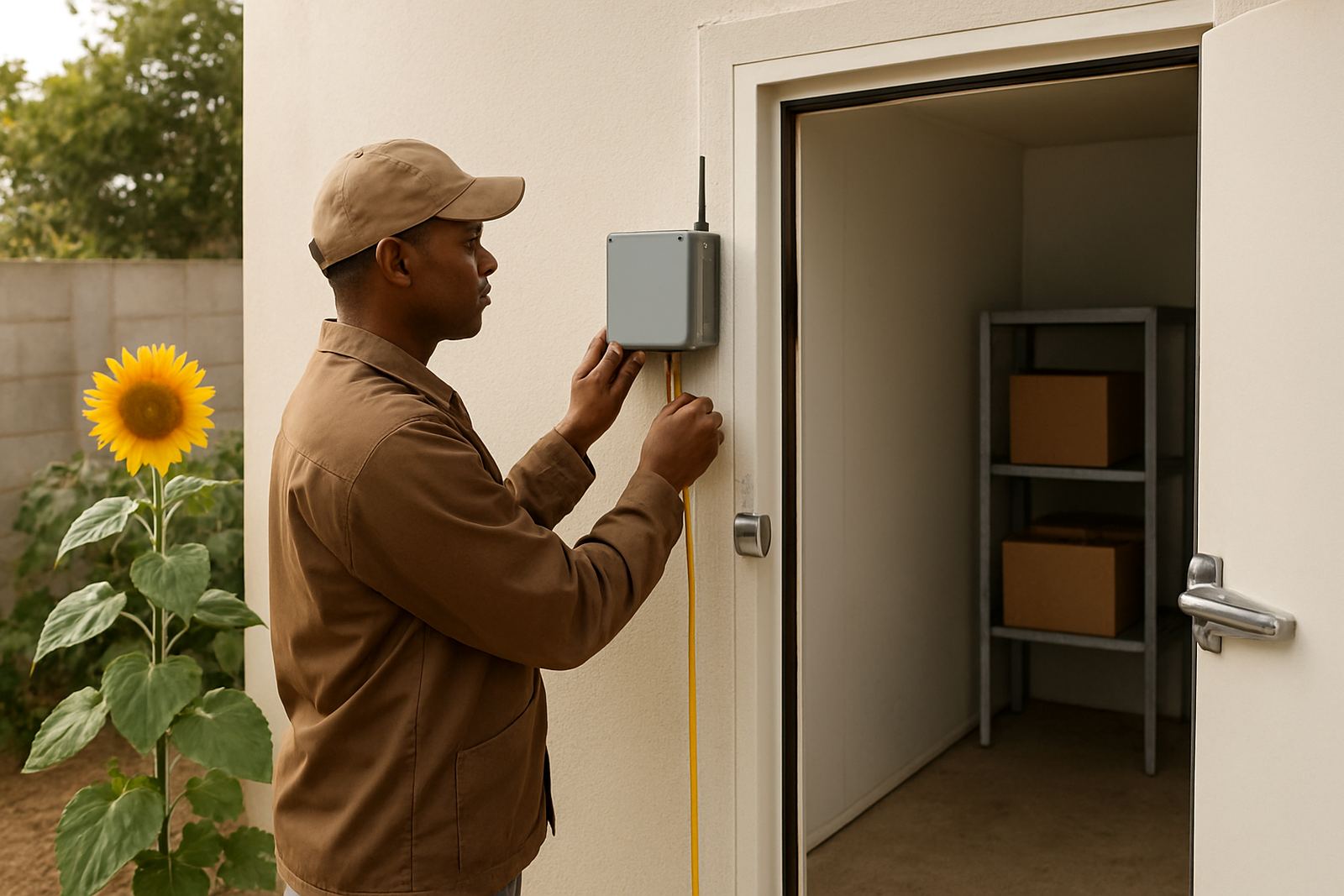
- Installation and wiring or wireless pairing
- Alarm testing and set point confirmation
- Hand-over with basic training for staff
- Follow-up check after the first operating period
Alarm response and early warning support
Most product losses do not happen because a system fails without warning. They happen because the warning is missed. That is why we focus on early alerts, clear set points and a response plan that fits your people. If your site loses power, has a compressor issue or gets a door left open, the alert needs to reach the right person quickly. On sites with after-hours storage or reduced night staffing, this makes a proper difference.
We can help define who gets notified, what the acceptable temperature window is, and when to escalate from operator level to maintenance or management. For sites with municipal compliance needs or audit requirements, the logs can also be kept for review and traceability. In practice, this means you can show when the excursion started, how long it lasted and what action was taken. That kind of record is useful when you need to explain a stock loss or show due care.
Maintenance intervals that keep readings honest
Monitoring equipment needs periodic attention, especially in dusty plant rooms, wash-down areas and coastal buildings where corrosion can creep in. We recommend scheduled checks rather than waiting for a fault. That includes sensor verification, alarm testing, battery checks where fitted, and confirmation that the logging interval still suits the site. If plant changes, the monitoring should change too.
As a guide, most clients benefit from a monthly visual check, a quarterly functional review and a full annual verification as part of planned maintenance. High-risk storage sites may need tighter intervals. If a room is opened constantly or the product is sensitive, it is worth checking alarm history more often and adjusting thresholds before the next hot spell. We can fold this into your planned maintenance visit, so it does not become another task for already busy staff.
- Monthly: visual check of sensors, display and alert status
- Quarterly: alarm test and reading comparison
- Annually: calibration review and set point audit
Pricing that suits the site, not a one-size quote
Pricing depends on the number of rooms, the type of equipment, whether remote alerts are needed and how much cabling or setup work is involved. A small single-room install will cost less than a multi-point system with several chillers, alarm outputs and long cable runs. We do not force the same package on every client, because the right answer for a butcher in Port Alfred is not the same as a distribution store in Gqeberha.
Our pricing approach is built around site scope, sensor count and support level. We can quote for supply and install, or for a monitoring upgrade added to an existing maintenance visit. Where clients want to reduce running cost, we also look at the bigger picture. A better set point, fewer false alarms and cleaner condenser coils can cut unnecessary cycling and reduce wear on the compressor. That saves money over time, not just at installation.
Who we support across the Eastern Cape
Nvirocool has been serving refrigeration clients since 2011 from our Newton Park base in Gqeberha. Our team includes technicians and support staff who understand cold rooms, chillers, maintenance planning and energy use, so monitoring is not treated as a separate gadget job. It is linked to the plant, the product and the people running the site.
We support operations in Gqeberha, Uitenhage, Despatch, Jeffreys Bay, Graaff-Reinet and Port Alfred, and we are set up for both planned work and urgent call-outs. If your storage conditions need better oversight, we can assess the current setup and recommend a clean path forward. You get practical feedback, a clear hand-over and a system your team can use without fuss.
Key facts
| Monitoring types | Digital logging, local alarms, remote alerts, excursion history |
|---|---|
| Typical temperature ranges | -25 C to +15 C depending on room and product |
| Sensor options | Single point, multi-point, air probe or product buffer probe |
| Alert methods | Audible alarm, SMS, email or control panel output |
| Logging intervals | From 1 minute to 15 minute readings, site dependent |
| Service coverage | Gqeberha, Uitenhage, Despatch, Jeffreys Bay, Graaff-Reinet, Port Alfred |