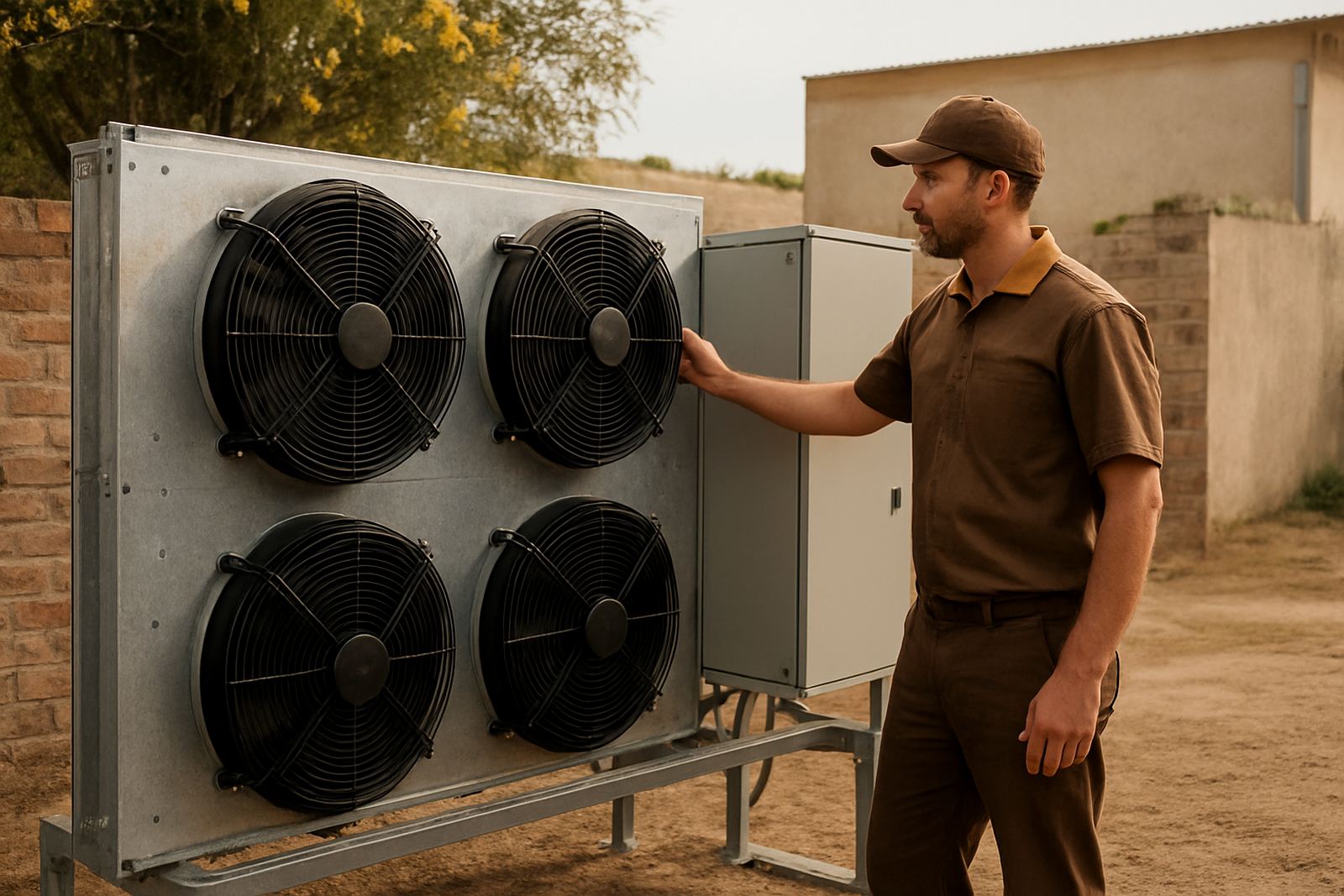
When a few degrees start costing real money
A chiller setpoint is not just a number on a screen. It tells the unit when to start, when to stop and what water temperature to hold for the process. If that number is too low, the chiller works harder than needed and can short cycle, especially in milder months around Gqeberha. If it is too high, the process may drift, ice build-up can change and product quality may suffer without a clear alarm.
We see this often after a hurried handover, a power interruption, or a control panel change where nobody checks the actual process requirement. A site may still look fine from the outside, yet the compressor runs longer, the return water is colder than necessary and the monthly account starts creeping up. On a medium plant that can mean a real Rand loss over a year.
Why setpoint errors are easy to miss
Many sites only watch for high temperature alarms, not for inefficient operation. A chiller can sit within a narrow band and still be wrong for the job. That is why setpoint faults often hide in plain sight.
- The displayed temperature matches the target, but the target itself is not correct for the process
- Operators lower the setpoint during a hot spell and never restore it
- A control sensor has drifted, so the reading is not true
- Valve or pump issues force the unit to work harder, masking the real problem
- After load-shedding, settings are changed to get the plant going again and left there
At one food processor in the Port Elizabeth area, the chiller stayed within alarm limits but the setpoint had been dropped by 3 degrees during summer. That small change increased compressor run time and the site only noticed it when the bill climbed and the night shift heard the plant running longer than usual.
The local conditions that make it worse
Eastern Cape sites deal with a mix of heat, coastal humidity, dust and unstable power supply. Those conditions can push staff to make quick changes just to keep production moving. In Newton Park and along the beachfront industrial areas, salt air can also affect sensors, terminals and control boards. A sensor that reads a little off in a dry inland depot may drift further at the coast.
Load-shedding adds another layer. When a chiller stops and restarts, operators often override settings to recover temperature faster. That is understandable, but if the setpoint is left too low the system may overshoot and spend the whole day chasing a number it does not need. The same thing happens after maintenance when the control setpoint and the process setpoint are not matched up properly.
We also see this in Despatch and Uitenhage where plants try to protect product after power cuts. The intention is good, but without checking the actual process spec the site can end up paying for colder water than required.
What to check before you change anything
Before a technician touches the control, start with the process need. A chiller serving a packing area does not need the same target as one serving a glycol loop or a cold room coil. The right setpoint depends on the application, the load profile and the equipment design.
- Confirm the required supply and return temperatures for the process
- Check the calibration of the temperature sensor and probe placement
- Compare controller reading with a trusted handheld thermometer
- Review pump flow, valve position and filter condition
- Look at compressor cycle times, not only alarm history
If the machine is cycling too often, the setpoint may be too close to the actual operating range or the plant may be oversized for the current load. If the process temperature is drifting, the setpoint might be fine but another fault is forcing compensation. Either way, changing a number and hoping for the best is poor practice.
How a proper setpoint review saves energy
A good review starts with trend data. At Nvirocool, our team led by Anele Mbeki-Jacobs looks at actual run patterns, not just the screen reading. Siyabonga Mthembu will check whether the chiller is meeting the setpoint with short compressor runs or long, steady cycles. Nokulunga Dlamini then looks at the energy side, because the same machine can be holding temperature but using far more power than it should.
In many cases the fix is not dramatic. The target may only need a one or two degree correction, along with better sensor placement, coil cleaning or a control upgrade. On some older systems in Graaff-Reinet and Jeffreys Bay, a setpoint review has been combined with leak detection and minor refrigeration adjustments to bring the plant back into line without replacing the entire unit. That saves money and reduces wear on the compressor.
Where a process allows it, a slightly higher chilled water setpoint can make a big difference to energy use. The plant does less work, discharge temperatures stay healthier, and the system often handles afternoon demand better. It has to be done carefully of course, but the savings can be worth it.
A practical checklist for site managers
If your chiller is behaving strangely but no alarm is sounding, start with the basics. This is a simple check list that works well on factory floors, cold stores and light industrial sites across the Eastern Cape.
- Write down the setpoint, actual supply temperature and return temperature
- Check whether the reading matches the product or process requirement
- Ask when the setpoint last changed and who changed it
- Inspect for dirty coils, low refrigerant and poor airflow around the plant room
- Review power cuts, generator changeover and restart procedures
- Make sure operators know when a temporary setting must be returned to normal
If staff keep changing the same number every week, there is usually an underlying issue. It may be a sensor, a control fault, or a mismatch between plant capacity and actual demand. A proper maintenance record helps you spot the pattern before it turns into a breakdown.
When to call for a technical review
Call for a review when bills rise, product temperature drifts or the chiller runs longer than expected. You should also bring in support after repeated power interruptions, after a control upgrade, or when a site has moved from one product line to another. A setpoint that worked for one season may not suit the next.
Nvirocool supports sites in Gqeberha, Port Alfred, Jeffreys Bay, Despatch, Uitenhage and Graaff-Reinet with planned maintenance, emergency breakdowns, chiller servicing and temperature monitoring. From our Newton Park base, Leanne Petersen and Yolanda Jacobs help keep the follow-up tidy so nothing gets missed. If you want the system checked properly, not just reset and left, we can inspect the settings, test the sensors and set a practical plan for the plant.
A small error on a chiller screen can look harmless. In practice it can waste power, strain equipment and upset a process long before any alarm appears.